Can a Pulse Oximeter Read Blood Sugar?
A pulse oximeter cannot read blood sugar. It measures blood oxygen saturation and pulse rate, while blood glucose requires a glucose meter or another device designed for glucose testing.
On this page (6 sections)
- Can a pulse oximeter read blood sugar?
- Why does “pulse oximeter glucose monitor” appear in searches?
- What can a regular pulse oximeter tell you?
- How is a pulse oximeter different from other home monitors?
- How can you avoid buying the wrong monitor?
- What is the final answer about pulse oximeters and blood sugar?
A pulse oximeter that reads blood sugar does not work like a normal fingertip oximeter. Standard pulse oximeters measure blood oxygen saturation, called SpO2, and pulse rate.
They do not measure glucose.
Blood sugar, also called blood glucose, needs a glucose meter or another device designed for glucose testing. The FDA explains that pulse oximeters estimate oxygen saturation and pulse rate, while glucose testing uses a different measurement process.
This distinction matters because an oxygen reading and a glucose reading answer different health questions. A finger sensor that tracks light changes can estimate how well oxygen is carried, but it cannot show how much glucose is in a blood sample.
Many shoppers search for a pulse oximeter that reads blood sugar because they want one simple device for home checks. A two in one claim should still show a separate glucose method, clear test steps, and units that match your care plan.
You can read the agency's pulse oximeter basics before choosing a device.
Use that guide to check the intended use and measurement limits first. Then look for a glucose meter if blood sugar is the number you actually need.
Can a pulse oximeter read blood sugar?
No, a standard pulse oximeter cannot read blood sugar. Its finger sensor uses light to estimate oxygen saturation and detect the pulse signal.
That information does not provide a blood glucose result.
A normal oximeter may show:
- SpO2 or blood oxygen saturation
- Pulse rate
- Pulse strength or a pulse bar
- A waveform or perfusion index on some models
- Alerts for oxygen or pulse thresholds on some models
None of these values equals a glucose reading. A pulse rate can change for many reasons, but it cannot be used as a blood sugar measurement.
If you are comparing a pulse oximeter device, focus on the oxygen and pulse features it actually supports. Do not assume a device can measure glucose because its description uses the words “glucose monitor” or “blood sugar.”
Why does “pulse oximeter glucose monitor” appear in searches?
The phrase pulse oximeter glucose monitor often combines two different types of health devices. It may refer to shoppers looking for both an oximeter and a glucose meter, or to unclear wording used in online product searches.
A “pulse oximeter with glucose monitor” would need a separate, clearly explained glucose measurement method. A pulse sensor alone cannot create a reliable blood sugar reading.
Before buying, look for these details:
- A clear description of how glucose is measured.
- Instructions that explain the glucose test process.
- A glucose result reported in the units used in your area.
- Information about calibration, supplies, and sample collection when applicable.
- Appropriate regulatory and safety information.
- Separate guidance for oxygen saturation and glucose readings.
If those details are missing, treat the device as a pulse oximeter only. The words “pulse oximeter glucose” in a search result are not proof that the device measures both.
What should you use for blood sugar testing?
Use a blood glucose meter or another glucose-monitoring device made for glucose testing. A glucose meter may use a blood sample and test strip, while other systems use a different approved sensing method.
The National Institute of Diabetes and Digestive and Kidney Diseases explains that blood glucose monitoring helps people check glucose levels according to their care plan. Follow the instructions for the specific meter and ask a health care professional how often you should test.
Do not use oxygen saturation, pulse rate, or a pulse waveform as a substitute for a glucose result. If you have symptoms such as confusion, fainting, severe weakness, or other urgent concerns, seek medical help rather than trying to interpret an oximeter display.
What can a regular pulse oximeter tell you?
A regular pulse oximeter can show oxygen saturation and pulse rate, not blood sugar. It is useful when you need a quick look at those specific measurements and understand the device's intended use.
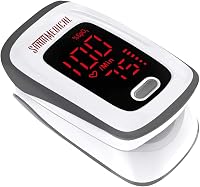
The Santamedical Fingertip Pulse Oximeter displays SpO2, pulse rate, and a pulse bar graph. It is compact, uses 2 AAA batteries, and includes a case, neck or wrist cord, and user manual.
Use the display as directed and allow the reading to settle. Cold fingers, movement, nail products, poor circulation, and other factors can affect an oximeter reading.
Our guide to fingertip pulse oximeter readings explains what the numbers and symbols mean.
The Santamedical device is intended for sports and aviation use rather than medical use. Read the instructions and do not treat one reading as a diagnosis.
Can an oximeter's alerts warn about blood sugar?
No, pulse oximeter alerts do not warn you about blood sugar. An alert may indicate that oxygen saturation or pulse rate has crossed a set threshold, depending on the device.
The Vibeat Fingertip Pulse Oximeter lets you set notification thresholds for blood oxygen and pulse rate. It can beep and flash the reading when a value moves outside a preset range.
Those alerts relate to oxygen and pulse measurements only.
Vibeat also stores 12 sets of data on the device and can show oxygen saturation, pulse rate, perfusion index, and a pulse waveform. Its instructions state that it is for sports and aviation use and should not be used to diagnose or treat a medical condition.
For help judging the oxygen reading itself, see our guide to fingertip pulse oximeter accuracy. Accuracy claims do not turn an oximeter into a glucose meter.
How is a pulse oximeter different from other home monitors?
A pulse oximeter checks oxygen saturation and pulse, while a blood pressure monitor checks pressure and may detect some rhythm disturbances. Neither device provides a blood glucose result unless it has a separate glucose function with clear instructions.
The iHealth Track Smart Upper Arm Blood Pressure monitor uses an upper-arm cuff and stores up to 99 readings on the monitor. Its companion app can store unlimited readings, and the device can display a warning symbol when it detects a heart rhythm disturbance.
Its wide-range cuff fits upper arms from 8.7 to 16.5 in, and the monitor uses 4 AAA batteries. If you are deciding between pressure and oxygen measurements, compare a pulse oximeter vs blood pressure monitor before buying.
A pulse oximeter and blood pressure monitor answer different questions. A blood pressure monitor does not replace a glucose meter either.
Is a heart-rate monitor the same as a pulse oximeter?
A heart-rate monitor and pulse oximeter can both show pulse rate, but only a pulse oximeter measures oxygen saturation. Neither one should be treated as a blood sugar monitor.
A heart-rate monitor may focus on pulse trends during exercise or daily activity. A pulse oximeter adds an SpO2 reading and may show pulse strength or a waveform.
Our comparison of heart rate monitor vs pulse oximeter explains which measurement each device is built to provide.
For heart rhythm questions, an ECG or EKG device is a separate category. Learn How to Read an ECG Strip? or How to Read an EKG Reading at Home? before interpreting a rhythm tracing.
How can you avoid buying the wrong monitor?
Match the device to the number you need before you buy it. Choose a glucose meter for blood sugar, a pulse oximeter for oxygen saturation and pulse, and a blood pressure monitor for blood pressure.
Use this quick check:
- Need blood glucose? Look for a glucose meter or approved glucose-monitoring device.
- Need oxygen saturation? Look for a pulse oximeter with an SpO2 display.
- Need blood pressure? Look for an upper-arm or wrist blood pressure monitor.
- Need pulse only? A heart-rate monitor may be enough.
- Need rhythm information? Look for an ECG or EKG device with clear instructions.
Do not rely on a product name alone. Check the measurements, test method, intended use, and instructions.
A device described as a pulse oximeter glucose monitor may still be only an oxygen and pulse monitor.
What is the final answer about pulse oximeters and blood sugar?
A pulse oximeter that reads blood sugar is not a standard pulse oximeter. A regular oximeter checks SpO2 and pulse rate, while blood sugar requires a glucose-monitoring device with a separate testing method.
Keep the two needs separate when you shop. Oxygen saturation tells you about oxygen carried in the blood at that moment, while glucose tells you about sugar levels that may need a different test and a different response.
Choose the Santamedical or Vibeat if you need oxygen and pulse readings. Both are fingertip devices built for SpO2 and pulse checks, with different display and alert features for home, sport, or aviation use.
Choose the iHealth Track if you need upper-arm blood pressure readings. It measures pressure with a cuff and can flag possible heart rhythm disturbances, but it does not measure blood oxygen or blood sugar.
If your goal is blood glucose, skip pulse oximeters and select a glucose meter made for that measurement. Look for clear instructions on samples, controls, timing, and how to record results.
Do not use a pulse reading as a clue to glucose. Pulse rate can rise or fall for many reasons, including activity, stress, caffeine, illness, or rest, and none of those changes gives a glucose value.
Set up whichever device you choose by reading the manual before the first test. Warm hands, a proper cuff or finger fit, and a steady position help you get a reading you can compare over time.
Store readings in the way your care plan suggests. A trend recorded consistently is more useful than a single number taken under different conditions.
When the number you need is glucose, buy for glucose. When the number you need is oxygen or pulse, buy for that task, and keep the instructions close by.
Frequently asked questions
Can a pulse oximeter measure blood glucose?
No. A standard pulse oximeter measures blood oxygen saturation and pulse rate through a finger sensor.
Blood glucose requires a glucose meter or another device built for glucose testing.
Be careful with products described as a pulse oximeter glucose monitor unless the device clearly explains its separate glucose measurement method and has appropriate instructions.
What does a pulse oximeter measure?
A pulse oximeter measures blood oxygen saturation, usually shown as SpO2, along with pulse rate. Some models also show pulse strength, a waveform, or a perfusion index.
These readings do not tell you your blood glucose level and should not replace glucose testing.
What device should I use to check blood sugar?
Use a blood glucose meter or another glucose-monitoring device intended for that purpose. Follow the device instructions for preparing, collecting, and interpreting a sample.
If you have diabetes or symptoms that concern you, follow the testing plan from your health care professional.
Why do some products mention glucose and pulse oximeters together?
Some search results and product descriptions group health monitors together, while others may use broad wording such as pulse oximeter with glucose monitor. That wording does not prove one sensor measures both values.
Check for a separate glucose test method, clear instructions, and appropriate regulatory information before relying on a device.