Heart Rate Monitor vs Pulse Oximeter: Which Is Better? (November 2026)
Choose a heart rate monitor to track your pulse, and a pulse oximeter when you also want an oxygen saturation reading. A pulse oximeter shows pulse rate too, but it doesn't replace a device made for ongoing heart rate tracking.
On this page (7 sections)
- What does each device measure?
- Heart rate monitor vs pulse oximeter: which should you choose?
- What do pulse oximeter readings tell you?
- Can a pulse oximeter replace a heart rate monitor?
- How should you choose a fingertip pulse oximeter?
- What can affect an oxygen or pulse reading?
- Which device makes sense for you?
Choose a heart rate monitor to track your pulse, and a pulse oximeter when you also want an oxygen saturation reading. A pulse oximeter shows pulse rate too, but its main extra measurement is SpO2, a reading that a basic heart rate monitor may not offer.
The phrase heart rate monitor vs pulse oximeter describes 2 different jobs. One focuses on pulse tracking; the other gives a spot check of oxygen saturation and pulse.
A pulse oximeter can suit you if oxygen readings are part of what you want to check. A heart rate monitor is the clearer fit if you mainly want to follow pulse during activity or across a period of time.
What does each device measure?
A heart rate monitor tracks pulse, while a pulse oximeter measures oxygen saturation and pulse rate. The extra oxygen reading is the main reason to choose an oximeter.
A heart rate monitor may be worn on the wrist, chest or another part of the body, depending on the device. Its features and how it records pulse vary by model, so check whether it displays a live rate, stores readings or tracks activity over time.
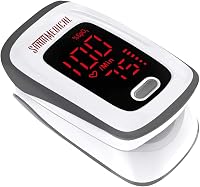
A fingertip pulse oximeter uses a sensor at the finger to estimate blood oxygen saturation and show pulse rate. The models in this guide also display pulse strength, though the screen and controls differ.
A pulse reading from an oximeter is not the same as continuous monitoring. It is a spot check, so it may not show how your heart rate changed between readings.
Heart rate monitor vs pulse oximeter: which should you choose?
Choose a heart rate monitor for pulse tracking and a pulse oximeter for oxygen saturation spot checks. If both needs matter, check whether a specific device supports both functions.
Think first about the question you want the device to answer. If you want to see how your pulse changes while you exercise, look for a heart rate monitor with tracking features that fit your routine.
If you want to see SpO2 along with pulse, a fingertip pulse oximeter is designed for that pair of readings. For an overview of what to compare, see our pulse oximeter device guide.
Don't assume that every wearable heart rate monitor measures oxygen, or that every pulse oximeter stores a history. Check the exact functions before choosing.
When is a heart rate monitor the better fit?
A heart rate monitor is the better fit when pulse tracking is your main goal. A model that records readings over time may help you review changes during a workout or routine, depending on its features.
Check how the device is worn, what its display shows and whether it stores readings. Some devices pair with an app, while others show a rate on the device itself.
If you already use a monitor and see a pulse reading that concerns you, follow the device instructions and consider the context, such as recent activity. Our guide explains what to do when a heart rate monitor shows a high pulse.
When is a pulse oximeter the better fit?
A pulse oximeter is the better fit when you want an oxygen saturation reading as well as pulse. A fingertip design can be useful for an occasional spot check at home or during an activity.
The products below are described for sports and aviation use, and some explicitly say they are not intended for medical use. A consumer reading is not a diagnosis or a substitute for advice from a health professional.
For a clear reading, follow the device instructions and keep your hand still. Cold fingers, movement, weak circulation, nail polish and acrylic nails may affect results.
What do pulse oximeter readings tell you?
A pulse oximeter gives an SpO2 estimate and a pulse reading at the time of the check. It doesn't explain why a number is high or low, or show a continuous record unless the specific device has that feature.
The Zacurate models show SpO2, pulse rate and pulse strength. The CHOICEMMed also shows those 3 readings, while the Mibest product description lists SpO2, pulse rate, pulse strength and battery status on its OLED display.
Learn how to read fingertip pulse oximeter readings before comparing a number with another reading. For a useful spot check, sit still, warm your hands if they're cold and follow the device's directions.
Use the same finger and similar conditions when comparing readings. Our guide to which finger to use for a pulse oximeter explains the practical choice.
A pulse oximeter isn't a blood pressure monitor either. If you're deciding between those measurements, read pulse oximeter vs blood pressure monitor.
Can a pulse oximeter replace a heart rate monitor?
A pulse oximeter can show pulse rate, but it won't necessarily replace a heart rate monitor for tracking over time. The right choice depends on whether you need a quick reading or an ongoing record.
A fingertip reading is taken while the device is on your finger. It can tell you the pulse rate at that moment, but repeated spot checks are different from a monitor that records changes during an activity.
Check the monitor's functions if you want workout data, alerts or a record you can review later. Features vary across models, and a device name alone doesn't tell you what it tracks or saves.
If the reading is related to a fever, see our guide on monitoring heart rate and fever with an EKG. A temperature reading, pulse check and EKG each provide different information.
How should you choose a fingertip pulse oximeter?
Choose by display readability, ease of use and included accessories. The four options here share the basic purpose of checking SpO2 and pulse, but their controls and screens differ.
The Zacurate Pro Series 500DL has a large LED display that faces the user, a silicone cover and lanyard. Zacurate says it works for ages 12 and above.
The Zacurate 500 Series also has a user-facing LED screen and includes batteries, a silicone cover and lanyard. Its product details give a pulse rate range as well as an SpO2 range.
The CHOICEMMed has one-button operation, a carrying case and up to 40 hours of battery life. Its description says it's intended for sports and aviation rather than medical use.
The Mibest uses an OLED screen with multiple display directions and adjustable brightness. It includes a case, lanyard, batteries and user manual.
Use the device's instructions for setup and operation. If you want an at-home spot-check device, compare the controls and screen with how you plan to use it, and read the complete pulse oximeter buying guide.
What can affect an oxygen or pulse reading?
Movement, cold hands, poor circulation and nail coverings can interfere with a fingertip reading. Repeat a reading according to the device instructions if the result seems inconsistent, and seek medical advice for symptoms or concerns.
CHOICEMMed's guidance notes that cold hands, poor circulation, a very weak pulse, movement, nail polish and acrylic nails may cause inaccurate results. Keep your hand relaxed and still during a check.
Oxygen saturation may change more slowly than pulse rate. Give the device time to settle and follow its instructions instead of reacting to a brief display change.
Don't use a pulse oximeter number on its own to make a health decision. A clinician can interpret readings alongside symptoms and your personal health context.
Which device makes sense for you?
Pick a heart rate monitor if pulse tracking is your priority; pick a pulse oximeter if you want SpO2 and pulse in a spot check. If you need both, compare the specific features of each device before buying.
For a portable fingertip check, the Zacurate and CHOICEMMed options include batteries, and the Mibest adds adjustable screen viewing. Choose based on the display and accessories that suit your routine.
Use a pulse oximeter to check oxygen saturation, not blood sugar, blood pressure or an EKG. For more on its limits, see what a pulse oximeter can and can't measure.
Frequently asked questions
Does a pulse oximeter measure heart rate?
Yes. A pulse oximeter displays pulse rate as well as blood oxygen saturation, often called SpO2.
It gives a spot reading from your finger, while a heart rate monitor may be designed to track pulse over time.
Pick based on whether you need oxygen readings, ongoing pulse tracking, or both.
Can a heart rate monitor measure blood oxygen?
Some devices may include oxygen measurement, but a heart rate monitor doesn't necessarily provide it. Check the features of the exact device before buying.
If you specifically want a fingertip SpO2 reading, look for a pulse oximeter and learn how to read its display.
Which device should I use for exercise?
Choose a heart rate monitor if you want to follow your pulse during activity, and consider a pulse oximeter for a separate oxygen and pulse spot check. The devices in this guide are described for sports and aviation use, not medical use.
Follow the instructions for your device and activity.
Can a pulse oximeter diagnose a health problem?
No. A pulse oximeter provides readings, but a number alone doesn't diagnose a condition or explain its cause.
Readings can be affected by factors such as cold hands, movement and poor circulation.
Ask a health professional about concerning readings or symptoms.
Can a pulse oximeter read blood sugar?
No. A pulse oximeter measures oxygen saturation and pulse rate, not blood glucose.
Don't use one in place of a glucose meter or rely on it for a blood sugar estimate.
See whether a pulse oximeter can read blood sugar for more detail.