How Accurate Is a Fingertip Pulse Oximeter?
A fingertip pulse oximeter can give useful spot checks, but its reading is an estimate, not a diagnosis. Cold fingers, movement, poor circulation, nail products, and an incorrect fit can make the result less reliable.
On this page (9 sections)
- How accurate is fingertip pulse oximeter technology?
- What can make a fingertip pulse oximeter reading unreliable?
- How should you take a more reliable reading?
- What does the oxygen number actually tell you?
- Is a pulse oximeter the same as a heart rate monitor?
- Does a pulse oximeter measure blood pressure?
- Can fingertip pulse oximeter reviews prove accuracy?
- When should you use another type of monitor?
- How can you judge a fingertip pulse oximeter result?
A fingertip pulse oximeter can be accurate enough for a useful spot check, but it is not perfect and cannot diagnose a medical problem. The result is an estimate of blood oxygen saturation, called SpO2, plus pulse rate.
That estimate is useful for following a pattern over time or for a quick check at home, during sport, or at altitude. It does not show why oxygen may be low, and it should not replace medical advice when symptoms are present.
Cold fingers, movement, poor circulation, nail products, and a poor fit can reduce reliability. Even a well made device needs a strong pulse signal to form a reading.
Accuracy also depends on how you use the device. Sitting still, warming your hand, placing the sensor correctly, and waiting for the number to settle can make the reading more useful.
This suits people who want a simple spot check rather than continuous medical monitoring. It is less suited to someone who needs blood pressure, an ECG recording, or a diagnosis.
Set up matters more than it first seems. Choose a warm finger, support your hand so it does not move, and keep the sensor aligned as the manual describes.
Care is simple but steady. Keep the sensor clean and dry, store it in its case when there is one, and follow the battery and cleaning guidance for your model.
Trade offs are honest ones. A fingertip device is fast, small, and easy to learn, yet it gives only a brief estimate at one moment.
It cannot track every change through the day or night.
If a number looks unusual, repeat it after correcting the obvious causes. Compare readings taken at rest under similar conditions, note how you feel, and seek medical help for serious or persistent symptoms.
How accurate is fingertip pulse oximeter technology?
Fingertip pulse oximeter accuracy is best when the sensor has a steady pulse signal and your hand remains still. These devices use light through the finger to estimate oxygen saturation and pulse rate.
The number is not a direct blood test. It is an estimate affected by the device, your circulation, the finger position, and the conditions around the measurement.
A device may show a stable number that is still not reliable if your finger is cold or the sensor is poorly positioned. Treat the result as one piece of information, not a complete picture of your health.
For an overview of device types and buying factors, see our guide to the pulse oximeter device.
What can make a fingertip pulse oximeter reading unreliable?
Movement, cold skin, weak circulation, and a weak sensor signal are common reasons for an unreliable reading. Nail polish, artificial nails, bright light, and an incorrect fit may also interfere with some devices.
Common causes include:
- Shivering, walking, or talking during the reading
- Cold hands or fingers
- A loose sensor that does not sit over the finger correctly
- A sensor that is too tight or uncomfortable
- Poor blood flow to the finger
- Nail polish or artificial nails
- Direct bright light reaching the sensor
- Waiting only a few seconds before recording the number
- A low battery or damaged device
A pulse oximeter can also display a number when the pulse signal is weak. Check the pulse bar or signal indicator if your device has one, but remember that a signal indicator does not prove the oxygen result is medically correct.
Does finger choice affect accuracy?
Yes, finger choice can affect the result when one finger is colder or has weaker circulation than another. Use a clean, warm finger that fits the sensor comfortably, then keep your hand relaxed and still.
Our guide to which finger to use for a pulse oximeter explains how to choose a finger and position your hand. Compare readings only when the conditions are similar.
The Santamedical Fingertip Pulse Oximeter is designed for quick SpO2, pulse rate, and pulse strength readings, with a finger chamber for a range of finger sizes.
Santamedical describes this model for sports and aviation use, not medical use. Its display is intended to show the result quickly, but you should still sit still and wait for a steady reading.
How should you take a more reliable reading?
Warm your hand, rest for several minutes, place the sensor correctly, and wait for a stable number before recording it. Repeat the measurement if the number changes quickly or does not match how you feel.
Use this process:
- Sit quietly and let your hand rest.
- Warm your finger if it feels cold.
- Remove nail polish or artificial nails if they appear to interfere.
- Place the sensor fully on the finger according to the instructions.
- Keep your hand below or near heart level without squeezing it.
- Stay still until the display settles.
- Record more than one reading if the first number looks unusual.
Read the display carefully with our guide to fingertip pulse oximeter readings. A pulse rate that looks plausible does not automatically confirm that the SpO2 number is reliable.
The Vibeat Fingertip Pulse Oximeter has a spot-check mode, adjustable notification thresholds, and memory for 12 sets of data. It also displays pulse rate, perfusion index, and pulse waveform.
Vibeat gives a measurement accuracy specification of ±2 for the device and states that it is intended for sports and aviation use only. That specification does not remove the need for correct placement, a steady hand, and careful interpretation.
What does the oxygen number actually tell you?
The SpO2 number estimates the percentage of oxygen carried in your blood, while the pulse number estimates heartbeats per minute. Neither number explains the cause of an unusual result.
A reading can change with activity, altitude, circulation, illness, and measurement conditions. Compare readings taken at rest under similar conditions rather than comparing one active reading with one resting reading.
If a result is unexpected, repeat it after correcting obvious problems such as cold fingers or movement. If concerning readings continue, or if you have trouble breathing, chest pain, confusion, blue lips, or another serious symptom, seek urgent medical help.
The FDA explains that pulse oximeter readings have limitations and should be interpreted with symptoms and other information, not used alone. See its pulse oximeter safety information.
Is a pulse oximeter the same as a heart rate monitor?
No. A pulse oximeter measures estimated oxygen saturation along with pulse rate, while a heart rate monitor focuses mainly on heart rate.
The devices may overlap on pulse information, but they answer different questions. One asks how much oxygen the blood appears to carry and how fast the pulse feels.
The other asks how fast the heart is beating, often through the day or during exercise. That focus can make it better suited to training and general activity tracking.
Read our comparison of heart rate monitors and pulse oximeters if you are deciding which tool fits your routine. For exercise tracking, a heart rate monitor may be the more direct choice.
For a quick oxygen spot check, a pulse oximeter is the relevant device.
Does a pulse oximeter measure blood pressure?
No. A pulse oximeter does not measure blood pressure.
You need an upper-arm or wrist blood pressure monitor for systolic and diastolic readings.
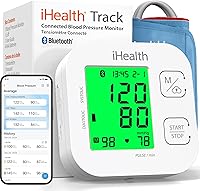
The iHealth Track Smart Upper Arm Blood Pressure has a wide-range cuff for upper arms measuring 8.7 to 16.5 in and can store up to 99 readings on the monitor.
This device is not a substitute for a pulse oximeter. Our guide to pulse oximeters versus blood pressure monitors explains which measurement each device provides.
Can fingertip pulse oximeter reviews prove accuracy?
No. Fingertip pulse oximeter reviews can reveal patterns such as display readability or ease of use, but they cannot prove that every reading is accurate.
User conditions vary, and most home measurements are not compared with a clinical reference.
Use reviews to identify practical concerns, then check the device's stated purpose, measurement range, instructions, and signal features. Avoid treating a large number of positive comments as clinical validation.
The same caution applies to claims about precision. A stated accuracy range applies under particular conditions and does not guarantee a correct result for every person or situation.
When should you use another type of monitor?
Use another monitor when you need a measurement that a pulse oximeter does not provide, such as blood pressure or an ECG recording. Choose the device based on the question you need answered.
For pulse regularity, read Using EKG to Check Pulse Regularity: Is It Accurate?. For an electrical heart recording at home, see What Is the Most Accurate Home ECG Device?.
Do not use a fingertip pulse oximeter to confirm or rule out a heart or lung condition. Persistent abnormal readings, severe symptoms, or uncertainty about what a number means call for medical advice.
How can you judge a fingertip pulse oximeter result?
Trust a reading more when your hand is warm, you are still, the sensor fits correctly, and the number stays stable across repeated checks. Treat a sudden or unexpected result as a reason to check the conditions and repeat the measurement.
Choose a pulse oximeter for the information you need. Santamedical suits basic portable spot checks, Vibeat adds threshold alerts and short-term records, and the iHealth Track is for blood pressure rather than oxygen.
The decision rule is simple: correct the common causes of error, repeat an unusual result, and consider your symptoms. If the result remains concerning, contact a health professional instead of relying on the device alone.
Frequently asked questions
How accurate is a fingertip pulse oximeter?
A fingertip pulse oximeter can provide a useful estimate of blood oxygen saturation and pulse rate when it fits well and your hand is still and warm. Accuracy can vary with circulation, movement, skin factors, and device quality, so use repeated readings and consider symptoms rather than treating one number as a diagnosis.
Why does my pulse oximeter give different readings?
Different readings can result from movement, cold fingers, weak circulation, a loose or tight fit, nail polish, or waiting too little time for the number to settle. Remove the device, warm your hand, sit still, and try again on another suitable finger while following the device instructions.
Can a pulse oximeter be wrong?
Yes. A pulse oximeter may show an unreliable result when the sensor cannot detect a strong pulse signal or when outside factors affect the light-based measurement.
A single reading does not explain why oxygen may be low, so contact a health professional if concerning readings continue or symptoms are present.
Does a pulse oximeter measure blood pressure?
No. A pulse oximeter estimates oxygen saturation and pulse rate, while a blood pressure monitor measures systolic and diastolic pressure.
If you need both measurements, use the right device for each job and follow the instructions for correct positioning and repeated checks.