Is Your EKG App Working? 5 Ways to Check
You can check if your EKG app is working properly by comparing readings with medical devices, testing it during different activities, and monitoring for consistent waveform patterns. Most EKG apps…
SVT (Supraventricular Tachycardia) appears as a heart rate above 150 beats per minute with narrow QRS complexes on an ECG, often starting and stopping suddenly. You can identify SVT by…
A flat line on EKG can result from loose electrodes, electrical interference, or machine problems – not just cardiac arrest. Technical issues like disconnected leads or patient movement cause most…
Yes, a low battery can affect EKG accuracy by causing signal distortion, incomplete readings, and device malfunctions that compromise your heart rhythm measurements. Your EKG device needs consistent power to…
Athletes typically show lower resting heart rates, stronger electrical signals, and structural adaptations on EKG readings that would be considered abnormal in non-athletes. Normal EKG patterns for athletes include heart…
A PAC (Premature Atrial Contraction) is an extra heartbeat that starts in your heart’s upper chambers before your regular heartbeat is due. These early beats are usually harmless and feel…
Sinus arrhythmia appears on your EKG as a heart rhythm that speeds up when you breathe in and slows down when you breathe out, creating an irregular but predictable pattern….
Wolff-Parkinson-White syndrome creates a distinctive delta wave pattern on EKG readings, appearing as a slurred upstroke at the beginning of the QRS complex. You can identify WPW by looking for…
The U wave is a small deflection on an EKG that appears after the T wave, representing the final phase of ventricular repolarization. You’ll typically see U waves in leads…
Yes, an EKG can detect ectopic beats including PVCs (premature ventricular contractions) and PACs (premature atrial contractions). These irregular heartbeats show up as distinct patterns on EKG tracings that doctors…
When your EKG device shows a high heart rate warning, you should take action if your resting heart rate exceeds 100 beats per minute or if you experience symptoms like…
You can learn basic ECG interpretation, but you should never rely solely on your own analysis for medical decisions without professional guidance. While ECG devices provide valuable data, interpreting ECG…
Interpreting EKG results for heart palpitations involves looking for irregular heartbeats, abnormal rhythms, and specific wave patterns that indicate heart rhythm disorders. Normal EKG readings show regular intervals between heartbeats,…
Finger-clip EKG devices typically achieve 85-95% accuracy compared to medical-grade equipment, while chest-strap EKG monitors generally deliver 90-98% accuracy for heart rhythm detection. The key difference lies in signal quality:…
An EKG showing 0 BPM usually means the device cannot detect your heartbeat due to poor electrode contact, dead batteries, or incorrect placement. This reading doesn’t mean your heart stopped…
Yes, muscle tremors can affect EKG readings by creating electrical interference that appears as wavy, irregular lines on your heart rhythm recording. You can get clearer EKG results by staying…
EKG artifacts are unwanted signals on your electrocardiogram that can make your heart rhythm look abnormal when it’s actually normal. These false readings come from muscle movement, loose electrodes, electrical…
A normal ST segment appears as a flat, horizontal line on an ECG that connects the QRS complex to the T wave, sitting at the same level as the baseline…
To measure the RR interval on an EKG strip, find two consecutive R waves and count the number of large squares between their peaks, then multiply by 0.20 seconds per…
The J-point on your EKG reading is the spot where the QRS complex ends and the ST segment begins, appearing as a small junction between these two important parts of…
Home EKG devices can detect some heart rhythm problems, but they’re not good enough for complete medical diagnosis and shouldn’t replace professional evaluation. Your doctor needs more detailed testing and…
ST depression on home EKG appears as a downward dip in the ST segment, which may signal heart problems like coronary artery disease or medication effects. You should contact your…
Common EKG findings for atrial fibrillation include an irregularly irregular heart rhythm and the absence of clear P waves on the electrocardiogram strip. You can spot atrial fibrillation on an…
A bundle branch block on your EKG appears as a widened QRS complex (wider than 120 milliseconds) with specific wave patterns that show delayed electrical conduction through your heart’s ventricles….
An inverted T wave on an EKG happens when the T wave points downward instead of upward, often indicating heart muscle problems or blood flow issues. This pattern can signal…
Normal P wave amplitude ranges from 0.5 to 2.5 millimeters (0.05 to 0.25 millivolts) in standard EKG leads, with the tallest waves typically seen in leads II and V1. A…
EKG readings change throughout the day due to your body’s natural circadian rhythm, which affects heart rate and electrical activity patterns every 24 hours. Your heart rate typically peaks in…
Medical EKG reports come from healthcare professionals and provide detailed diagnostic analysis, while consumer EKG reports from wearable devices offer basic rhythm monitoring with simplified interpretations. The main difference lies…
Yes, stress can cause a bad EKG reading by creating irregular heart rhythms, muscle tension, and breathing changes that interfere with accurate electrical signals from your heart. Anxiety affects EKG…
The number of ECG leads you need depends on your purpose: 1-lead for basic heart rhythm monitoring, 6-lead for intermediate cardiac assessment, and 12-lead for comprehensive heart evaluation and diagnosis….
An “unclassified heart rhythm” on your ECG app means the device detected something unusual but couldn’t identify the specific type of heart rhythm abnormality. This reading typically happens when your…
A PVC (premature ventricular contraction) on your home EKG strip appears as a wide, bizarre-looking beat that comes early and disrupts the normal heart rhythm pattern. You can spot a…
EKG for tachycardia reveals heart rates above 100 beats per minute through characteristic patterns on the electrocardiogram tracing. Your EKG will show narrow or wide QRS complexes depending on whether…
An EKG for bradycardia shows a heart rate below 60 beats per minute with normal electrical patterns but slower timing intervals between heartbeats. You can identify bradycardia on an EKG…
An irregular EKG shows abnormal heart rhythms with uneven spacing between beats, missing waves, or extra electrical activity that doesn’t match a normal pattern. You’ll typically see variations in the…
A normal heart rhythm on a chart shows a regular pattern with consistent P waves, QRS complexes, and T waves repeating at steady intervals. The heart rate typically falls between…
You can calculate heart rate from an EKG strip by counting the number of R-waves (the tall spikes) in a 6-second strip and multiplying by 10, or by measuring the…
Yes, your EKG can appear upside down if the limb leads are placed incorrectly, with the most common mistake being swapping the left and right arm electrodes. Proper EKG lead…
When your heart monitor displays “unreadable,” it typically means the device cannot detect a clear electrical signal from your heart due to poor contact, movement, or technical issues. The most…
Yes, home EKG devices can give false positives due to movement, poor contact, or device limitations. These incorrect readings happen when the device shows abnormal heart activity that isn’t actually…
Wandering baseline on EKG happens when the baseline shifts up and down during recording, creating wavy lines that make reading the heart rhythm difficult. This artifact typically results from patient…
Smartwatch ECG accuracy ranges from 85-95% compared to doctor EKGs, which are considered the gold standard for heart rhythm detection. The main difference lies in electrode placement and data processing…
Your EKG device can detect atrial fibrillation (AFib) even when you feel completely normal because this heart rhythm disorder often produces no noticeable symptoms in its early stages. Silent AFib…
The normal QT interval ranges from 350-440 milliseconds for men and 360-460 milliseconds for women, with women typically having longer QT intervals than men. This gender difference in QT intervals…
Poor signal errors on your EKG app happen when the electrodes can’t detect your heart’s electrical activity clearly, usually due to poor skin contact, movement, or dry electrodes. You can…
QRS duration on your EKG measures how long it takes electrical signals to travel through your heart’s lower chambers, with normal duration being 80-100 milliseconds. When your QRS duration is…
A normal PR interval on an EKG measures between 0.12 to 0.20 seconds (120-200 milliseconds), representing the time it takes for electrical signals to travel from your heart’s upper chambers…
A wavy EKG line usually means electrical interference or poor electrode contact is disrupting your signal. Most wavy patterns can be fixed by checking your electrode placement and reducing nearby…
EKG devices measure your heart’s electrical activity while pulse oximeters count heartbeats through blood flow changes, which can create different heart rate readings between the two devices. These differences happen…
EKG paper squares follow the 0.04-second rule, where each small square represents 0.04 seconds of time on the horizontal axis. You can read EKG paper by counting squares to measure…
Normal sinus rhythm on an EKG shows a heart rate between 60-100 beats per minute with consistent P waves before each QRS complex and regular spacing between heartbeats. You can…
Most home EKG devices are 85-95% accurate for detecting basic heart rhythm problems, but they’re not as precise as hospital-grade machines. Your home EKG can catch common issues like atrial…
An “inconclusive” EKG result means the test couldn’t provide a clear reading of your heart’s electrical activity due to technical issues, patient movement, or unclear signal patterns. This doesn’t mean…
Athletes need EKG monitoring to detect dangerous heart rhythm abnormalities that intense training can mask or trigger, potentially preventing sudden cardiac events during competition. Regular EKG screening helps athletes identify…
Home EKG devices cannot reliably detect Brugada syndrome because this condition often shows normal heart rhythms during routine monitoring. Most home EKG devices lack the specialized leads needed to identify…
Regular EKG monitoring helps people with high cholesterol detect heart problems early, often before symptoms appear. High cholesterol damages arteries over time, making EKG screening a smart way to catch…
Using EKG for general wellness isn’t necessary for most healthy people, but it can provide peace of mind and early detection of heart rhythm issues. Consumer EKG devices offer convenience…
Yes, an EKG can often help find the cause of fainting spells by detecting heart rhythm problems that may trigger these episodes. EKG tests capture electrical signals from your heart…
Yes, an EKG can detect signs of heart inflammation (myocarditis), but it cannot diagnose the condition on its own. EKG changes in myocarditis may show abnormal heart rhythms, ST-segment changes,…
EKG devices help prevent strokes by detecting irregular heart rhythms, especially atrial fibrillation, which increases stroke risk by five times. Modern portable EKG monitors can catch dangerous heart irregularities early,…
You can use an EKG device to monitor heart rate changes during fever, helping detect potential complications like increased cardiac stress or irregular rhythms that often accompany high body temperature….
Silent AFib affects millions but shows no clear symptoms, making home EKG devices your best early warning system. You can catch silent atrial fibrillation by using portable EKG monitors that…
Yes, home EKG devices can detect bigeminy, which appears as an abnormal rhythm where every other heartbeat is a premature ventricular contraction (PVC). You’ll see a distinct pattern on your…
You should get a professional EKG instead of using a home device when experiencing chest pain, severe shortness of breath, or symptoms that could indicate a heart emergency. Home EKG…
Using EKG for panic disorder helps distinguish between anxiety symptoms and actual heart problems during episodes. Most panic attack symptoms mirror heart issues, making EKG monitoring a valuable tool for…
PVC (premature ventricular contractions) appear as wide, bizarre QRS complexes that come early and lack P waves, while PAC (premature atrial contractions) show normal QRS complexes preceded by abnormal P…
After a chest injury, you should get EKG monitoring within 24-48 hours to check for heart rhythm problems or hidden cardiac damage. EKG devices can detect dangerous heart issues that…
EKG monitoring can help track your heart’s response to caffeine by detecting changes in heart rate, rhythm irregularities, and arrhythmias that occur after consuming coffee or other caffeinated drinks. Most…
Home EKG devices can potentially detect signs of Long QT Syndrome, but their accuracy varies significantly depending on the device type and your specific condition severity. Consumer-grade home EKG monitors…
EKG monitoring can detect heart rhythm changes caused by thyroid disorders, helping you spot problems before they become serious. Your thyroid hormone levels directly affect your heart rate, rhythm, and…
You can track your heart rhythm while traveling using portable ECG devices, smartphone apps, or wearable monitors that work anywhere without internet connection. The best travel-friendly heart monitoring options include…
Yes, an EKG can show signs of heart failure by revealing abnormal heart rhythms, electrical delays, and structural changes in your heart muscle. While an EKG alone cannot diagnose heart…
An EKG for heavy chest feeling can help rule out serious heart conditions, but the sensation alone doesn’t always mean you need emergency care. You should get an EKG if…
You need a 24-hour heart monitor when you have unexplained symptoms like chest pain, dizziness, or fainting that don’t show up during a regular EKG. Your doctor may recommend this…
EKG devices can accurately check pulse regularity and detect irregular heartbeats like atrial fibrillation with clinical-grade precision. Most consumer EKG monitors show 95-99% accuracy for detecting normal versus irregular heart…
People with diabetes should monitor their heart health daily using EKG devices because they face significantly higher risks of heart disease and silent heart attacks. Regular EKG monitoring for diabetics…
No, an EKG cannot directly detect blood clots in your blood vessels or lungs. However, an EKG can show heart changes that happen when blood clots affect your heart’s rhythm…
Home EKG monitoring after surgery helps track your heart rhythm and catch problems early when you’re recovering at home. Post-surgery heart monitoring with home EKG devices gives you peace of…
EKG monitoring for smokers can detect early signs of heart damage including irregular rhythms, reduced blood flow, and coronary artery disease before symptoms appear. Smoking damages your heart within months,…
EKG monitoring can help identify heart rhythm problems that may cause lightheadedness, ruling out serious cardiac issues when dizziness occurs frequently. Your doctor might recommend an EKG if you experience…
Detecting Wolff-Parkinson-White on an EKG requires looking for a short PR interval (less than 0.12 seconds) and a delta wave that creates a slurred upstroke on the QRS complex. You…
Atrial flutter shows up on an EKG strip as regular sawtooth waves between 240-340 beats per minute with a consistent pattern that looks like sharp peaks and valleys. You can…
EKG signs of electrolyte imbalance include T-wave changes, QT interval prolongation, and rhythm abnormalities that reflect disrupted electrical conduction in your heart. Your EKG can reveal potassium, sodium, calcium, and…
Yes, an EKG can detect some signs of magnesium deficiency, but it cannot directly measure your magnesium levels. When your magnesium is low, your EKG might show heart rhythm problems…
Yes, an EKG can show signs of myocarditis, but it’s not always reliable for diagnosis on its own. The test may reveal abnormal heart rhythms, ST-segment changes, or other warning…
EKG monitoring becomes critical after age 60 because heart disease risk doubles every decade, and early detection can prevent life-threatening cardiac events. Seniors over 60 should consider regular EKG monitoring…
EKG monitoring during pregnancy is generally safe when recommended by your healthcare provider, using standard electrodes placed on your skin to track heart rhythm without harming you or your baby….
Yes, EKG for POTS can help with diagnosis by detecting heart rate changes when you stand up, but it’s not the only test doctors use to confirm POTS syndrome. An…
Yes, an EKG can detect signs of an enlarged heart by showing specific changes in electrical patterns, though it’s not always 100% accurate for all cases. An EKG looks for…
You can track skipped heartbeats with your EKG device by looking for irregular spacing between heartbeats on your rhythm strip or unusual pause patterns in your readings. Most consumer EKG…
EKG changes in mitral valve prolapse typically show inverted T waves in leads II, III, and aVF, along with possible ST depression and arrhythmias like PVCs or atrial fibrillation. Most…
A slow heart rate becomes dangerous on EKG when it drops below 60 beats per minute (bradycardia) and causes symptoms like dizziness, fainting, or chest pain. Most healthy adults should…
A heart monitor can tell the difference between anxiety and a heart attack by tracking your heart rate patterns, rhythm irregularities, and other vital signs that trained professionals can analyze….
EKG monitoring after COVID-19 helps track heart rhythm changes, chest pain episodes, and irregular heartbeats that many people experience during recovery. Post-COVID heart issues show up as arrhythmias, palpitations, and…
Home EKG devices cannot directly detect heart murmurs because murmurs are sounds that require audio detection, while EKGs only measure electrical activity of your heart. You can use a home…
Using an EKG during heavy exercise is generally safe with proper equipment and precautions, but excessive sweat and movement can interfere with accurate readings. Most modern portable EKG devices are…
EKG for SVT shows a narrow QRS complex with a heart rate typically between 150-250 beats per minute, helping doctors quickly identify supraventricular tachycardia episodes. You can spot SVT on…
Yes, an EKG can detect pericarditis by showing specific electrical changes in your heart rhythm, though it’s not always 100% definitive. The most common EKG indicators include widespread ST-segment elevation…
EKG monitoring can detect irregular heart rhythms associated with sleep apnea, but it doesn’t directly measure oxygen levels during sleep episodes. Sleep apnea causes breathing interruptions that trigger heart rate…
Call a doctor after a home EKG test if you see irregular rhythms, chest pain symptoms, or readings that look different from your normal pattern. You should also contact your…
Heart monitors can be helpful for people with chronic fatigue by tracking heart rate patterns that may reveal useful information about energy levels and symptom triggers. These devices work best…
EKG devices can help monitor high blood pressure by detecting heart rhythm changes and stress patterns that often accompany hypertension. While EKG machines don’t directly measure blood pressure like a…
An EKG can detect some signs that suggest heart valve problems, but it cannot directly diagnose valve disease on its own. EKGs show electrical activity changes that may indicate valve…
Athletes with high heart rates should use EKG monitoring to track their cardiac health, especially since athletic hearts can show unique patterns that differ from average readings. EKG for athletes…
Yes, you can use an EKG to track stress levels by monitoring heart rate variability and detecting irregular heart rhythms that occur during stressful situations. Modern EKG devices measure your…
Signs of an irregular heartbeat on your EKG include abnormal spacing between beats, missing P waves, and unusual rhythm patterns that deviate from the normal steady pattern. Your EKG will…
Your EKG device can help identify racing heart causes at night by recording abnormal heart rhythms, irregular patterns, or elevated heart rates during episodes. Common nighttime heart racing triggers include…
Yes, home EKG devices can detect certain heart attack signs, but they cannot replace emergency medical care during an actual heart attack. Home EKG monitors are useful for tracking heart…
You should worry about an EKG result if you see abnormal heart rhythms, signs of heart attack, or dangerous electrical patterns that suggest serious cardiac problems. Red flags in EKG…
An EKG does not directly show clogged arteries, but it can reveal signs that suggest blockages may be present. While an EKG detects electrical activity in your heart, clogged arteries…
Monitoring heart rhythm for AFib requires checking your pulse daily, using an ECG device when symptoms occur, and tracking irregular patterns through smartphone apps or wearable monitors. You can catch…
Yes, an EKG can help diagnose the cause of dizziness and fainting by detecting heart rhythm problems that reduce blood flow to your brain. When you feel dizzy or faint,…
EKG for shortness of breath helps doctors identify heart rhythm problems, blocked arteries, and other cardiac causes that might be making you feel breathless. Your EKG results show electrical patterns…
Yes, your EKG can detect skipped beats by capturing the electrical activity when your heart misses or adds an extra beat, showing up as irregular patterns on the readout. Modern…
An EKG can effectively track heart palpitations by recording your heart’s electrical activity during episodes, helping identify irregular rhythms that cause the fluttering or racing sensations. Home EKG devices make…
You need a home heart monitor if you experience chest pain, irregular heartbeats, shortness of breath, or have a family history of heart disease. Home heart monitors help catch heart…
Take an EKG at home when you experience chest pain, irregular heartbeats, shortness of breath, or dizziness that could signal heart problems. The best timing for home EKG readings is…
An EKG for chest pain should be done immediately if you have severe crushing chest pain, shortness of breath, or pain radiating to your arm or jaw. Call 911 for…
To perform a long 10-minute ECG recording, you need a compatible ECG device and a quiet environment where you can remain still throughout the entire recording period. Most personal ECG…
EKG devices can detect dangerous medication side effects by monitoring heart rhythm changes, helping you catch problems before they become serious. Monitoring medication side effects via EKG works best when…
EKG tests cannot directly check electrolyte levels, but they can reveal the effects of electrolyte imbalances on your heart rhythm and electrical activity. Your EKG shows changes in wave patterns…
Yes, caffeine can affect your EKG readings by increasing heart rate and potentially causing irregular heart rhythms that show up on the test. To measure accurately, avoid caffeine for 12-24…
Heart monitors can help POTS patients track their heart rate patterns throughout daily activities and detect episodes early. The best heart monitor for POTS should provide continuous monitoring, customizable heart…
A successful home EKG test requires proper preparation, correct electrode placement, staying still during recording, and understanding when to seek medical help. Following these 5 key steps ensures accurate readings…
EKG accuracy depends on proper device calibration, lead placement, and regular maintenance – most consumer devices achieve 95-99% accuracy when used correctly. You can verify your EKG device by comparing…
EKG for remote patient monitoring lets doctors track your heart rhythms from anywhere using connected devices that transmit real-time data to healthcare providers. Remote EKG monitoring works through wearable sensors…
You can view and manage your EKG app history by opening your app’s main menu and selecting “History” or “Recordings” to access all your past readings and data. Most EKG…
Setting up irregular heart rate alerts on your ECG device takes just 5-10 minutes through your device’s app or settings menu. Most modern ECG devices let you customize alert thresholds,…
Changing batteries in your EKG monitor takes 3-5 minutes and requires powering off the device, opening the battery compartment, removing old batteries, and installing fresh ones with correct polarity. Most…
During a panic attack, your home EKG will typically show a fast heart rate between 100-150 beats per minute with normal electrical patterns, helping you distinguish anxiety from heart problems….
Using your EKG to find AFib triggers involves tracking your heart rhythm patterns before, during, and after potential trigger events like stress, caffeine, or exercise. You can identify AFib triggers…
ECG readings are generally more accurate when you’re lying down because your heart is in a neutral position with minimal muscle interference. While sitting works for quick checks, lying flat…
A bad EKG connection shows up as a flat line, excessive noise, or irregular spikes that don’t match your heart rhythm. You can spot these connection problems instantly by looking…
Yes, you can use alcohol wipes on EKG sensors, but only isopropyl alcohol wipes with 70% concentration or higher. Avoid wipes with lotions, fragrances, or bleach, as these can damage…
Store your portable EKG device in a cool, dry place between 32-86°F with humidity below 60% to maximize battery life and prevent electronic damage. Proper storage includes removing batteries if…
The best skin preparation for EKG sticker accuracy involves cleaning with alcohol, removing hair, and letting skin dry completely before applying electrodes. Proper skin prep reduces electrical resistance by up…
Yes, EKG is generally safe for kids when used properly, as it’s a non-invasive test that only reads electrical signals from the heart. Children can safely use EKG devices at…
For placing EKG electrodes on a hairy chest, trim the hair with clippers to about 2-3mm length before electrode placement to ensure proper skin contact. You don’t need to shave…
Using EKG for elderly parents provides early warning signs of heart problems and can prevent emergency situations through continuous monitoring at home. Home EKG devices designed for seniors offer peace…
To export and print your ECG data easily, you can use your device’s built-in mobile app, connect to your computer via USB, or access cloud-based platforms that sync your heart…
To switch leads on your portable EKG device, power off the unit first, then gently disconnect the old lead wires by pressing the connector tabs and pulling straight out. Connect…
Inconclusive EKG app results usually happen because of poor electrode contact, movement during recording, or electrical interference from nearby devices. You can fix most inconclusive EKG readings by cleaning your…
Using a wireless handheld EKG device is simple: clean your hands, place your fingers on the device electrodes, stay still for 30 seconds, and let the device record your heart…
Proper positioning for a resting ECG test requires you to lie flat on your back with arms relaxed at your sides and legs uncrossed. Your body should remain still and…
The QTc interval measures how long your heart takes to reset between beats, with normal values ranging from 380-450 ms for men and 380-460 ms for women. You can interpret…
EKG data privacy depends on your device manufacturer’s security practices, data encryption standards, and how they store or share your heart information with third parties. Most consumer EKG devices collect…
EKG devices can track anxiety’s physical effects on your heart by monitoring heart rate variability, irregular rhythms, and stress-induced palpitations in real-time. Using EKG for anxiety helps you understand when…
Taking an EKG after exercise typically shows elevated heart rate, stronger electrical signals, and gradual recovery patterns that help assess your cardiovascular fitness and detect potential heart issues. You should…
A perfect 30-second ECG recording requires proper skin preparation, correct electrode placement, and remaining completely still during the test. Most recording failures happen due to poor skin contact or movement…
To reset your Bluetooth heart monitor, press and hold the power button for 10-15 seconds until the device turns off completely, then power it back on. Most Bluetooth heart monitors…
To properly charge your portable EKG device, connect the included USB cable to your device and plug it into a power source, ensuring the charging indicator light turns on. Most…
Yes, it is generally safe to use EKG with a pacemaker, but you need to inform your healthcare provider about your device beforehand. Modern EKG machines are designed to work…
A loose EKG lead causes inaccurate readings, false alarms, or complete signal loss – check for visible gaps, poor waveforms, or error messages on your device. You can fix most…
EKG lines show your heart’s electrical activity through specific wave patterns that represent different phases of your heartbeat. Each squiggle on the EKG strip has meaning – P waves show…
Syncing your heart monitor with Apple Health is straightforward: open your heart monitor app, go to settings, select “Health App” or “Apple Health,” and toggle on the data types you…
You can save and export EKG data on Android by using your device’s built-in health app, third-party EKG apps, or cloud storage services that automatically sync your heart rhythm recordings….
When experiencing heart palpitations, place your EKG device firmly against your chest or fingers as instructed, remain still, and record for the full duration recommended by your device. Most personal…
You can measure your heart rhythm while sleeping using wearable devices like smartwatches, chest straps, or under-mattress sensors that continuously monitor your heart rate and rhythm patterns. The most accurate…
A chest strap ECG for running provides the most accurate heart rate data by monitoring your heart’s electrical activity directly, giving you precise feedback for training zones and performance optimization….
Placing 12-lead ECG stickers correctly means positioning six chest electrodes in specific spots and four limb electrodes on arms and legs for accurate heart readings. Proper electrode placement follows standard…
You can calibrate a home ECG by cleaning the electrodes, placing them correctly on your skin, and running the device’s built-in calibration function according to manufacturer instructions. Regular calibration of…
Most EKG devices connect to smartphones through Bluetooth pairing, downloadable companion apps, or WiFi connections depending on your device model. The connection process typically takes 2-3 minutes and requires enabling…
Using a finger-touch EKG is simple: place your fingers on the designated electrodes for 30 seconds while staying still and relaxed. These portable devices can detect irregular heart rhythms and…
Unclassified ECG results usually happen when your heart rhythm doesn’t fit standard categories that your app recognizes. Most unclassified readings are normal variations that simply fall outside the app’s preset…
To share your ECG PDF with your doctor, you can email it securely through your healthcare provider’s patient portal, bring it on a USB drive to your appointment, or use…
Most home EKG devices work fine without conductive gel, but medical-grade machines often need it for the clearest readings. You can get accurate EKG results at home using dry electrodes,…
You usually don’t need to shave completely for an EKG, but trimming long chest hair helps electrodes stick better and gives clearer results. Most hospitals and clinics will prepare your…
For 1-lead ECG devices, lying down typically provides the most accurate readings because it reduces muscle artifacts and movement interference. Sitting can work well too, but you’ll need to stay…
The KardiaMobile 6L detects AFib in 30 seconds by placing your fingers and knee on the device while recording a 6-lead EKG. Position the device properly, stay still during recording,…
Setting up your home heart monitor takes just 5-10 minutes when you follow the right steps in order. Most home heart monitors require three simple actions: charge the device, download…
Reading an EKG strip at home involves identifying the basic heart rhythm patterns by looking at the P waves, QRS complexes, and T waves on the printed readout from your…
Poor ECG signal quality happens when skin isn’t clean, electrodes are loose, or you move too much during recording. You can improve your ECG signal quality by cleaning your skin…
Clean ECG electrodes with mild soap and warm water, then disinfect with 70% isopropyl alcohol for optimal signal quality. Proper electrode cleaning removes skin oils, lotions, and debris that interfere…
EKG artifact can be fixed by ensuring proper skin preparation, secure electrode placement, and keeping the patient still during recording. The most common causes of EKG noise include muscle movement,…
To record an EKG on Apple Watch, open the ECG app and rest your finger on the Digital Crown for 30 seconds while keeping your wrist still. The Apple Watch…
Getting a clear ECG reading requires proper electrode placement, staying still during the test, and ensuring your skin is clean and dry before starting. You can improve your ECG reading…
EKG lead placement requires positioning electrodes on specific anatomical landmarks to capture accurate heart rhythm data. Proper lead placement follows standardized positions: V1 at the fourth intercostal space right of…
To use a portable EKG device, place the electrodes on clean skin as directed, stay still during the recording, and follow your device’s specific instructions for starting the measurement. Most…
Home cardiac monitoring refers to the use of portable devices that track your heart’s electrical activity, rhythm, and rate from the comfort of your own home. These FDA-approved devices allow…
An echocardiogram uses ultrasound waves to create moving images of your heart, while an ECG records the electrical activity of your heartbeat on paper or a screen. The main difference…
The heart’s electrical system consists of specialized cells that create and conduct electrical impulses to coordinate your heartbeat through the sinoatrial node, atrioventricular node, and Purkinje fibers. Your heart beats…
Wearable heart sensors use photoplethysmography (PPG) technology and electrical conductivity to measure your heart’s activity through your skin in real-time. These tiny devices combine LED lights, photodetectors, and electrodes to…
An EKG cannot directly detect a stroke, but it can reveal heart rhythm problems that increase your stroke risk by up to 5 times. While EKGs detect electrical heart activity,…
Yes, an ECG can detect signs of a silent heart attack, but only if it’s taken during or shortly after the event when electrical changes are still visible. Silent heart…
HRV and ECG work together by showing different aspects of your heart’s function – ECG records electrical activity while HRV measures beat-to-beat timing variations from that same data. Your heart…
Heart Rate Variability (HRV) is the tiny time differences between your heartbeats, measured in milliseconds, which shows how well your nervous system responds to stress and recovery. Higher HRV typically…
Heart palpitations are irregular, rapid, or forceful heartbeats that you can feel in your chest, neck, or throat, and ECG tracking provides real-time monitoring to help identify their patterns and…
An inverted T wave on your ECG may signal heart problems, but it’s not always dangerous and can appear in healthy people too. Your doctor needs to review your complete…
Bundle branch block occurs when electrical signals in your heart get delayed or blocked as they travel through the left or right bundle branches of your heart’s conduction system. EKG…
ST segment elevation on an ECG is a warning sign that shows your heart muscle isn’t getting enough blood, often during a heart attack. When you see ST segment elevation,…
A heart block is an electrical problem where signals from your heart’s upper chambers (atria) don’t properly reach the lower chambers (ventricles). This disrupts your heart’s normal rhythm and can…
PAC stands for premature atrial contraction, while PVC means premature ventricular contraction – both are extra heartbeats that occur earlier than normal but originate from different heart chambers. PACs come…
A PVC is a premature ventricular contraction – an extra heartbeat that starts in your heart’s lower chambers and happens earlier than your normal heartbeat. Most PVCs are harmless and…
Normal sinus rhythm means your heart beats in a regular, healthy pattern controlled by the sinoatrial (SA) node, typically between 60-100 beats per minute. On an ECG, normal sinus rhythm…
Tachycardia is a condition where your heart beats faster than 100 beats per minute while at rest. This rapid heart rate can cause symptoms like chest pain, dizziness, shortness of…
Bradycardia is when your heart beats slower than 60 beats per minute at rest. This condition can be normal for athletes or cause symptoms like dizziness and fatigue in others….
Atrial fibrillation (AFib) is an irregular heart rhythm where your heart’s upper chambers beat chaotically instead of in sync with the lower chambers. This common heart condition affects over 6…
An arrhythmia is an irregular heartbeat that occurs when your heart beats too fast, too slow, or with an uneven rhythm. Your heart’s electrical system controls this rhythm, and when…
Cardiac event recorders are portable ECG devices that continuously monitor your heart rhythm for weeks or months, capturing irregular heartbeats that standard tests often miss. These specialized monitors help doctors…
Portable ECG for home use means FDA-cleared devices that you can operate yourself to record heart rhythm without medical supervision. These consumer-grade monitors capture basic ECG data but aren’t substitutes…
A leadless ECG is a heart monitoring device that captures your heart’s electrical activity without traditional wires or leads attached to your chest. This wireless technology allows you to monitor…
A home EKG device lets you monitor your heart rhythm anytime, potentially catching dangerous arrhythmias before they become life-threatening emergencies. Home EKG monitoring can detect irregular heartbeats, track heart health…
A stress ECG is an electrocardiogram test that monitors your heart’s electrical activity while you exercise, typically on a treadmill or stationary bike. This test helps doctors detect heart problems…
The SA node is your heart’s natural pacemaker that creates electrical signals to make your heart beat. It sits in the right atrium and controls your heart rhythm by firing…
Clinical ECG devices offer medical-grade accuracy and comprehensive diagnostics, while consumer ECG devices provide convenient, affordable heart rhythm monitoring for everyday use. The choice between clinical vs consumer ECG depends…
Telemetry monitoring is continuous, wireless heart rhythm tracking that transmits real-time ECG data to healthcare teams for immediate analysis and response. This advanced monitoring system allows doctors to watch your…
Portable AFib monitors use advanced sensors to detect irregular heartbeats by analyzing your heart’s electrical signals through ECG technology that tracks rhythm patterns. These home monitoring devices can identify atrial…
KardiaMobile technology detects AFib by using advanced algorithms to analyze your heart rhythm patterns captured through single-lead ECG recordings taken with your smartphone. The device works by detecting irregular electrical…
Heart rate monitoring only tells you how fast your heart beats, while ECG shows the electrical activity that makes your heart beat properly. Your pulse can be normal even when…
T wave abnormality appears when the electrical recovery phase of your heartbeat shows unusual patterns on an ECG, often indicating heart muscle stress or damage. These changes can signal anything…
The QRS complex on your EKG shows how electricity moves through your heart’s main pumping chambers, with each wave representing a different part of this electrical journey. A normal QRS…
The P wave is the first wave on your EKG strip that shows your heart’s upper chambers (atria) contracting to push blood into the lower chambers. Understanding the P wave…
Heart electrical signals are the electrical impulses that coordinate your heartbeat, traveling through specialized pathways in your heart muscle to create the rhythmic contractions you feel as your pulse. Your…
Smartwatch ECG features can detect some heart rhythm problems, but they’re not as accurate as medical EKG machines used by doctors. Your smartwatch ECG works well for basic heart monitoring,…
A 12-lead ECG is a heart test that uses 12 different electrical views to check your heart’s rhythm, detect problems, and diagnose conditions like heart attacks or arrhythmias. This test…
Normal sinus rhythm is when your heart beats in a regular pattern between 60-100 beats per minute, starting from the sinoatrial (SA) node. This natural heartbeat pattern shows your heart’s…
An ECG (electrocardiogram) measures your heart’s electrical activity to detect heart problems, rhythm issues, and other cardiovascular conditions that might not show symptoms. Your doctor uses ECG results to diagnose…
Heart event monitors are portable devices that record your heart’s electrical activity when you experience symptoms like chest pain, palpitations, or dizziness. These monitors work by detecting irregular heart rhythms…
EKG waves P, QRS, and T represent the electrical activity of your heart during each heartbeat, with P showing atrial contraction, QRS showing ventricular contraction, and T showing ventricular recovery….
ECG leads are the sensors or electrodes that attach to your body to measure electrical activity from your heart. They capture the heart’s electrical signals from different angles, allowing doctors…
EKG and ECG are exactly the same thing – they both refer to electrocardiograms, which are tests that record your heart’s electrical activity. The only difference between EKG vs ECG…
A Holter monitor is a small, wearable ECG device that records your heart’s electrical activity continuously for 24 to 48 hours while you go about your daily activities. Unlike a…
ECG monitors your heart’s electrical activity, while EEG measures your brain’s electrical signals – they’re completely different medical tests that monitor separate organs. The main difference between ECG and EEG…
1-Lead ECG devices capture basic heart rhythm data with one electrode pair, while 6-Lead ECG systems provide detailed heart analysis from six different angles for medical-grade accuracy. Your choice depends…
An electrocardiogram (ECG or EKG) is a painless medical test that records the electrical activity of your heart. It shows how fast your heart beats and whether the rhythm is…
Portable EKG monitors work by using small electrodes that stick to your chest to detect electrical signals from your heartbeat, then send this data to a device or app for…
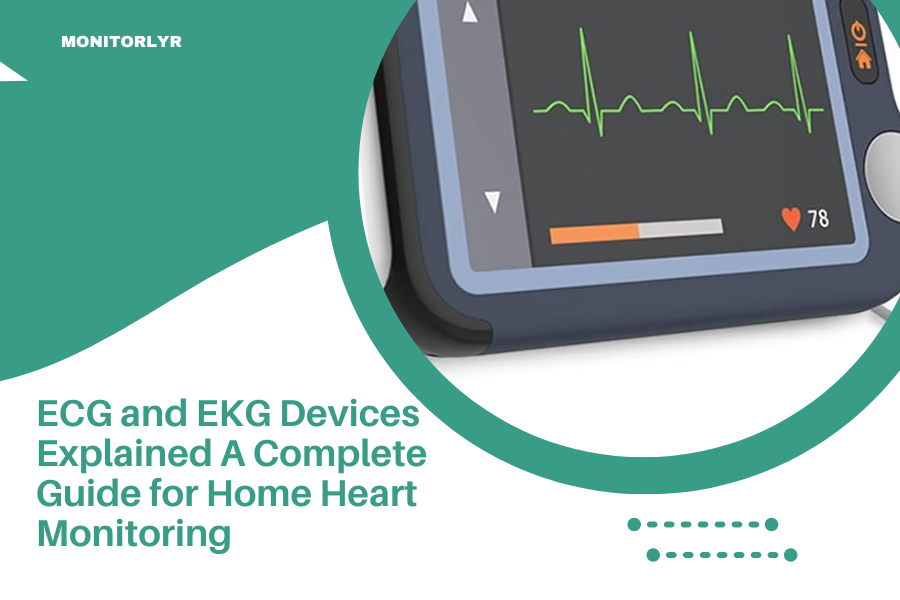
An ECG measures your heart’s electrical activity through sensors placed on your skin, recording the rhythm, rate, and strength of electrical signals as they travel through your heart muscle. These…
ECG and EKG refer to the exact same medical test – there is no difference between them except the letters used. The different abbreviations come from language origins: ECG uses…
ECG and EKG devices are no longer limited to hospitals and clinics. Many people now use these devices at home to better understand their heart health. However, they are not…
ECG and EKG devices are widely used for at home heart monitoring, but many people wonder how accurate these devices really are. Understanding their accuracy, limitations, and proper use can…
ECG and EKG devices have become increasingly popular as people look for convenient ways to monitor heart health at home. These devices allow users to track heart rhythm, detect irregularities,…