Fitbit Sense 2 ECG Review: Worth It? (November 2026)
The Fitbit Sense 2 offers an ECG app for recording a spot check of your heart rhythm. It can help you look for signs of atrial fibrillation, but it cannot diagnose a condition or replace medical care.
On this page (7 sections)
The Fitbit Sense 2 ECG app records a short heart rhythm check that may help identify signs of atrial fibrillation (AFib). It is a useful smartwatch feature for spot checks, but it does not diagnose heart disease or replace a clinician’s assessment.
The Sense 2 may fit if you want an ECG app on your wrist along with daily activity and health tracking. Check that ECG is available in your region and that your phone and account meet Fitbit’s requirements before relying on it.
What does the Fitbit Sense 2 ECG do?
The Sense 2 ECG app takes a single-lead recording of your heart rhythm during a brief, guided check. Its purpose is to look for signs of AFib, an irregular rhythm that can raise the risk of stroke.
The app does not continuously record an ECG throughout the day. You open it and follow the on-screen steps when you want a reading, so it is best understood as an occasional check rather than ongoing heart monitoring.
If you’re comparing Fitbit models, see which Fitbit devices have ECG. Our guide to what ECG on Fitbit means explains how the feature works across compatible devices.
Fitbit Sense 2 ECG review: what stands out?
The Sense 2’s main ECG benefit is having a guided rhythm check on a smartwatch you can wear during normal daily routines. The ECG feature sits alongside GPS, heart rate tracking, stress sensing, and a skin temperature sensor.
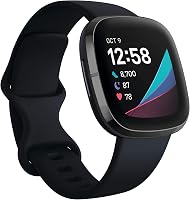
Fitbit Sense Health & Fitness Smartwatch W/GPS: Best for wrist-based ECG checks

A Fitbit smartwatch with an ECG feature, GPS, heart rate tracking, and stress sensing. It may suit you if you want an ECG app alongside everyday activity and health tracking.
That mix can be useful if you want health and activity tools together. The ECG itself remains a spot check, so it won’t show every rhythm change or explain why an irregular rhythm occurred.
Fitbit Sense 2 ECG benefits
The Sense 2 ECG may help you notice a possible AFib pattern and save a result to discuss with a clinician. For someone tracking a known concern, that can add context to a conversation about symptoms and next steps.
The watch also includes built-in GPS, a microphone and speaker, and notifications for calls, texts, calendar events, and apps. Its battery life is listed as up to 6+ days, though actual use can vary with settings and features.
Fitbit Sense 2 ECG limitations
A watch ECG is not the same as a diagnostic workup. It can’t detect every heart rhythm problem, rule out a heart attack, or assess the full range of heart activity that a clinician may evaluate.
A reading can also be inconclusive. Movement, loose fit, or poor skin contact may interfere with the recording, and you should not delay care to repeat a watch check if you feel seriously unwell.
How do you take an ECG on Fitbit Sense 2?
To take an ECG, open the ECG app and follow its prompts while staying still. For another Fitbit workflow, see the Fitbit Charge 6 ECG guide.
The app guides you through positioning your fingers and holding the watch so it can record a short sample.
Wear the watch snugly enough to maintain contact, but not so tight that it becomes uncomfortable. Sit down, rest your arms, and avoid talking or moving during the reading.
After the check, the app classifies the result. Follow its instructions for saving or sharing the report, and use it as information for a healthcare professional rather than a diagnosis.
Device eligibility and setup can affect access. Review Fitbit’s current instructions for the Sense 2 and check that the app is available where you live.
How accurate is the Fitbit Sense 2 ECG?
The Sense 2 ECG can be useful for screening for signs of AFib, but it has limits and cannot confirm or exclude every heart problem. Accuracy depends on the quality of the recording and on what rhythm is present during that brief check.
The watch captures a single lead, while medical ECG testing can use more leads and may be paired with other assessments. A result labeled normal does not mean every rhythm is normal, and an inconclusive result does not by itself confirm a health problem.
Read our closer look at how accurate a Fitbit ECG sensor is for help understanding what a watch reading can and can’t tell you. If you’re choosing between Fitbit wearables, our Fitbit Charge 6 ECG accuracy guide compares the same kind of feature on another device.
What should you do with an ECG result?
Treat an ECG result as a record to discuss with a healthcare professional, especially if the app detects signs of AFib or gives repeated inconclusive results. Save the report and note any symptoms or the time they occurred.
A watch result alone cannot tell you what treatment you need. A clinician can decide whether further testing is appropriate based on your health history, symptoms, and other information.
Seek urgent care for severe or sudden symptoms such as chest pain, trouble breathing, fainting, or weakness. Don’t use a normal watch reading as a reason to wait when symptoms may be an emergency.
Should you choose Sense 2 or another ECG monitor?
Choose the Sense 2 if you want an ECG check built into a smartwatch that also tracks activity and other health measures. Consider a dedicated monitor if your clinician recommends a different kind of recording or you need information the watch cannot provide.
A smartwatch prioritizes convenience and everyday wear. A dedicated ECG device may suit someone who needs a specific format or workflow, but you should confirm that it meets your clinician’s needs before buying.
For another Garmin option, see Venu 2 ECG support.
Compare options in our best ECG monitor Fitbit Sense alternative guide. For background on how a clinical 12-lead ECG is used, see our separate explainer.
Is the Fitbit Sense 2 ECG worth it?
The Fitbit Sense 2 ECG is worth considering if you want convenient, occasional rhythm checks as part of a broader smartwatch. Its value depends on your need for that feature, its availability where you live, and your understanding of what a single-lead reading can show.
Choose the Sense 2 if a wrist-based ECG app and everyday tracking suit your routine. Choose another monitor if a clinician recommends a different type of recording, and seek medical care for symptoms rather than relying on a watch result.
Frequently asked questions
Does the Fitbit Sense 2 have ECG?
Yes. Fitbit Sense 2 has an ECG app that records a short heart rhythm check when you follow the app's instructions.
ECG availability can depend on your location, age, and device setup.
It is intended to help identify signs of atrial fibrillation, not to diagnose a heart condition or replace a clinician's evaluation.
How accurate is the Fitbit Sense 2 ECG?
A Fitbit ECG result is a single-lead recording intended to help identify signs of atrial fibrillation, and it cannot rule out other heart problems. A result can also be inconclusive or affected by movement or poor contact.
For more on accuracy and limits, see our guide to Fitbit ECG sensors and discuss symptoms with a clinician.
Can Fitbit Sense 2 ECG detect a heart attack?
No. The Sense 2 ECG app is not designed to detect a heart attack, and a normal result does not rule one out.
If you have chest pain, trouble breathing, fainting, or other severe or sudden symptoms, seek emergency care rather than waiting for a watch reading.
Is the Fitbit Sense 2 ECG a substitute for a medical ECG?
No. A wrist ECG is a limited, single-lead snapshot, while a clinician may use different tests to assess symptoms and heart activity.
Use the watch as a source of information to discuss with a health professional, not as a replacement for a medical evaluation.