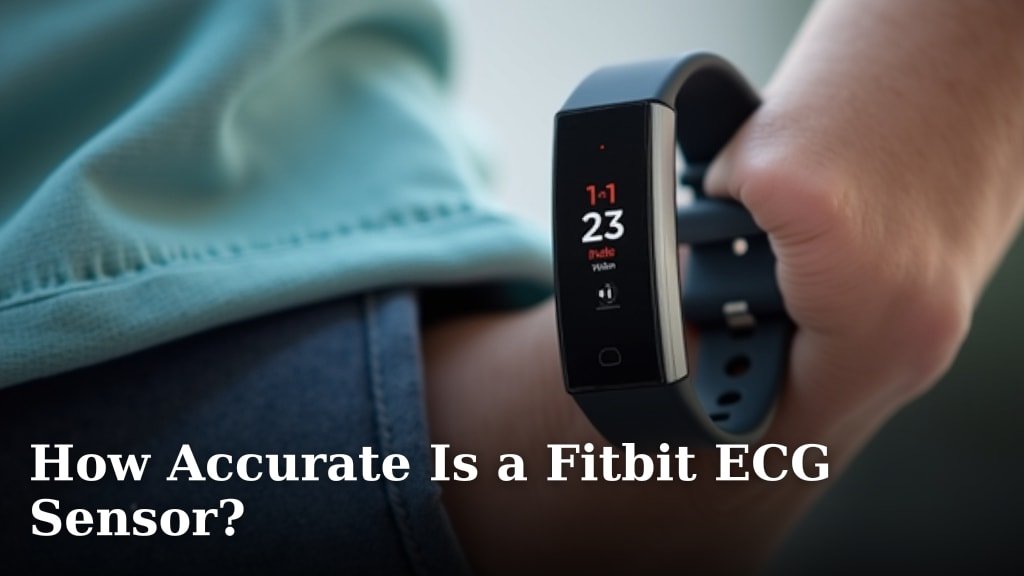
How Accurate Is the Fitbit Charge 6 ECG?
Fitbit Charge 6 ECG accuracy is best for screening rhythm patterns during a clean, still recording, not for diagnosing a heart condition. Fit, contact, movement, and heart rhythm itself affect the trace, so a poor recording says little and a clear one still needs medical context.
On this page (9 sections)
- Is the Fitbit Charge 6 ECG accurate enough to trust?
- What does a Fitbit ECG actually measure?
- Which Fitbit models have ECG, and how do they differ?
- How does fit affect ECG accuracy on the wrist?
- Why does movement ruin a Fitbit ECG recording?
- What heart rates and rhythms affect accuracy?
- How accurate is a Fitbit ECG for AFib screening?
- How often should you take an ECG, and when should you worry?
- What tips improve Fitbit Charge 6 ECG recording quality?
Fitbit Charge 6 ECG accuracy is good enough for occasional rhythm screening when you get a clean trace, but it is not clinical grade. A wrist device records from the wrist and fingers, so motion and contact matter more than on a hospital machine.
Think of it as a signal to share with a clinician, not as a diagnosis you can make alone.
That limit shapes every result. A clear trace can show heart rate and rhythm pattern for that short window.
A noisy or inconclusive trace tells you only that the recording failed. Neither one, on its own, proves your heart is healthy or unwell.
Is the Fitbit Charge 6 ECG accurate enough to trust?
It is trustworthy for pattern screening, not for ruling out disease. The Charge 6 records a single lead ECG, while a clinic ECG uses multiple electrodes placed on the chest, arms, and legs.
Fewer leads mean less information about the heart's electrical activity.
Accuracy also depends on the question you ask. A clean recording may show a regular rhythm or an irregular pattern clearly.
It cannot measure everything a full ECG can, and it only covers the seconds while you record.
We checked how wrist ECGs are positioned in general. They are screening tools meant for home use between medical visits.
That role still has value if you understand it and act on symptoms or repeated flags.
For a broader look at sensor limits, read how accurate is a Fitbit ECG sensor. To learn the basic terms first, see what is ECG on Fitbit.
What does a Fitbit ECG actually measure?
It measures the timing and shape of the heart's electrical signal over a short recording. The app turns that signal into a trace you can view, usually with heart rate and a rhythm classification.
You are not getting a continuous 24 hour ECG from a spot check. The device captures a brief sample, so a rhythm problem that happens later will not appear in that sample.
Absence of a flag in one recording does not mean nothing happened before or after.
The trace quality decides how much you can learn. A flat, shaky, or broken line gives little reliable information.
A sharp, repeating pattern is easier for the app to classify, and easier for a clinician to review later.
Fitbit also tracks heart rate, SpO2, and temperature through other sensors. Those readings can add context, but they do not upgrade a poor ECG trace into a good one.
Each sensor has its own limits.
Which Fitbit models have ECG, and how do they differ?
Not every Fitbit with a heart rate sensor can record an ECG. A model needs the electrodes and software for an ECG, plus the classification features your region and app version support.
If you are comparing models, start with which Fitbit has ECG function. That check saves you from assuming a fitness band or watch can do a test it was not built to do.
The Fitbit Sense Health & Fitness Smartwatch W/GPS gives a useful comparison point. It measures 1.59 in by 1.59 in by 0.49 in and weighs 30 g, with ECG, stress sensing, skin temperature sensing, SpO2 monitoring, built in GPS, and an OLED touchscreen.
It is water resistant to 50 meters and Fitbit says battery life reaches 6 plus days.
Size matters for recording quality. A larger watch may sit differently on the wrist and offer a larger electrode surface, but a snug Charge 6 worn correctly can still produce a clean trace.
The model matters less than fit and stillness during the test.
How does fit affect ECG accuracy on the wrist?
A snug, stable band gives the electrodes steady contact, and loose contact creates noise. Your skin must stay in touch with the metal parts on the back of the Charge 6 during the recording.
Wear the band one notch tighter than for sleep or daily wear. It should not slide when you lift your arm, and it should not pinch or numb your wrist.
Wash and dry your hands and wrist before you start, and wait until your skin is fully dry. Sweat, lotion, and leftover water can all change contact.
Check that no hair, fabric, or debris sits between the sensor and your skin. Clean the sensor area with a dry cloth when it looks dirty.
Why does movement ruin a Fitbit ECG recording?
Movement adds muscle noise that can hide the heart signal. Wrist ECGs are more sensitive to arm motion than chest ECGs because the sensor sits on a moving limb.
Sit down before you start and rest both forearms on a table. Keep your elbows supported, your shoulders relaxed, and your fingers steady on the electrodes.
Talking, tapping your foot, or shifting in your chair can all add noise.
Do not hold your breath or hold your arm in a tense, raised position. A supported, relaxed arm gives a steadier trace.
If you feel a flutter or racing heart during a recording, note the time and symptoms, but do not chase a perfect trace while you feel unwell.
How should you sit during a Charge 6 ECG?
Sit upright with your arms supported and your body still for the full recording. Stand up slowly after you finish, especially if you felt dizzy or short of breath.
A chair with armrests or a table at a comfortable height works well. Rest your recording arm on the surface and keep the other arm still as well.
Tense muscles in either arm can add noise through the wrist.
Our step by step guide to take ECG on Fitbit Charge 6 walks through the exact hand position and timing. Read it before your first test so you do not waste recordings on setup mistakes.
What heart rates and rhythms affect accuracy?
Very fast or very irregular rhythms are harder for a wrist ECG to classify. The app looks for repeating patterns, and a heart that changes speed quickly gives it less to work with.
A resting heart rate in a calm state usually gives a steadier trace than a rate recorded right after stairs, coffee, or stress. If you want a baseline, sit quietly for a few minutes first.
That wait improves both contact and rhythm stability.
An irregular rhythm is not automatically a failed recording. It may be the very pattern you need to capture.
The problem is that the app may mark it inconclusive when the signal is messy, even if an irregular rhythm is present.
That is why repeated inconclusive results deserve attention. One failed test often means setup.
For model-specific steps, see Fitbit Charge 5 ECG troubleshooting.
Several failed tests, especially with symptoms, mean you should seek medical review rather than keep retrying at home.
How accurate is a Fitbit ECG for AFib screening?
It can flag possible AFib, but a flag or a normal result is not a diagnosis. Screening means it can spot a pattern worth checking, not prove what caused it.
AFib can come and go, so a single normal recording cannot rule it out. For Fitbit-specific limits, read whether Fitbit ECG can detect AFib.
A single irregular recording also cannot prove AFib, because motion, a fast rate, or another rhythm can look irregular on a short trace.
If the app flags a possible irregular rhythm, save the trace, note the time, and contact a clinician. Bring your symptoms, medications, and medical history to that visit.
A clinician can decide whether you need a longer recording, a clinic ECG, or other testing.
If you want a comparison with another wrist device, see how accurate is an Apple Watch ECG. The core limits are similar, since both use wrist recordings rather than a full clinic setup.
How often should you take an ECG, and when should you worry?
Take a recording when you have a clear reason, and seek care promptly for symptoms. A weekly baseline at rest can help you learn your normal trace, but daily spot checks add little for most people.
Record during symptoms only if you can do so safely and without delaying care. Chest pain, severe shortness of breath, fainting, or a racing heart that will not settle needs urgent medical help, not a home test first.
Note the date, time, heart rate, symptoms, and what you were doing. That short log helps a clinician far more than a folder of unlabeled traces.
Charging also affects your routine, since a dead battery during symptoms is a missed chance to capture useful information. Our guide to how to charge an ECG monitor covers cables, ports, and habits that keep a device ready.
What tips improve Fitbit Charge 6 ECG recording quality?
Clean contact, a snug band, still arms, and a calm minute before you start give the best results. Those four steps fix most failed recordings.
Before each test, charge the device, clean the sensor, tighten the band, sit down, and rest your arms. Stay still until the app finishes, and if it reports poor contact, stop and adjust rather than restarting right away.
Retry once after fixing the cause. If the second trace is also noisy, try again later when you are calmer, since repeated retries rarely fix a fit or movement problem.
Consistency beats perfection for fitbit charge 6 ecg accuracy in daily use. Use the same chair, band position, and calm routine, save clean traces, and bring the log to your clinician.
Pick the Charge 6 for portable rhythm screening if you will follow up on flags, and pick a clinic ECG when you need a diagnosis or answers about ongoing symptoms.
Frequently asked questions
Is a Fitbit Charge 6 ECG as accurate as a medical ECG?
No. A wrist ECG uses fewer leads and a shorter recording than a clinic ECG, so it can show useful rhythm information but it cannot replace a full medical test.
Fit, stillness, and signal quality change what the trace can show, and a doctor should review concerns.
Why does my Fitbit ECG show an inconclusive result?
Movement, loose fit, dry skin, a fast heart rate, or an irregular rhythm can make the signal hard to read. Rest briefly, tighten the band, clean and dry your skin, keep your arm still, and try again.
Repeated inconclusive results or symptoms need medical advice.
Can a Fitbit ECG detect AFib?
It can sometimes flag an irregular rhythm that may be AFib, but a flag is not a diagnosis. A wearable screening result gives you a reason to seek clinical review, not proof that AFib is present or absent.
Bring the trace and your symptoms to a clinician.
How should I take a Charge 6 ECG for the best signal?
Sit down, rest your arms on a table, wear the band snug, and stay still for the full recording. Keep your fingers on the electrodes as your device directs, avoid talking or moving, and retry if the app reports poor contact.
Follow the steps in how to take an ECG on the Charge 6.