Why Do Doctors Recommend a Home ECG Monitor for AFib Patients?
On this page (8 sections)
Doctors recommend a home ECG monitor for AFib patients because it helps track heart rhythm more often and provides critical data between doctor visits. This allows for a more accurate diagnosis and better management of your condition. It’s like having a personal heart health watchdog.
Having a home heart monitor means you can easily monitor your heart whenever symptoms appear or on a regular schedule. This consistent monitoring helps doctors spot subtle changes they might miss during infrequent appointments. It’s a powerful tool for staying ahead of potential heart rhythm issues and ensures you receive the right care.
- Home ECGs provide frequent heart rhythm data.
- They help doctors make better AFib diagnoses.
- You can track symptoms as they happen.
- This leads to more personalized treatment plans.
Let’s walk through exactly why your doctor might suggest this for you and what benefits it can bring to your AFib management.
Why Your Doctor Recommends a Home ECG for AFib Management
When you have Atrial Fibrillation (AFib), managing your heart health is a top priority. You might be wondering why your doctor is suggesting a home ECG monitor. Think of it as an upgrade to your heart health toolkit. It’s a way to get a clearer picture of what’s happening between those important, but often infrequent, doctor’s appointments. This technology helps capture real-time data about your heart’s rhythm, which can be a game-changer for your treatment plan.
The main reason is simple: more information leads to better care. Your doctor needs to understand your AFib patterns. Are there specific times when your heart rhythm is irregular? Are your symptoms linked to these changes? A home ECG device can help answer these questions. It allows for frequent monitoring, giving your doctor the data they need to make informed decisions about your health.
The Power of Frequent Heart Rhythm Data
Your heart doesn’t always behave the same way. AFib can be paroxysmal, meaning it comes and goes. This makes it tricky to diagnose and manage. An ECG done only at the doctor’s office might miss an episode entirely. A home ECG monitor changes this. It lets you record your heart’s activity whenever you feel symptoms or on a schedule your doctor sets. This provides a much **richer dataset** for analysis.
Consider this: You might feel palpitations for a few minutes and then they disappear. If you can’t capture that on an ECG during your next appointment, the episode might seem less important. But for your doctor, those few minutes of data can be critically important. It helps them understand the frequency, duration, and specific rhythm of your AFib episodes. This detailed record is far more telling than just your memory of the event.
What Kind of Data Does a Home ECG Provide?
Home ECG monitors, sometimes called personal ECG devices or portable ECGs, typically record your heart’s electrical activity. Learn how portable monitors detect AFib at home. They can identify:
- Heart Rate: How fast or slow your heart is beating.
- Heart Rhythm: Whether your heart is beating regularly or irregularly.
- AFib Detection: Many devices are specifically designed to detect the irregular rhythm characteristic of AFib.
- Other Arrhythmias: Some advanced monitors can also flag other types of abnormal heart rhythms.
The accuracy of these devices has improved significantly. While not always a replacement for a full 12-lead ECG done in a hospital, they offer excellent insights for personal monitoring and initial assessment. Many are FDA-cleared for detecting AFib (Centers for Disease Control and Prevention).
Improving Diagnosis and Treatment Accuracy
Diagnosing AFib can sometimes be a puzzle. Doctors often rely on a patient’s reported symptoms and the results of ECGs taken during office visits. If your AFib episodes are infrequent, you might not have an episode during your appointment. This can lead to a delay in diagnosis or an incomplete understanding of your condition. Diagnosing AFib can sometimes be a puzzle, but a home ECG monitor acts as an extended diagnostic tool.
A home ECG monitor acts as an extended diagnostic tool. By capturing data over days or weeks, your doctor gets a clearer picture of your heart’s true behavior. This reduces the chances of misdiagnosis or delayed treatment. It’s like giving your doctor X-ray vision into your heart’s daily life.
How Home ECGs Help Your Doctor Refine Your Treatment
Once diagnosed, managing AFib involves finding the right treatment plan. This often includes medication and lifestyle adjustments. The effectiveness of these treatments can change over time. A home ECG allows your doctor to monitor the impact of treatment more closely.
For example, if you’re on medication to control your heart rate or prevent blood clots, the home ECG can show if the medication is working effectively. It can reveal if AFib episodes are becoming less frequent or less severe. Conversely, if the monitor shows that episodes are still frequent or lasting longer, your doctor knows it’s time to adjust your medication or treatment strategy.
This is especially important for preventing serious complications like stroke. AFib increases your risk of stroke because blood can pool in the heart’s upper chambers, forming clots. By keeping your AFib well-managed and your heart rhythm as regular as possible, you lower this risk (National Institutes of Health).
Empowering You as a Patient
Having a home ECG monitor puts you more in the driver’s seat of your health journey. It’s not just about passively receiving care; it’s about actively participating. When you can see your heart’s rhythm and understand its patterns, you become a more informed patient.
This device can help you correlate your symptoms with your heart rhythm. Do you feel tired after a long period of irregular beats? Does stress seem to trigger more episodes? By tracking this information, you can have more productive conversations with your doctor. You can point to specific data, not just general feelings, which helps your doctor understand your experience better.
Understanding Your Triggers and Symptoms
One of the most empowering aspects of a home ECG is its ability to help you identify your personal AFib triggers. Many people with AFib have triggers that can be specific to them. These can include:
- Certain foods or drinks (like caffeine or alcohol)
- Stress or anxiety
- Lack of sleep
- Dehydration
- Certain physical activities
By using your home ECG monitor regularly, you can start to notice patterns. If you see a spike in irregular heartbeats after having a glass of wine, for example, you can decide to limit your intake. This kind of self-awareness is incredibly powerful for managing AFib long-term. It moves you from reacting to AFib to proactively managing it.
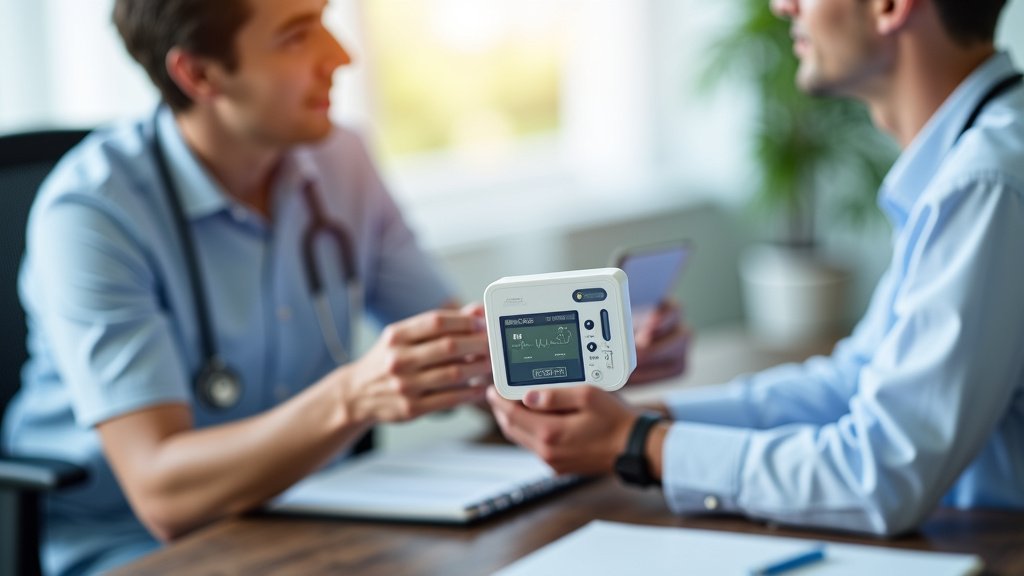
What to Expect When Using a Home ECG Monitor
Using a home ECG monitor is usually straightforward. Most devices are designed for ease of use. You’ll typically place electrodes on your chest or hold the device against your skin.
The device will then record your heart’s electrical signals. Many devices connect wirelessly to a smartphone app. This app stores your readings and often analyzes them. You can usually share these reports directly with your doctor. Some devices offer alerts if they detect an abnormal rhythm. This real-time feedback can be reassuring, but it’s important to discuss what those alerts mean with your healthcare provider.
Different Types of Home Monitoring Devices
There are a few types of devices available, and your doctor will likely recommend one based on your needs:
| Device Type | How it Works | Frequency of Monitoring | Typical Use Case |
|---|---|---|---|
| Single-Lead ECG Devices | Uses two contact points (e.g., hands or chest). Records a single line of ECG data. | On-demand or scheduled recordings. | Detecting AFib episodes as they happen. Good for symptomatic monitoring. |
| Multi-Lead ECG Devices | Uses multiple electrodes to capture more detailed ECG data, similar to a clinical ECG. | On-demand or scheduled. | More comprehensive rhythm analysis, identifying more subtle issues. |
| Wearable Monitors (Patch or Watch) | Worn continuously on the body or as a watch. Records data passively over time. | Continuous or frequent interval recording. | For patients with very frequent or asymptomatic AFib. Provides extensive data. |
Regardless of the type, the goal is the same: to gather consistent, actionable data about your heart health. It’s important to follow the instructions carefully to ensure the readings are accurate. Your doctor will guide you on which device is best suited for your specific condition and how often you should be recording.
Making the Most of Your Home ECG Monitor: A Checklist
To ensure you and your doctor get the most benefit from your home ECG monitor, consider these points:
- Understand Your Device: Read the manual and know how to use it correctly.
- Record When Symptomatic: If you feel palpitations or other AFib symptoms, use the monitor immediately.
- Follow Your Doctor’s Schedule: If your doctor recommended specific times or frequencies for recording, stick to them.
- Keep a Symptom Log: Note down how you feel when you take a reading. This context is vital.
- Ensure Good Contact: Make sure electrodes are clean and have good skin contact for accurate readings.
- Share Data Regularly: Promptly send your recorded data to your doctor as instructed.
By being diligent with your home ECG monitor, you’re actively contributing to your own care. You’re providing your doctor with the best possible information to help you manage your AFib effectively and live a healthier life. It’s a partnership in your heart health.
Conclusion
Your doctor recommending a home ECG monitor is a powerful step in managing your AFib. It provides a continuous stream of data that paints a clearer picture of your heart’s rhythm between appointments. This means more accurate diagnoses and finely-tuned treatment plans tailored just for you. By actively participating in your monitoring, you gain a deeper understanding of your condition and can have more productive conversations with your doctor. Take the next step by discussing the possibility of a home ECG monitor with your healthcare provider to gain better control over your heart health.
Frequently Asked Questions
How often should I use my home ECG monitor?
Your doctor will provide specific guidance on how often to use your home ECG monitor. Generally, you’ll be advised to record readings when you experience symptoms or at scheduled intervals they set. Following their instructions ensures you gather the most relevant data for your condition.
Can a home ECG device completely replace a doctor’s ECG?
A home ECG monitor is an excellent tool for frequent monitoring and initial detection, but it typically does not replace a comprehensive 12-lead ECG performed in a clinical setting; your doctor may also use Holter monitoring to capture patterns over time. It provides essential data for tracking, while the doctor’s ECG offers a more detailed diagnostic view.
What should I do if my home ECG monitor detects AFib?
If your home ECG monitor indicates AFib, the first step is to note the reading and any symptoms you’re experiencing. Then, contact your doctor’s office as soon as possible to report the findings and discuss the next steps they recommend for your care.
Will I be able to share the readings from my home ECG with my doctor easily?
Most modern home ECG monitors are designed to make sharing data simple. Many connect to smartphone apps that store your readings and allow for easy export or direct sharing with your healthcare provider, either digitally or by printing reports.
Are home ECG monitors difficult to use for someone not tech-savvy?
Manufacturers aim for ease of use. Most home ECG devices have straightforward instructions for taking readings, and often connect wirelessly to user-friendly apps. Your doctor or a device representative can often provide hands-on guidance to help you get started.