Is It Safe to Use a Home ECG Monitor Daily?
On this page (3 sections)
Yes, it is generally safe to use a home ECG monitor daily, especially with your doctor’s guidance. These devices are designed for convenient heart rhythm tracking in your own home. For pregnancy-specific questions, see our guide to using a home ECG monitor while pregnant. They can provide valuable information about your heart health between doctor visits.
Many people find daily home ECG monitoring helpful for managing certain heart conditions. It allows you to quickly detect potential irregularities and share them with your healthcare provider. This can offer peace of mind and improve your overall care plan.
- Daily home ECG use is generally safe.
- Always follow your doctor’s recommendations.
- Monitors help track heart rhythms conveniently.
- They can detect irregularities early.
- This provides valuable data for your doctor.
Let’s look closer at why daily home ECG monitoring can be a great tool for your health, what to consider, and how to use these devices effectively.
Is Daily Home ECG Monitoring Safe? Yes, Here’s Why
Yes, routinely using a home ECG monitor is generally considered safe. These devices are designed for personal use, allowing you to monitor your heart’s electrical activity from the comfort of your home. They are non-invasive and pose minimal risk.
The primary purpose of these monitors is to help you track your heart rhythm. This information can be incredibly helpful for you and your doctor. It bridges the gap between office visits, giving you a clearer picture of your heart health over time.
Understanding How Home ECG Monitors Work
How exactly do these devices give you peace of mind? It’s simpler than you might think. Home ECG monitors work by detecting the electrical signals your heart produces. These signals are what make your heart beat.
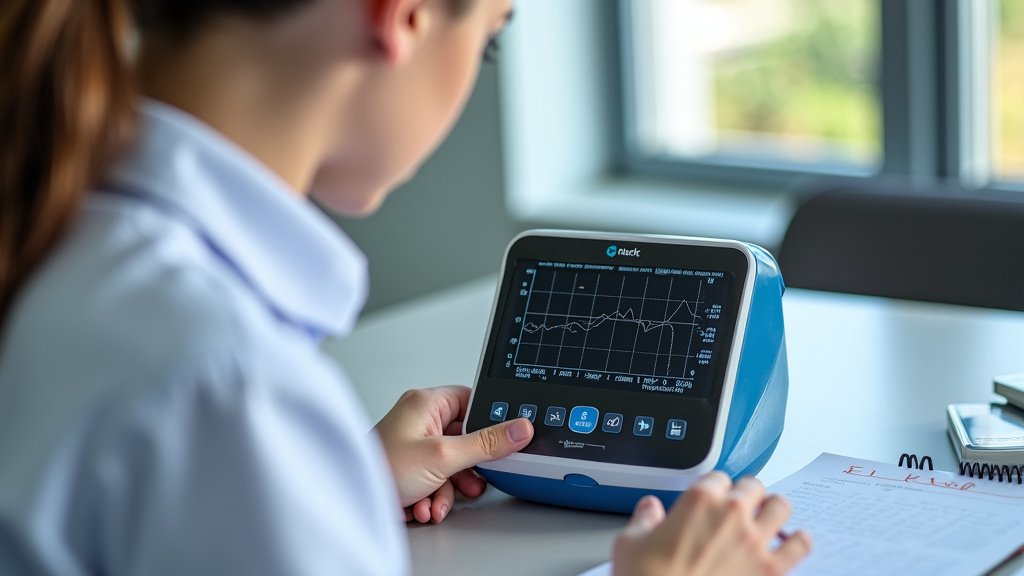
The device then translates these signals into a waveform. This waveform shows your heart’s rhythm. You’ll typically place your fingers or chest on sensors. The process is quick, usually taking less than a minute. It’s a snapshot of your heart’s activity at that very moment.
Types of Home ECG Monitors
You might be wondering what kind of home ECG monitor is right for you. Compare affordable ECG monitors for daily use to see which features fit your budget. There are a few main types available today. Each offers slightly different features and levels of convenience.
- Single-lead monitors: These are often small, portable devices. You typically hold them with your fingers or place them on your chest. They record one “lead” or view of your heart’s electrical activity. Many people find these very easy to use for daily checks.
- Wearable patches: Some devices come as adhesive patches you wear for a longer period, like a few days or weeks. These offer continuous monitoring. They’re great for catching irregular rhythms that don’t happen often.
- Smartwatch integration: Many modern smartwatches now include ECG capabilities. These are incredibly convenient. You can take an ECG reading almost anywhere, anytime, directly from your wrist.
No matter the type, they all aim to provide you with basic heart rhythm data. This data can show if your heart is beating regularly or if there are any unusual patterns.
Benefits of Consistent Monitoring
So, beyond just being safe, what’s in it for you? Consistent monitoring with a home ECG offers several real benefits. It empowers you to take a more active role in your own health management.
Early Detection of Irregularities
Perhaps the biggest advantage is the potential for early detection. Many heart conditions, like atrial fibrillation (AFib), can be intermittent. This means they don’t always show up during a doctor’s visit.
By monitoring daily, you increase your chances of catching an abnormal rhythm when it occurs. Imagine if you only visit your doctor once a year. What happens if an irregular beat happens in between those visits? A home monitor helps fill that gap (Cleveland Clinic).
This early warning can be crucial. It allows your doctor to diagnose and treat conditions sooner. Early treatment often leads to better health outcomes.
Providing Valuable Data for Your Doctor
When you see your doctor, they get a snapshot of your health. But your home ECG monitor provides a much larger picture. You can share your recorded data directly with them.
This ongoing record gives your doctor more information to work with. They can see trends over time. They can understand if a medication is working or if your condition is changing. This makes your doctor’s assessment more accurate and personalized.
Peace of Mind and Empowerment
Knowing you’re actively monitoring your heart can be incredibly reassuring. For many, it reduces anxiety about their heart health. You feel more in control, which is a powerful feeling.
If you experience symptoms like palpitations or dizziness, you can immediately take a reading. This gives you concrete information rather than just a feeling. It’s a tool that helps you understand your body better.
Important Considerations for Daily Use
While safe, there are some important things to keep in mind when using a home ECG daily. These considerations ensure you get the most out of your device and use it responsibly.
Always Consult Your Doctor First
This is perhaps the most critical piece of advice: always talk to your doctor before starting daily home ECG monitoring. Your doctor can help you determine if it’s the right tool for you.
They can also guide you on how often to monitor and what to look for. They’ll explain what types of readings warrant a call to their office. Think of your doctor as your co-pilot in this journey.
Self-diagnosis is never a good idea. Your monitor is a data-gathering tool, not a diagnostic one. It helps your doctor make informed decisions.
Understanding Device Limitations
Home ECG monitors are fantastic, but they have limitations. They are not a substitute for a full, clinical ECG performed in a medical setting. They typically provide a simplified view of your heart’s activity.
They are excellent at detecting common rhythm irregularities, especially AFib. However, they may not catch all types of heart conditions. For example, they usually don’t detect a heart attack directly, though they can show certain changes (National Institutes of Health).
Remember, these devices are designed to screen and alert, not to diagnose complex issues. Always keep that distinction clear in your mind.
Proper Use and Interpretation
To get reliable readings, you need to use your monitor correctly. Read the instructions carefully. Most devices come with clear guidelines on placement and posture.
Don’t try to interpret complex ECG readings yourself. That’s your doctor’s job. Focus on understanding whether the device reports a “normal” rhythm or an “irregularity.” If it flags something unusual, that’s your cue to share it with your healthcare provider.
Many apps that accompany these devices will provide a basic interpretation. Trust those simple indicators. Don’t go down an internet rabbit hole trying to understand every squiggle on the tracing.
When to Act on Your Daily Readings
Using your monitor daily is great, but knowing when to act on a reading is even better. This takes some of the guesswork out of your monitoring routine.
Checklist for Action
What should you do if your monitor shows something out of the ordinary? Here’s a simple checklist to guide you:
- Did the monitor report an irregular rhythm? Most devices will clearly indicate this.
- Are you experiencing new or worsening symptoms? Listen to your body in conjunction with the reading.
- Is this an unusual finding for you? If your doctor has told you what to expect, compare.
- Did you follow the instructions for taking the reading? Sometimes user error can cause an odd reading.
- Do you have a pre-existing condition that requires immediate attention for certain readings? Follow your doctor’s specific advice.
If you check off one or more of these, it’s time to reach out. Don’t hesitate. It’s always better to be safe than sorry.
Differentiating Normal Variations from Concerns
Sometimes your heart rate might fluctuate based on activity or stress. This is normal. Your monitor might pick up a slightly faster or slower beat, but still classify it as “normal rhythm.”
The key is to look for the device’s explicit warnings about “irregularities” or “possible AFib.” These are the red flags. Don’t worry about minor heart rate variations unless the device itself flags a problem.
Comparing Home ECG with Other Monitoring Methods
How does a home ECG fit into the larger landscape of heart monitoring? It complements other methods, offering distinct advantages.
| Monitoring Method | Typical Use Case | Frequency | Key Advantage |
|---|---|---|---|
| In-office ECG | Routine check-ups, acute symptoms | Infrequent, as needed | Comprehensive, full diagnostic view |
| Holter Monitor | Detecting intermittent issues | 24-48 hours continuous | Detailed continuous recording over short period |
| Event Monitor | Symptoms that occur rarely | Weeks-months, patient-activated | Records only when symptoms occur |
| Home ECG Monitor | Daily rhythm checks, symptom correlation | Daily, or as needed | Convenient, frequent self-monitoring |
As you can see, your home ECG monitor fills a unique role. It provides regular, self-initiated checks. This is something the other methods typically don’t offer in a convenient, daily format.
It acts as an excellent early warning system. It’s your personal heart rhythm diary. This diary can provide valuable pages to your doctor’s overall understanding of your heart’s story.
Conclusion
Using a home ECG monitor daily is generally safe and a smart move for your heart health; read more about using an ECG monitor every day. With your doctor’s guidance, these devices offer convenient tracking and can alert you to potential issues early. Remember, they are tools to support your health, not to replace professional medical advice.
By understanding how they work, their benefits, and their limitations, you can use them effectively. Communicate regularly with your doctor about your readings. Take this step to better monitor your heart and feel more confident about your well-being.
Frequently Asked Questions
Can a home ECG monitor detect all heart problems?
No, home ECG monitors are excellent for detecting common rhythm irregularities like AFib. However, they may not detect all types of heart conditions. They are a screening tool, not a comprehensive diagnostic device for every possible heart issue.
What’s the difference between a home ECG and an EKG at the doctor’s office?
A home ECG typically provides a single-lead view of your heart’s activity, focusing on rhythm. An EKG (electrocardiogram) at the doctor’s office uses multiple leads for a more detailed and comprehensive diagnostic view of your heart’s electrical patterns.
Should I stop my heart medication if my home ECG shows a normal rhythm?
Absolutely not. You should never adjust or stop your prescribed heart medication based solely on home ECG readings. Always discuss any changes to your treatment plan with your doctor first.
How often should I share my home ECG readings with my doctor?
The frequency for sharing readings depends on your specific condition and your doctor’s advice. Some doctors prefer regular summaries, while others want to know immediately about any significant irregularities. Always clarify this with your healthcare provider.
Can stress or anxiety affect my home ECG readings?
Yes, emotional states like stress, anxiety, or even excitement can temporarily influence your heart rate and rhythm. It’s best to be relaxed when taking a reading to get the most accurate baseline data. Always mention these factors if you discuss an unusual reading with your doctor.


