Is an EKG Monitor Worth Buying?
On this page (3 sections)
Yes, an EKG monitor can be a worthwhile purchase for some people, especially those managing specific health conditions or seeking peace of mind. It offers convenient access to heart rhythm data at home, but it’s not a replacement for professional medical care.
We found that these devices provide a snapshot of your heart’s electrical activity. This can help you track changes over time or share data with your doctor. Understanding your heart’s health empowers you to make informed decisions.
- Home EKG monitors offer convenience for tracking heart rhythms.
- They are not a substitute for seeing your doctor.
- These devices can help identify irregular heartbeats.
- Data collected can be useful for your healthcare provider.
- Consider your personal health needs before buying one.
Let’s walk through everything you need to know about EKG monitors and whether one is right for you.
Assessing the Value of a Home EKG Monitor
A home EKG monitor can be very valuable for certain individuals, offering convenience and a deeper understanding of their heart rhythm.
Consider your health goals and existing conditions when deciding. Is it about monitoring a known issue, or just curious about your heart? We found that the right device depends on these personal needs.
Who Benefits Most from an EKG Monitor?
You might be wondering if you’re the ideal candidate for an EKG monitor. We found that certain groups gain the most from these devices.
Individuals with Known Heart Conditions
If you’ve been diagnosed with conditions like atrial fibrillation (AFib), an EKG monitor can be a powerful tool. AFib causes an irregular, often rapid heart rhythm (CDC).
Monitoring at home allows you to track episodes. You can then share this data with your doctor. This helps them adjust your treatment plan or understand your symptom triggers.
Those Experiencing Occasional Symptoms
Do you sometimes feel your heart flutter or skip a beat? These sporadic symptoms can be hard to catch during a doctor’s visit. A home EKG can help.
When symptoms strike, you can quickly record your heart’s activity. This recording could capture the irregularity in action. It gives your doctor a concrete piece of information, not just your description of a feeling.
People Focused on Wellness and Prevention
Perhaps you’re simply interested in your overall heart health. Many people use EKG monitors for peace of mind. It’s like having a quick check-up whenever you want.
While not a diagnostic tool, it can help you become more attuned to your body. You might notice patterns or feel more in control of your health journey.
Understanding How Home EKG Monitors Work
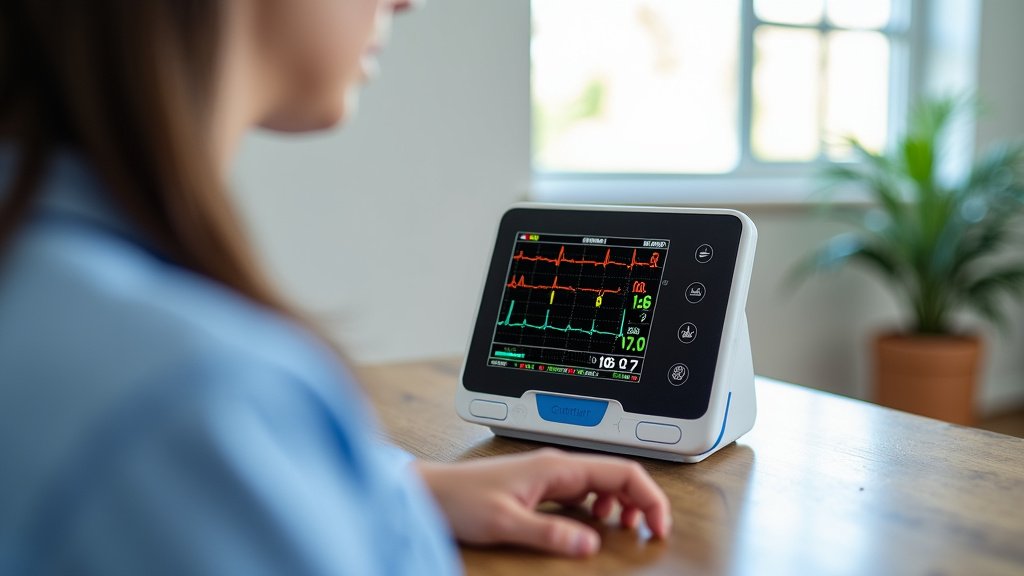
Home EKG, or ECG, monitors are designed to be user-friendly. They record the electrical signals of your heart.
Think of it like taking a quick snapshot of your heart’s activity. This snapshot shows the rate and rhythm. Most devices can store these readings for you.
The Technology Behind the Scan
Most personal EKG monitors use two or more electrodes. These electrodes detect electrical impulses from your heart through your skin.
When you place your fingers or chest on the device, it records a “lead” of your heart. Many models connect to a smartphone app. The app then displays the waveform and often interprets it (Mayo Clinic).
It’s important to remember these devices provide single-lead EKGs. This is different from the 12-lead EKGs you get in a clinical setting. A single lead offers a good overview but not the detailed picture a hospital EKG would.
Key Features to Look For
When shopping, consider features that match your lifestyle. Do you want something portable? Or something with advanced data sharing? Here’s a brief look at some common features:
- Portability: Some are small, pocket-sized devices.
- Connectivity: Most sync with smartphones via Bluetooth.
- App Integration: A good app makes data viewing and sharing easy.
- Battery Life: Important for convenience.
- Storage: How many readings can it save?
Comparing Home Monitors to Clinical EKGs
It’s vital to know the difference between what you record at home and what you get at the doctor’s office. They serve different purposes.
A home EKG is a convenient screening tool. A clinical EKG is a diagnostic tool performed by professionals.
| Feature | Home EKG Monitor | Clinical EKG (Hospital/Clinic) |
|---|---|---|
| Purpose | Monitoring, screening | Diagnosis, detailed analysis |
| Number of Leads | Usually 1 or 2 leads | 12 leads (standard) |
| Interpretation | Basic, often automated via app | By trained medical professional |
| Convenience | High, on-demand at home | Requires appointment |
| Cost | One-time purchase (variable) | Covered by insurance (doctor visit) |
You can see that they aren’t competitors. Instead, they work together. Your home monitor can prompt you to seek a clinical EKG if needed.
Making Sense of Your EKG Readings
Getting a reading is one thing; understanding it is another. Most apps provide some interpretation, but it’s not a diagnosis.
The app might tell you if your rhythm is “normal” or if it detects “possible AFib.” This information should always be discussed with your doctor.
Many experts say that sharing your EKG data with your healthcare provider is the most beneficial aspect. It gives them more information to work with, especially if your symptoms are infrequent (American Heart Association).
When to Contact Your Doctor
If your home monitor shows frequent irregularities, or if you feel unwell, contact your doctor promptly. Don’t wait.
A home EKG monitor is a guide, not a final answer. It empowers you with more information, but your doctor provides the expert medical opinion.
Potential Downsides and Limitations
While beneficial, an EKG monitor isn’t without its caveats. It’s smart to be aware of these.
They can sometimes detect “normal” variations that might cause unnecessary worry. Or they might miss complex issues only a multi-lead EKG could catch.
False positives or negatives can happen. This is why medical oversight is always essential. Never change your medication or treatment based solely on a home device reading.
Cost vs. Benefit: Is the Investment Worth It?
Prices for EKG monitors vary widely. Some simpler models are quite affordable, while advanced ones cost more.
When considering the cost, think about the peace of mind it offers. For some, being able to check their heart rhythm at any time is priceless.
For others, especially those with diagnosed conditions, it can be a tool that helps manage their health more effectively. This could potentially reduce ER visits or missed medical issues.
Your Personal Checklist for Deciding
Still on the fence? Here’s a quick checklist to help you decide if an EKG monitor is a good fit for you:
- Do I have symptoms of an irregular heartbeat?
- Am I managing a diagnosed heart condition like AFib?
- Do I want to track my heart health more closely for general wellness?
- Am I comfortable using technology and a smartphone app?
- Will I commit to sharing readings with my doctor?
- Have I discussed this purchase with my healthcare provider?
Answering these questions will guide you toward the right decision. Remember, it’s about making an informed choice for your health.
Conclusion
Deciding if an EKG monitor is for you comes down to your personal health journey. You’ve seen that these devices offer significant benefits, from tracking known conditions to providing peace of mind. They help you stay engaged with your heart health daily. Remember, they are a powerful adjunct to, not a replacement for, professional medical care. Always discuss your readings with your doctor. Consider your needs, research quality devices, and take this step to proactively manage your well-being. Your heart health is worth the attention.
Frequently Asked Questions
What’s the main difference between a home EKG and an Apple Watch EKG?
Both devices offer single-lead EKG readings. Apple Watch requires electrical contact with both wrists, typically, while many dedicated home EKG monitors use finger or chest placements. Dedicated monitors sometimes offer more advanced interpretation features or longer battery life. Both aim to detect irregularities like AFib.
Can a home EKG monitor detect a heart attack?
No, a home EKG monitor is not designed to diagnose a heart attack. If you experience symptoms like chest pain, shortness of breath, or discomfort, you should seek immediate medical attention by calling 911. These devices are for monitoring heart rhythm, not for emergency diagnosis.
How often should I use my home EKG monitor?
The frequency depends on your individual needs and your doctor’s recommendations. If you’re tracking specific symptoms, you might use it when symptoms occur. For general wellness, once a day or a few times a week might be sufficient. Always follow your healthcare provider’s advice.
Are home EKG monitors accurate enough to trust?
Reputable home EKG monitors are FDA-cleared and can accurately record your heart’s electrical activity for a single lead. While they detect common rhythm irregularities like AFib, they don’t provide the same detailed diagnostic information as a multi-lead clinical EKG. Always verify any concerning findings with your doctor.
Will my insurance cover the cost of a home EKG monitor?
Generally, health insurance plans do not cover the cost of consumer-grade home EKG monitors because they are considered elective wellness devices. For payment details, review the guide to FSA-eligible EKG monitors. Some medical-grade or prescribed monitors might be covered for specific conditions. You should check directly with your insurance provider for clarification.