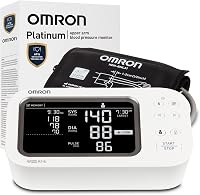
Omron 10 Series BP7465 Review: Worth It? (November 2026)
The Omron 10 Series BP7465 is best judged by its measurement workflow, cuff fit and connection needs. Confirm the exact US package, then choose the right replacement cuff or storage case for your setup.
On this page (10 sections)
- What does the Omron 10 Series review show?
- Is the BP7465 the right Omron 10 Series model?
- What makes the HEM-RML31 cuff useful?
- How should you prepare for repeatable home readings?
- Can connected readings replace a written record?
- Is the Zacurate 500 Series useful with a blood-pressure monitor?
- Does the co2CREA case help with Omron storage?
- Omron Platinum vs 10 Series: which should you choose?
- How do you use an Omron monitor correctly?
- Final verdict on the Omron 10 Series BP7465
The Omron 10 Series BP7465 deserves consideration when you want an upper-arm monitor for connected home measurements, but the exact US package and connection workflow should decide the purchase. Cuff fit matters just as much, because an incorrect cuff can make routine readings harder to interpret.
This review compares the BP7465 with three useful accessories and adjacent monitoring tools. It looks at what each option does well, where it adds limits and how it fits into daily home use.
The BP7465 suits a buyer who plans to take readings often rather than now and then. A regular routine helps patterns stand out over time and makes it easier to share useful information with a clinician.
It also suits someone who wants less manual record keeping. Connected readings can help when the app, phone and account steps work smoothly in your home setup.
Connection support varies by exact US package and model version. You should confirm the included features, app support and phone requirements before you treat connectivity as a reason to buy.
Cuff fit should be checked at the same time. Measure your bare upper arm and match it to the cuff range supplied or recommended for the monitor.
The HEM-RML31 is the large cuff option covered here for arms from 9 to 17 inches. The Zacurate 500 Series is a separate fingertip tool for oxygen and pulse checks, and it does not measure blood pressure itself.
The co2CREA case is for storage and travel rather than measurement. It helps when a specified Omron monitor needs a firm place to carry small accessories too.
What does the Omron 10 Series review show?
The Omron 10 Series BP7465 is most suitable for a home user who will follow a repeatable measurement routine and confirm the exact connection features before buying. Choose the monitor based on cuff fit, storage needs and how you plan to record readings.
A connected monitor can be useful when it reduces manual record keeping, but connection support is only helpful if it works with your phone and preferred health workflow. Check the current US instructions for pairing, app support and account requirements before treating connectivity as a deciding feature.
For background on choosing an upper-arm device, use this best blood pressure monitor buying guide. It explains the broader choices around cuff fit, measurement habits and home use.
Is the BP7465 the right Omron 10 Series model?
The right model is the one whose cuff, phone connection and storage setup match your routine. The BP7465 name identifies the review target, but you should verify the exact package details before ordering.
Start with your arm measurement. A cuff that is too small or too large can make the setup inconvenient, and a replacement cuff should match both the arm range and the monitor generation.
Next, decide how you will record readings. If you want connected home measurements, confirm whether the current package supports your phone and whether the data workflow fits how you already track health information.
The best Omron blood pressure monitor comparison can help you compare the 10 Series with other Omron options before you settle on the BP7465. If you are considering Evolv, read the Omron Evolv monitor review.
What makes the HEM-RML31 cuff useful?
The Omron Blood Pressure Cuff HEM-RML31 for Omron BP Monitor 10 Series, 7 Series, 5 Series, 3 Series, BP742N, BP786, BP785N, BP761, BP710N, Large 9-17 Inches is the strongest accessory choice here for users who need a large arm range.
Omron Blood Pressure Cuff HEM-RML31 for Omron: Best for larger arm sizes

- Large 9–17 in arm range
- Preformed expandable firm arm cuff
- Fits selected Omron 10, 7, 5 and 3 Series monitors
A replacement cuff for users whose arm size needs the large 9–17 in range. Confirm your exact Omron monitor and cuff generation before ordering.
Pros
- Preformed expandable firm design
- Large 9–17 in range
- Works with selected Omron monitor series
Cons
- Not compatible with older HEM models
- Compatibility needs checking before use
Its 9–17 in range suits a different fit need from a standard cuff. The preformed expandable firm design may also make positioning more repeatable than trying to wrap a loose cuff around the upper arm.
Compatibility needs care. The supplied compatibility notes identify selected 7 and 10 Series Advanced monitors and warn that older HEM models are not compatible, so check the model number before ordering.
The cuff has item model number MAIN-96338 and product dimensions of 13.5 x 10.2 x 8.5 in. Those dimensions describe the packaged product information, while the 9–17 in figure is the arm range that matters for fit.
If your arm is outside that range, look for the correct Omron cuff rather than forcing this one to work. A good measurement routine starts with a cuff that sits correctly on the bare upper arm.
How should you prepare for repeatable home readings?
A repeatable routine matters more than occasional readings taken in different conditions. Sit quietly, keep your arm supported and follow the BP7465 instructions for cuff placement and timing.
Use the same seat, arm support and cuff position each time. Give yourself a few calm minutes first and let conversation, work and movement settle.
Place the cuff on bare skin rather than over clothing. Check that it sits snugly without pinching and that the tube and monitor rest without pulling.
Sit with your back supported and your feet flat. Keep your arm at heart level and stay still and quiet while the reading runs.
Avoid talking, eating, smoking or using your phone during the measurement. These distractions can add noise that is hard to explain later.
Take readings at similar times when your clinician has asked you to monitor at home. Morning and evening checks suit many routines, but your care plan comes first.
Record the date, time and relevant context so changes are easier to discuss. Note the arm used, cuff position and anything unusual about the moment.
Take multiple readings when your care plan calls for them. Write down results or confirm that the connected workflow saved them correctly, and keep a backup note of important results.
Store readings in one place that you can share when needed. Avoid treating one unusual result as a diagnosis.
If readings remain high, low or confusing, contact a qualified health professional for advice. Share the pattern, dates and conditions under which you measured.
The American Heart Association explains why home monitoring can support blood-pressure care and why correct technique matters: home blood pressure monitoring guidance.
Can connected readings replace a written record?
Connected readings can reduce manual entry, but they don't remove the need to review your information. Keep a backup note of important readings if the app, phone or account is unavailable.
Before pairing the BP7465, confirm the required app, phone operating system and account steps. Also check whether the workflow lets you export or share readings in a form your clinician can use.
Privacy is another practical issue. Review the app's permissions and decide whether automatic syncing fits your comfort level.
An ECG or EKG tool also cannot measure blood pressure directly. Read using EKG to monitor high blood pressure for the difference between rhythm tracking and blood-pressure tracking, and see can an ECG monitor detect high blood pressure for the limits of ECG data.
Is the Zacurate 500 Series useful with a blood-pressure monitor?
The Zacurate 500 Series Fingertip Pulse Oximeter Blood Oxygen Saturation Monitor with Silicon Cover, Batteries and Lanyard (Royal Black) is useful only as a separate oxygen and pulse tool. It does not replace the Omron 10 Series because it does not measure blood pressure.
Zacurate 500 Series Fingertip Pulse Oximeter Blood: Best for oxygen and pulse checks

- Displays SpO2 and pulse rate
- Large digital LED display
- 2 AAA batteries, silicone cover and lanyard included
This is a separate fingertip oxygen and pulse tool, not a blood-pressure monitor. It suits users who want SpO2 and pulse readings alongside home blood-pressure tracking.
Pros
- Large user-facing LED display
- Includes batteries, cover and lanyard
- Works for ages 12 and above
Cons
- Does not measure blood pressure
- Designed for sports and aviation use
The Pro Series 500DL displays SpO2 and pulse rate on a large digital LED display. Its stated measuring ranges are SpO2 from 70–100% and pulse rate from 30–250 BPM, with measurement accuracy of +/-2%.
The device measures 2.25 x 1.25 x 1.25 in and weighs 3.2 ounces. It includes 2 AAA batteries, a silicone cover, a lanyard, a manual and the product itself.
The finger chamber uses a SMART Spring System and is intended for ages 12 and above. The product description also identifies it for sports enthusiasts, pilots and aviation use, so treat it as an adjacent tracking tool rather than part of the BP7465 measurement system.
Warm, still fingers can make use easier, but follow the device instructions and don't use a single oxygen reading to make a medical decision. Contact a clinician when symptoms or repeated unusual readings concern you.
Does the co2CREA case help with Omron storage?
The co2CREA Hard Travel Case for OMRON 10 Series BP785N BP786 BP786N Monitor suits users who need a dedicated place to store a specified Omron monitor and small accessories. It is a case only, so the BP monitor and cuff are not included.
co2CREA Hard Travel Case for OMRON: Best for protecting a BP786 kit

- Hard EVA shell
- Mesh pocket
- Hand strap and zipper
- Fits specified Omron BP785N, BP786 and BP786N monitors
A storage and travel case for the specified Omron monitor models. It helps keep the monitor and smaller accessories together, but the blood-pressure monitor is not included.
Pros
- Hard EVA shell
- Mesh pocket for small items
- Hand strap for carrying
Cons
- Case only
- Compatibility is centered on specified BP785N, BP786 and BP786N models
The case has a hard EVA shell, a mesh pocket, a hand strap and a zipper. Its stated dimensions are 3.54 x 6.69 x 4 in, and its model number is BD16722.
The product information names BP785N, BP786 and BP786N as compatible monitor models. Confirm your exact BP7465 package and the space needed for the cuff before assuming the case will hold your complete setup.
A case is most useful when you measure in more than one room or travel with the monitor. Keep the cuff dry, avoid sharply folding it and store the monitor according to its instructions.
Omron Platinum vs 10 Series: which should you choose?
Choose between the Omron Platinum and 10 Series by comparing the exact connection features, cuff arrangement and record-keeping workflow you will use. For another Omron model comparison, see Omron Platinum vs Evolv.
The better choice is the one that makes correct readings simple and repeatable.
The Omron Platinum vs 10 Series comparison is the next useful read if both models are on your shortlist. If you are also weighing Gold against Platinum, see the Omron Gold vs Platinum comparison.
Pay attention to the details that affect daily use rather than choosing by series name alone.
If you want a lower-tier Omron option, read the Omron 3 Series blood-pressure monitor reviews before deciding. A simpler monitor may be enough when you don't need connected records.
How do you use an Omron monitor correctly?
Use the monitor with your back supported, feet flat and arm resting at heart level, unless your healthcare professional has given different instructions. Place the cuff on bare skin and remain still and quiet during the reading.
Take multiple readings when your care plan calls for them, with the interval recommended in the instructions. Write down the results or confirm that the connected workflow saved them correctly.
For a step-by-step routine, follow how to use an Omron blood pressure monitor. The same basic habits also help when you switch between compatible Omron models.
Do not change medication based only on home readings. Share a pattern of readings with a clinician, especially if values are repeatedly outside the range you were given.
Final verdict on the Omron 10 Series BP7465
The Omron 10 Series BP7465 is a sensible choice when its confirmed US connection features and cuff fit match your home routine. Pick the HEM-RML31 if you need a 9 to 17 in cuff range, add the Zacurate when you also need SpO2 and pulse readings, and choose the co2CREA case when your specified Omron monitor needs protected storage.
Verify the exact model, cuff compatibility and phone workflow before ordering. Connected records can support consistency, but accurate placement and a repeatable routine still come first.
Confirm the exact US package before you pay. Check what is in the box, which cuff is supplied and whether the connection features you want are included with that version.
Check cuff compatibility with care. The HEM-RML31 suits arms from 9 to 17 inches and fits selected Omron 10, 7, 5 and 3 Series monitors, while older HEM models are not compatible.
Measure your arm before you order a replacement cuff. A cuff that fits well makes placement easier and helps you repeat the same setup at each session.
Choose the Zacurate only when you want a separate oxygen and pulse tool. It displays SpO2 and pulse rate for fingertip checks, and it does not measure blood pressure.
Choose the co2CREA case only when your monitor model is listed for it. The case is described for BP785N, BP786 and BP786N, and the monitor and cuff are not included.
Consider where readings will happen and how records will be kept. A monitor used in one chair needs less storage help than one carried between rooms or trips.
Confirm the app steps, phone needs and sharing options before you rely on connected readings.
Frequently asked questions
Is the Omron 10 Series BP7465 a connected blood-pressure monitor?
The BP7465 is the model covered by this Omron 10 Series review, but connection details can vary by exact US package and model version. Confirm the included monitor features, app support and phone requirements before buying if connected home measurements are your main reason for choosing it.
What cuff size fits an Omron 10 Series monitor?
The Omron HEM-RML31 is a large cuff for arms measuring 9–17 inches, and it fits selected Omron 10, 7, 5 and 3 Series monitors. Check your arm measurement and the exact monitor compatibility before replacing the cuff, especially if your monitor is an older HEM model.
Can a pulse oximeter replace an Omron blood-pressure monitor?
No. The Zacurate 500 Series Fingertip Pulse Oximeter measures blood oxygen saturation and pulse rate, while an Omron upper-arm monitor measures blood pressure.
They can serve different home-tracking needs, but an SpO2 reading cannot replace a blood-pressure reading.
What case fits an Omron 10 Series monitor?
The co2CREA Hard Travel Case is described for Omron BP785N, BP786 and BP786N monitors, including 10 Series models named in its title. It is case-only, so confirm your monitor model and measure the complete kit before relying on it for storage.