Omron Gold vs Platinum Blood Pressure Monitor: Which Is Better? (November 2026)
Choose Omron Gold if you want wrist monitoring with Bluetooth tracking and 200 readings per user. Choose Platinum only after confirming its exact cuff, memory and app features because Platinum models vary.
On this page (9 sections)
- Omron Gold vs Platinum: which should you choose?
- How do the controls and daily setup compare?
- Which monitor gives you more memory?
- What heart-tracking features does Gold include?
- Is an Omron Platinum or Gold better for app tracking?
- What alternatives are worth considering?
- How should you choose between wrist and upper-arm monitoring?
- Gold vs Platinum: what should you verify before ordering?
- Final answer: Omron Gold vs Platinum blood pressure monitor
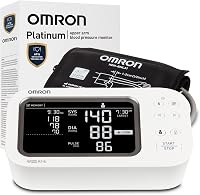
Choose the Omron Gold if you want a compact wrist monitor with Bluetooth tracking and 200 readings per user. The Omron Gold vs Platinum blood pressure monitor decision needs one extra check: confirm the exact Platinum model's cuff type, memory and app features before comparing it with Gold.
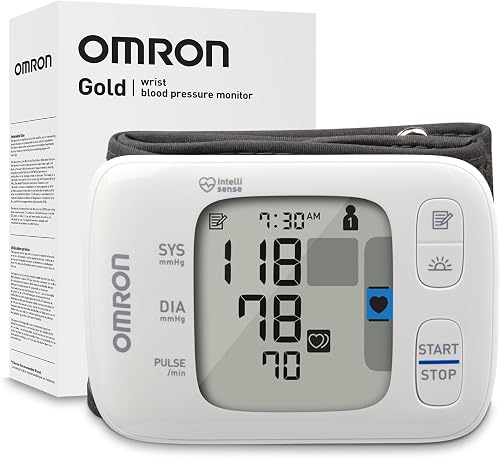
The Omron Gold information available for this comparison describes model BP4350, a wireless wrist monitor for home use. It includes an attached cuff for wrists measuring 5.3–8.5 in, 2 AAA batteries, a storage case, an instruction manual and a quick start guide.
Omron uses Gold and Platinum names across more than one blood pressure monitor design. That means a Platinum model may differ by cuff location, controls, memory and connected tracking.
Check the model number before treating a Platinum feature as part of every Platinum monitor.
 Best for wide upper-arm fit
iHealth Track Smart Upper Arm Blood Pressure
 Best for wrist tracking
OMRON Gold Wireless Wrist Blood Pressure Monitor
Omron Gold vs Platinum: which should you choose?
Choose Gold when wrist portability and connected tracking matter most. Choose Platinum when its exact model offers the upper-arm setup, memory system or tracking workflow you prefer.
You can also compare Omron Platinum and Evolv monitors.
Gold keeps the controls focused on routine wrist readings. Its feature set includes dual-user support, irregular heartbeat detection, a High Morning Average Indicator and Bluetooth connection to the OMRON connect app.
The Platinum name alone doesn't tell you whether the monitor uses a wrist cuff or an upper-arm cuff. It also doesn't confirm how many readings it stores, which users it supports or which app functions it includes.
For a broader shortlist, see our guide to the best Omron blood pressure monitor. For a simpler model, read the Omron 3 Series BP7150 review.
It helps place Gold alongside other Omron designs instead of treating one product name as a complete specification.
How do the controls and daily setup compare?
Gold is designed around a simple wrist-monitor routine, while Platinum should be judged by the controls on its exact model. Look for a clear start button, an easy-to-read result screen and a memory control you can use without guessing.
The Gold is intended for routine measurements at home. Its attached wrist cuff fits a stated range of 5.3–8.5 in, so measure your wrist before choosing it.
During a wrist reading, sit upright with your feet flat and keep the cuff at heart level. Stay still and quiet while the monitor measures, then record unusual results rather than repeating measurements continuously.
Our guide on using an Omron blood pressure monitor covers the positioning habits that matter across Omron designs. Correct placement matters more than choosing a feature label.
A Platinum monitor may have different buttons or a different cuff position. Read its instructions before use, especially if you are moving from a wrist unit to an upper-arm unit.
Which monitor gives you more memory?
Gold gives you a clear memory figure: up to 200 readings for each of 2 users. A Platinum model should be compared by its stated memory limit and whether it separates readings between users.
The Gold's dual-user memory suits 2 people who want separate histories on the monitor. Bluetooth connection to OMRON connect adds unlimited reading storage in the app.
App tracking can make patterns easier to review over time. It can also add setup steps, so choose it only if you plan to pair the monitor and review the records.
The Gold also works with Apple Health and Google Fit. That gives compatible phone users more ways to organize health records, but the app and phone requirements still matter.
If you want a comparison with another Omron line, read Omron Platinum vs 10 Series before deciding that the Platinum name automatically means more useful memory.
What heart-tracking features does Gold include?
Gold includes irregular heartbeat detection and a High Morning Average Indicator. These features can help you notice readings that deserve attention, but they don't diagnose a heart condition.
The irregular heartbeat feature can display a warning symbol when the monitor detects an irregular rhythm during a measurement. Treat that symbol as a reason to discuss readings with a health professional, not as a diagnosis.
The High Morning Average Indicator focuses on morning readings. A consistent routine can make your records easier to compare, especially if your clinician has asked you to monitor at a certain time.
Blood pressure and heart rhythm are related but different measurements. Our guide to using EKG to monitor high blood pressure explains why an EKG device and a blood pressure monitor serve different purposes.
Is an Omron Platinum or Gold better for app tracking?
Gold is the clearer choice when Bluetooth app tracking is a priority because its available features name OMRON connect, unlimited app storage and sharing tools. Confirm the Platinum model's app support before choosing it for connected records.
Gold connects to OMRON connect through Bluetooth. The app can store readings, track trends and share reports with a doctor.
The monitor also lists compatibility with Apple Health and Google Fit. Phone operating system support, Bluetooth settings and app permissions can affect setup, so keep those practical steps in mind.
A Platinum model may be a better fit if its exact app workflow matches your phone and record-keeping habits. For details on the other compact Omron option, see the Omron Evolv blood pressure monitor review.
Don't choose by the Gold or Platinum label alone.
For buyers comparing heart-monitoring tools more broadly, how to choose the right ECG monitor explains why connectivity should match the measurement you actually need.
What alternatives are worth considering?
The iHealth Track is the strongest upper-arm alternative here, while Oklar offers rechargeable wrist use and AILE offers dual-user upper-arm memory. These alternatives help if Gold's wrist format or Omron's model uncertainty does not fit your routine.
The iHealth Track uses 2 buttons and has a large multi-color backlit display. It stores up to 99 readings on the monitor and unlimited readings in the iHealth app, which supports iOS 12.0 or later and Android 9.0 or later with Bluetooth 4.0 or later.
Its upper-arm cuff covers a wider stated range than Gold's wrist cuff. It also includes automatic heart rhythm disturbance alerts, 4 AAA batteries and an instruction manual.
Gold's 2-user memory and OMRON connect support make it a strong fit for shared home tracking. Its wrist cuff, case, quick start guide, instruction manual and 2 AAA batteries support a compact setup.
The Oklar stores up to 240 readings for 2 users and has a large LED backlit display. It also provides voice broadcast, a Type-C charging cable and an adjustable cuff for wrists measuring 4.92–8.46 in.
The charging adapter isn't included.
AILE's automatic upper-arm monitor displays systolic pressure, diastolic pressure and pulse on one screen. Its cuff fits arms measuring 8.7–16.5 in, and it uses 4 AAA batteries with an external power option.
How should you choose between wrist and upper-arm monitoring?
Choose the format you can position correctly every time. Gold and Oklar use wrist cuffs, while iHealth Track and AILE use upper-arm cuffs.
This choice often matters more than extra features. A monitor you can set up well each day will usually give more useful records.
A monitor that feels awkward may be skipped or used in a hurried way.
Wrist monitors suit people who want something small and portable. The Omron Gold is compact at 3.17 ounces and comes with a storage case.
That makes it easier to keep in a drawer or carry when you travel.
Oklar is also light at 3.59 ounces and uses a rechargeable battery. It may suit people who do not want to keep buying AAA batteries.
Its cuff fits wrists from 4.92 to 8.46 inches.
A wrist reading still needs care with position. Your arm should rest so the cuff sits at heart level.
A wrist held too high or too low can lead to a reading that does not reflect your usual level.
You also need to keep your wrist still during the reading. Small movements can affect the result.
This takes a little practice, especially if you are new to home monitoring.
An upper-arm monitor may suit a fixed place at home. You can keep it on a table or shelf where you sit down with feet flat.
That routine can make morning and evening checks easier to repeat.
The iHealth Track has a wide-range cuff for upper arms from 8.7 to 16.5 inches. AILE uses the same stated cuff range.
Measuring your arm first helps you avoid a cuff that feels too tight or too loose.
A wider cuff range can help in shared homes. Two people with different arm sizes may both find a fit without changing cuffs.
Still, each person should check the fit before relying on the readings.
Upper-arm monitors tend to be larger than wrist models. The iHealth Track weighs 15.45 ounces, and AILE weighs 13.4 ounces.
They are still portable, but they take more space in a bag or drawer.
Think about where you will measure most often. If you travel a lot, a wrist unit may fit your routine better.
If you mainly measure at home, an upper-arm unit may feel simpler.
Consider your eyesight and hearing too. The iHealth Track has a large multi-color backlit display with green, yellow and red coding.
Oklar has a large LED backlit display and voice broadcast for people with poor eyesight.
Our complete blood pressure monitor buying guide explains how cuff fit, memory, display design and tracking tools affect a home-monitoring choice.
Gold vs Platinum: what should you verify before ordering?
Verify the Platinum model number, cuff location, cuff range, memory, app support and power source. Those details can change the comparison more than the Gold or Platinum name.
Start with the model number on any Platinum listing. Omron uses the Platinum name on more than one design.
Two units with the same range name may not share the same cuff or controls.
Check whether the Platinum unit is a wrist or upper-arm monitor. This tells you how it will be positioned during a reading.
It also affects how you sit, where your arm rests and how portable the unit feels.
Then confirm the cuff range against a fresh measurement. The Omron Gold fits wrists from 5.3 to 8.5 inches.
If your wrist falls outside that range, Gold may not be the right fit even if its other features look appealing.
Measure in the same way the instructions describe. A loose measure can make a cuff seem suitable when it is not.
A snug fit usually works better than a cuff that slides or gaps at the edges.
Review how many users the device supports and how many readings it stores for each person. Gold stores up to 200 readings for each of 2 users.
That gives each person a separate history without needing the app for basic review.
Compare that figure with the Platinum model you find. Some models may store fewer readings or may not separate them by user.
In a shared home, that difference can change how useful the monitor is over time.
If you want phone tracking, confirm the named app and phone compatibility. Gold connects to the free OMRON connect app through Bluetooth.
It also works with Apple Health and Google Fit for people who use those services.
Check the phone requirements before you order. The iHealth Track app needs iOS 12.0 or later or Android 9.0 or later, with Bluetooth 4.0 or later.
Similar checks help you avoid a monitor that cannot pair with your phone.
Also check the power setup. Gold includes 2 AAA batteries, while the alternatives here range from 4 AAA batteries to a built-in rechargeable battery.
Battery type affects ongoing cost and how often you need to keep spares ready.
Oklar uses a built-in rechargeable battery and a Type-C cable, but the charging adapter is not included. That means you need a suitable charger at home.
Gold and the upper-arm models avoid that step by using disposable batteries.
Look at the full list of what is included in the box. Gold includes a storage case, an instruction manual and a quick start guide.
A clear manual can make first-time setup less confusing, especially if you are sharing the device.
Think about care and storage as well. A case helps protect a wrist unit between uses.
An upper-arm monitor may need a stable shelf or drawer so the cuff and tube are not bent or twisted.
Do not rely on the Gold or Platinum label as a shortcut. The exact model tells you what you are getting.
A short check of cuff, memory, app and power details will lead to a steadier choice.
Final answer: Omron Gold vs Platinum blood pressure monitor
Pick Omron Gold if you want a wireless wrist monitor with 200 readings per user, irregular heartbeat detection, morning tracking and OMRON connect support. Pick Platinum only after checking its exact model against your cuff-fit, memory and app needs.
Gold suits people who want a compact unit for routine home checks. Its attached wrist cuff fits wrists from 5.3 to 8.5 inches.
It weighs 3.17 ounces, so it is easy to store between readings.
The dual-user memory is a clear strength. Each of 2 users can store up to 200 readings on the monitor.
Bluetooth connection to OMRON connect then adds unlimited app storage for longer records.
Gold also includes a High Morning Average Indicator. That feature can help you notice when morning readings run higher than usual.
It works best when you measure at a similar time each day.
The irregular heartbeat detection can flag a possible irregular rhythm during a reading. Treat any warning as a prompt to discuss your records with a health professional.
It is not a diagnosis on its own.
Choose iHealth Track if you prefer a wide-range upper-arm cuff and iHealth app tracking. Its cuff fits upper arms from 8.7 to 16.5 inches.
It stores up to 99 readings on the monitor and unlimited readings in the app.
The iHealth Track uses 2 buttons and a large multi-color backlit display. Green, yellow and red coding can make the result easier to read at a glance.
It also alerts you to heart rhythm disturbances after a measurement.
Choose Oklar for rechargeable wrist use and voice broadcast. It stores up to 240 readings for 2 users in total.
Its large LED backlit display and voice function may help if numbers are hard to read.
Oklar uses a built-in rechargeable battery with a Type-C cable. The charging adapter is not included, so you will need a compatible charger.
That trade-off suits people who prefer recharging over replacing batteries.
Choose AILE for dual-user upper-arm memory. It stores 99 readings for each of 2 users, with date and time information.
Its cuff fits arms from 8.7 to 16.5 inches and it shows systolic pressure, diastolic pressure and pulse on one screen.
AILE uses 4 AAA batteries and also supports an external power option. That flexibility can help if you want a fixed home station.
Its size and weight are still modest for home use and travel.
The best choice is the monitor whose cuff fits you and whose records you will use consistently. Fit affects comfort and position, and both affect the quality of each reading.
Consistency matters just as much as features. A simple routine you follow most days will give better patterns than a complex setup you use once in a while.
For the closest Omron comparison, continue with Omron Platinum vs Evolv.
Frequently asked questions
What is the difference between Omron Gold and Platinum?
The exact difference depends on the Platinum model. Omron Gold here is a wireless wrist monitor with 200 readings for each of 2 users, Bluetooth app tracking, irregular heartbeat detection and a high morning average indicator.
Confirm the Platinum model's cuff type, memory and tracking tools before choosing.
Is an Omron Gold wrist monitor better than an upper-arm monitor?
An upper-arm monitor may suit you better if you want a wide cuff and a larger measurement area. The Omron Gold suits people who prefer a portable wrist design, provided they can keep the wrist positioned correctly at heart level during each reading.
How much memory does the Omron Gold have?
The Omron Gold stores up to 200 readings each for 2 users. It also connects to the free OMRON connect app through Bluetooth, where readings can be stored without the monitor's 200-reading limit.
Can a wrist blood pressure monitor track morning readings?
The Omron Gold includes a High Morning Average Indicator for checking morning blood pressure patterns. Use it as a tracking aid, not as a diagnosis, and discuss unusual or repeated readings with a qualified health professional.