9 Best Wireless Blood Pressure Monitors (November 2026)
The best wireless blood pressure monitors include the iHealth Track Smart Upper Arm Blood Pressure for simple app tracking, the Greater Goods Bluetooth Blood Pressure Monitor for reports and shared records, and the OMRON Evolv Wireless Blood Pressure Monitor for a compact upper-arm design.
On this page (5 sections)
The best wireless blood pressure monitor for most homes is the iHealth Track Smart Upper Arm Blood Pressure. Its wide-range cuff, large color display, 99-reading memory, and smartphone app cover the main reasons people choose a connected monitor.
Two-button operation and large oversized numbers make regular home checks easier to follow day to day. The backlit display uses green, yellow, and red coding for a quick visual cue.
On-device memory lets you review recent results without your phone. Bluetooth syncing to the free iHealth apps for iOS and Android adds unlimited app storage for longer history and trend tracking.
The cuff fits upper arms from 8.7 to 16.5 inches, covering many standard to large adult arms. Measure your arm before you buy to confirm a comfortable fit.
Heart rhythm disturbance alerts add context during a measurement. A warning symbol appears after the reading if a disturbance is detected, but the alert does not diagnose a heart condition.
Greater Goods is the closest alternative if you want app reports, Apple Health integration, and an AC adapter. OMRON Gold is the better fit for a compact wrist model with large two-user memory.
Wireless monitoring can mean Bluetooth syncing, on-device memory, or rechargeable power. How you plan to review records matters as much as the measurement itself.
Good daily use starts with the same posture each time. Sit quietly, keep your feet flat, support your arm, and stay still while the cuff inflates.
Check that your phone has Bluetooth 4.0 or newer and a supported operating system before relying on app features. The main trade-off with an upper-arm model is positioning on bare skin.
For broader cuff, display, and measurement guidance, see our best blood pressure monitor buying guide. If you want more app-focused upper-arm options, compare the best Bluetooth home blood pressure monitor.
Our picks at a glance
-
1
 Best for simple app tracking
iHealth Track Smart Upper Arm Blood Pressure
9.7/10 our score
See it on Amazon -
2
 Best for reports and shared records
Greater Goods Bluetooth Blood Pressure Monitor
9.6/10 our score
See it on Amazon -
3
 Best for a compact upper-arm design
OMRON Evolv Wireless Blood Pressure Monitor
9.5/10 our score
See it on Amazon
- 4
 Check it
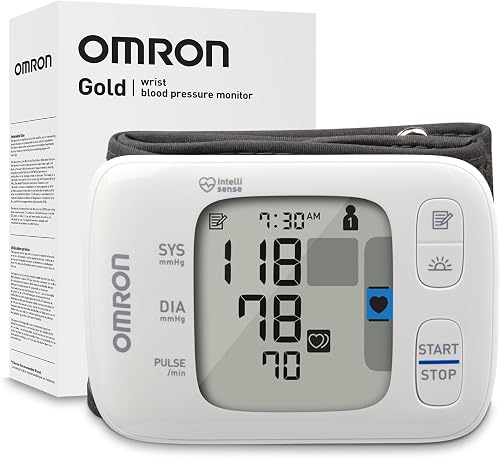
OMRON Gold Wireless Wrist Blood Pressure Monitor
Best for portable wrist monitoring - 5
 Check it
Oklar Wrist Blood Pressure Monitor
Best for voice guidance - 6
 Check it
Dario Gen-2 Blood Pressure Monitor for Home
Best for a complete travel kit - 7
 Check it
Etekcity Bluetooth Blood Pressure Monitor for Home
Best for Apple Health syncing - 8
 Check it
Oklar FDA Cleared Blood Pressure Monitor Upper
Best for flexible power at home - 9
 Check it
Wellue BP2A Smart Blood Pressure Monitor
Best for rechargeable upper-arm monitoring
How we chose these wireless blood pressure monitors
The best wireless blood pressure monitor should fit your arm or wrist, record readings in a useful way, and make repeat measurements simple. We compared cuff ranges, app connections, memory, power options, displays, and features that affect daily use.
The scores weigh specs, features, and buyer feedback against the needs of someone shopping for connected home monitoring.
Cuff fit comes first. An upper-arm cuff that is too small or too large can make consistent measurement harder.
Measure your arm where the cuff will sit, and compare that number with the stated range before choosing a device. For more options, compare replacement upper-arm blood pressure cuffs.
App support comes second. Unlimited app storage is useful if you want trends or reports over time.
On-device memory may be enough if you only need to review recent readings or do not want to use a phone for every measurement.
Power affects routine use. Battery models are easy to place anywhere, while the Wellue and Oklar wrist models reduce routine battery replacement with rechargeable designs.
The Oklar upper-arm model can run from AA batteries or a Type-C cable, but the cable does not recharge batteries.
| Product | Best for | Cuff | Memory | Power | Our score |
|---|---|---|---|---|---|
| iHealth Track Smart Upper Arm Blood Pressure | simple app tracking | 8.7–16.5 in upper arm | 99 readings on device | 4 AAA batteries included | 9.7 |
| Greater Goods Bluetooth Blood Pressure Monitor | reports and shared records | 8.7–16.5 in upper arm | 120 total readings | 4 AAA batteries and AC adapter included | 9.6 |
| OMRON Evolv Wireless Blood Pressure Monitor | a compact upper-arm design | 9–17 in upper arm | 100 readings | 4 AA batteries included | 9.5 |
| OMRON Gold Wireless Wrist Blood Pressure Monitor | portable wrist monitoring | 5.3–8.5 in wrist | 200 readings for each of 2 users | 2 AAA batteries included | 9.5 |
| Oklar Wrist Blood Pressure Monitor | voice guidance | 4.92–8.46 in wrist | 240 total readings | Built-in rechargeable battery | 9.5 |
| Dario Gen-2 Blood Pressure Monitor for Home | a complete travel kit | 8.75–16.5 in upper arm | 4 AAA batteries included | 9.4 | |
| Etekcity Bluetooth Blood Pressure Monitor for Home | Apple Health syncing | 8.6–16.5 in upper arm | 90 readings per user | 4 AAA batteries included | 9.4 |
| Oklar FDA Cleared Blood Pressure Monitor Upper | flexible power at home | 8.7–15.7 in upper arm | 120 readings per user | 3 AA batteries or Type-C cable | 9.3 |
| Wellue BP2A Smart Blood Pressure Monitor | rechargeable upper-arm monitoring | 22–42 cm upper arm | Rechargeable lithium polymer battery | 8.4 |
Best wireless blood pressure monitors ranked
The iHealth Track leads this group because it balances a wide upper-arm cuff, a clear display, simple controls, app support, and on-device memory. The remaining picks are better for specific needs such as reports, portability, voice guidance, or rechargeable power.
iHealth Track Smart Upper Arm Blood Pressure: Best for simple app tracking
- Wide-range upper arm cuff
- Stores 99 readings
- iOS and Android app support
- Heart rhythm disturbance alert
A wide-range cuff, large color display, and app support make this a strong everyday choice for connected home monitoring.
Pros
- Wide cuff range
- Clear color-coded display
- No calibration required
Cons
- Upper-arm setup takes more positioning than a wrist monitor
- App requires a compatible phone and Bluetooth 4.0 or newer
The iHealth Track Smart Upper Arm Blood Pressure is the strongest all-around choice for connected home monitoring. Its 8.7–16.5 in wide-range cuff covers the same broad arm range as several other upper-arm picks, so it suits many adult users who want one device for regular checks.
The large multi-color backlit display uses green, yellow, and red coding to make the result easier to read at a glance. Two-button operation keeps the basic measurement process simple, and the monitor stores up to 99 readings.
Bluetooth connects the monitor to iHealth's free iOS and Android apps. For iPhone users, compare blood pressure monitors with iPhone apps.
The app supports unlimited readings, while the device can identify and alert you to heart rhythm disturbances during a measurement. For more app-connected choices, compare phone-connected blood pressure monitors.
That alert does not diagnose a heart condition.
The kit includes 4 AAA batteries, the wide-range cuff, and an instruction manual. Read our guide on how to use an iHealth blood pressure monitor before your first measurement.
Greater Goods Bluetooth Blood Pressure Monitor: Best for reports and shared records
- Upper arm cuff
- Balance Health app
- 60 readings per user
- Apple Health integration
Greater Goods combines on-device memory with app trends, exports, and sharing tools for households that want organized records.
Pros
- App stores unlimited readings
- Two-user memory
- AC adapter included
Cons
- Different cuff sizes require support
- More app features may be unnecessary for occasional checks
The Greater Goods Bluetooth Blood Pressure Monitor is best for households that want organized records and shareable reports. Its Balance Health app stores unlimited readings, shows averages and trends, exports reports, and can connect with Apple Health.
The monitor also works without Bluetooth. It stores up to 60 readings per user, or 120 total, which gives two people a useful on-device record when a phone is not nearby.
The 8.7–16.5 in upper-arm cuff has an artery alignment guide to support placement. A large backlit display and one-touch operation make the main controls easy to follow.
Greater Goods includes the monitor, cuff, travel case, 4 AAA batteries, and an AC adapter. See other blood pressure monitors with power adapters if plug-in power matters.
Smaller or larger cuff options are available through Greater Goods support, which matters if the standard range does not match your arm.
OMRON Evolv Wireless Blood Pressure Monitor: Best for a compact upper-arm design
- One-piece design
- OMRON connect app
- 100 readings
- Apple Health and Google Fit compatibility
The attached cuff and compact one-piece design reduce loose parts while Bluetooth connects readings to the OMRON connect app.
Pros
- Compact one-piece design
- App stores unlimited readings
- Irregular heartbeat detection
Cons
- Cuff range starts at 9 in
- Uses AA batteries
The OMRON Evolv is the best choice here if you want a compact upper-arm monitor with fewer separate parts. Its one-piece design combines the monitor and attached ComFit cuff, which fits 9 to 17 inch arms.
Everything stays together, which can make storage in a drawer or bag simpler. You still need to position the cuff correctly on bare skin, but you do not handle a separate tube first.
The device stores up to 100 readings on the monitor. That is enough for a regular routine when you review results before they roll over.
It connects by Bluetooth to the OMRON connect app. The app stores unlimited readings, tracks trends, and shares reports with a doctor.
It also works with Apple Health and Google Fit. Those links can help if you already keep health data in one of those apps.
Irregular heartbeat detection runs during routine measurements. An indicator can help you notice a pulse pattern that deserves attention, but it does not replace professional evaluation.
The package includes the monitor with attached cuff, an instruction manual, a quick start guide, and 4 AA batteries. Arms below 9 inches will need a different option.
OMRON Gold Wireless Wrist Blood Pressure Monitor: Best for portable wrist monitoring
- Wrist cuff
- 200 readings per user
- High Morning Average Indicator
- OMRON connect app
This wrist model is easy to carry and offers large shared memory, app syncing, and a morning average indicator.
Pros
- Large two-user memory
- Small and light
- Apple Health and Google Fit compatibility
Cons
- Wrist position must be kept at heart level
- Wrist cuffs can be less forgiving of positioning errors
The OMRON Gold Wireless Wrist Blood Pressure Monitor is the best portable option for users who prefer a wrist cuff. It fits 5.3 to 8.5 inch wrists, weighs 3.17 oz, and uses 2 AAA batteries.
That small size suits bedside use, travel, or a desk drawer where space is limited. You can carry it without the bulk of an upper-arm kit.
Its main advantage is memory. The monitor stores up to 200 readings for each of 2 users, while the OMRON connect app can store unlimited readings and share reports.
Separate user memory helps two people track their own records. It reduces the chance that readings get mixed when a household shares one device.
Apple Health and Google Fit compatibility adds another way to organize records. Syncing can make long-term trends easier to see in one place.
The High Morning Average Indicator helps you review morning blood pressure averages. Morning patterns can be useful information to share at a routine appointment.
Wrist measurement requires careful positioning, so keep the wrist at heart level and use the same technique each time. Moving the wrist during inflation can affect the result.
This model includes a storage case, instruction manual, quick start guide, and attached wrist cuff. The case helps protect the device when it travels.
Read our Garmin blood pressure monitor review if you are also comparing blood pressure tools from smartwatch brands. That comparison can help you decide whether a wrist cuff or a watch based tool fits your routine better.
Oklar Wrist Blood Pressure Monitor: Best for voice guidance
- Rechargeable wrist design
- Voice broadcast
- 240 readings for 2 users
- Type-C charging cable
A voice broadcast, large backlit display, and rechargeable battery suit readers who want audible guidance and fewer battery changes.
Pros
- Voice volume can be adjusted or turned off
- Large two-user memory
- Type-C cable included
Cons
- Charging adapter is not included
- Wrist positioning remains important
The Oklar Wrist Blood Pressure Monitor is best for audible guidance, large memory, and rechargeable power. Its voice broadcast can be adjusted or turned off with the SET and MEM buttons, which may help users who have trouble reading a screen.
That audio output suits people who want spoken results without leaning in to read small digits. You can lower the volume or switch it off for quiet checks.
The wrist cuff adjusts from 4.92 to 8.46 inches, and the large LED backlit display shows clear numbers in dim light. It also helps for early morning checks in a bedroom.
The monitor stores up to 240 readings for 2 users, the largest stated total memory in this roundup. That capacity supports shared tracking without syncing every day.
A measurement takes about 35 seconds, and the device turns off after 60 seconds of inactivity. Auto shutoff helps save power if you forget to switch it off.
Its built-in rechargeable battery uses the included Type-C cable, but the charging adapter is not included. You will need a compatible adapter you already own.
A blinking battery symbol signals that it is time to recharge. Charging is simpler than swapping disposable batteries for many users.
As with any wrist monitor, keep the cuff at heart level and stay still during the reading. Rest your arm on a table and keep your feet flat for a steadier result.
Choose it for portability and voice output, not if you find upper-arm positioning easier to repeat.
Dario Gen-2 Blood Pressure Monitor for Home: Best for a complete travel kit
- Upper arm cuff
- Dario app sync
- Carry case
- Two on-device user profiles
Dario includes the core travel items and connects one user's readings to its app while keeping a second profile on the device.
Pros
- Carry case included
- Color-coded blood pressure indicator
- Irregular heartbeat detection
Cons
- Not rechargeable
- No AC adapter included
The Dario Gen-2 Blood Pressure Monitor for Home is a practical pick for users who want an upper-arm kit with a carrying case. The adjustable cuff fits 8.75 to 16.5 inch upper arms, and the battery-powered monitor includes the cuff, batteries, and case.
That complete package suits people who want to start measuring and then travel with the same device. The case helps keep the monitor and cuff together between uses.
Bluetooth sends User 1 readings to the Dario app, where you can store readings, follow trends, and share information. A second user profile stays on the device, so two people can keep separate records.
The large backlit display shows systolic, diastolic, and pulse results. Clear numbers make it easier to copy a result into notes or share it during a call.
It also includes an irregular heartbeat indicator and a color-coded blood pressure level indicator. The indicator can flag a pulse pattern for follow-up, but it does not replace evaluation by a healthcare professional.
Dario's monitor uses 4 AAA batteries and is not rechargeable. It does not include an AC adapter, so keep spare batteries available for travel.
For setup, measure your arm midway between shoulder and elbow before ordering. The cuff should sit about an inch above the elbow, snug but with room for two fingers underneath.
Etekcity Bluetooth Blood Pressure Monitor for Home: Best for Apple Health syncing
- Upper arm cuff
- VeSync app
- Apple Health syncing
- 90 readings per user
Etekcity gives app-based tracking, Apple Health syncing, color indicators, and a cuff that fits standard to large adult arms.
Pros
- Apple Health support
- Two-user memory
- FSA eligible item
Cons
- Fewer on-device readings than some picks
- Upper-arm setup needs consistent cuff placement
The Etekcity Bluetooth Blood Pressure Monitor for Home suits users who want app tracking with Apple Health support. Its 8.6 to 16.5 inch upper-arm cuff covers standard to large adult arm sizes, and the device stores up to 90 readings per user.
That cuff range fits many adults who find smaller cuffs uncomfortable. A proper fit helps the cuff stay in place during inflation.
The VeSync app provides unlimited storage, automatic tracking, and Bluetooth syncing. Automatic syncing reduces manual entry and keeps your history in one place.
The monitor also includes color-coded indicators and irregular heartbeat alerts, giving you more context during routine record keeping. The display makes the category of a reading easier to read at a glance.
Etekcity describes this as an FDA-cleared and FCC-certified monitor and identifies it as an FSA-eligible item. Those labels describe the product status, but they do not replace correct technique.
Those labels do not remove the need for correct cuff placement or professional advice about concerning readings. Sit quietly and keep your arm supported for each check.
The kit uses 4 AAA batteries. Battery power keeps the monitor portable for a bedroom, office, or travel bag.
Choose it when Apple Health syncing and a broad upper-arm cuff matter more than maximum on-device memory. If you need more on-device storage, compare models with higher per-user memory.
For care, store the cuff flat or as directed and avoid rolling it tightly. Clean hands and bare skin under the cuff help the device seal and measure consistently.
Oklar FDA Cleared Blood Pressure Monitor Upper: Best for flexible power at home
- One-button operation
- 240 readings for 2 users
- Type-C cable power
- Large LED display
This upper-arm Oklar offers simple controls, two-user memory, and a choice between AA batteries and Type-C cable power.
Pros
- One-button operation
- Large memory
- Battery or cable power
Cons
- AA batteries are not included
- Type-C cable powers the monitor but does not recharge batteries
The Oklar FDA Cleared Blood Pressure Monitor Upper is the best fit for simple controls and flexible power. Its one-button design starts a reading, while the large backlit LED display shows results within about 1 minute.
That simplicity suits older adults or anyone who wants fewer steps. Press once, keep still, and read the result on the backlit screen.
The adjustable cuff fits 8.7 to 15.7 inch upper arms. Measuring your arm first helps confirm a comfortable fit before you depend on it.
Two users can each store 120 readings, for 240 total. Separate storage makes the device useful for shared household tracking.
You can power it with 3 AA batteries or the included Type-C cable. That choice lets you use it at home with a cable or move it to another room on batteries.
The monitor is not rechargeable, and the cable supplies power only. The batteries are not included, so you will need to add 3 AA batteries for battery power.
This model suits a bedside table or travel bag where you may have either batteries or a USB power source. It is not the best fit for arms wider than 15.7 inches.
For best results, sit with feet flat and your arm supported at heart level. Wait at least a few minutes between readings so repeated checks are easier to compare.
Wellue BP2A Smart Blood Pressure Monitor: Best for rechargeable upper-arm monitoring
- Wireless upper-arm cuff
- iOS and Android app
- Historical data sharing
- Rechargeable design
Wellue combines a wide upper-arm cuff, app sharing, one-button operation, and rechargeable power in a portable design.
Pros
- Rechargeable
- Wide cuff range
- Historical data can be shared
Cons
- Lower score for this connected-monitor roundup
- App is needed for reviewing and sharing historical data
The Wellue BP2A Smart Blood Pressure Monitor is the rechargeable upper-arm option in this group. Its automatic cuff fits 22 to 42 cm, or about 8.7 to 16.5 inches, and the one-button design checks blood pressure in about 30 seconds.
That speed suits a morning or evening routine when you want a quick result. One press starts the measurement without navigating menus.
Bluetooth synchronizes readings to the app, where historical data from different users can be reviewed and shared with family or friends. Sharing can help a caregiver or clinician see patterns between visits.
The rechargeable design is useful if you want to avoid routine battery replacement at home or while traveling. One full charge can last for several months, according to the product details.
Wellue identifies the device as FDA cleared and designed to measure systolic pressure, diastolic pressure, and heart rate. Those three values give a fuller picture of each check.
Those measurements still depend on quiet posture, correct cuff placement, and consistent technique. Sit for a few minutes first and keep your arm supported.
Choose it when rechargeable upper-arm monitoring and app sharing are your priorities. It suits users who prefer not to keep spare batteries on hand.
The iHealth Track or Greater Goods models are stronger choices if you want more clearly stated memory and reporting details. Those models state on-device memory and report features in more detail.
For care, recharge before the battery runs low and store the cuff without sharp folds. Clean the cuff surface as directed to keep it comfortable for repeated use.
What should you look for in a wireless blood pressure monitor?
The most important feature is a cuff that matches your arm or wrist. A monitor with excellent app storage is not a good choice if its cuff range does not fit you correctly.
A poor fit can make the cuff slip or squeeze unevenly during inflation. That discomfort can also make you less likely to measure on a regular schedule.
For upper-arm models, measure around the middle of your upper arm between your shoulder and elbow. Use a soft tape and keep it snug without pulling tight.
The iHealth Track, Greater Goods, and Wellue models cover 8.7 to 16.5 inches or a similar range, while the OMRON Evolv starts at 9 inches. Small differences at the edge of the range can matter for comfort.
Choose wrist monitoring when a small, light design makes you more likely to follow a routine. OMRON Gold and Oklar offer large memory, but wrist readings require careful heart-level positioning.
Next, decide how you will use the records. Unlimited app storage helps with long-term trends and sharing, while built-in memory is useful when you want to measure without opening a phone.
Greater Goods offers reports and exports, and Etekcity connects with Apple Health. Reports can make it easier to share a summary before an appointment.
Power is another daily-use choice. Battery models are easy to move, rechargeable models reduce battery changes, and the Oklar upper-arm model can run from a Type-C cable without charging its batteries.
Display readability matters in low light or for users with poor eyesight. Irregular heartbeat detection is common across this group, and it should prompt discussion with a clinician, not be treated as a diagnosis.
How do you get more consistent readings?
Sit quietly for about 5 minutes before measuring. Keep your feet flat, support the arm or wrist at heart level, place the cuff on bare skin, and stay still and silent.
That quiet period helps your body settle after walking, talking, or climbing stairs. A supported arm also prevents muscle tension from changing the reading.
Avoid measuring immediately after exercise, caffeine, smoking, bathing, or a stressful activity. Those factors can raise readings for a short time.
Use the same arm or wrist each time and keep conditions similar so records are easier to compare. Do not talk during inflation, as speaking can change the result.
Wait at least 3 minutes between repeated readings unless your health professional gives you different instructions. Waiting gives your arm time to return to a resting state.
A single unusual result does not explain the full pattern, so use the app or device memory to track readings over time. Wireless syncing makes records easier to review, but it does not improve a measurement taken with a poor cuff fit.
Keep a simple log of time, arm used, and any symptoms if you share results with a clinician. Store the monitor in a dry place and keep the cuff clean.
For questions about how blood pressure relates to heart monitoring, read Using EKG to Monitor High Blood Pressure and Can an ECG Monitor Detect High Blood Pressure?.
Are wireless blood pressure monitors worth using?
Wireless blood pressure monitors are worth considering when automatic records, trend tracking, or data sharing will help you follow a regular routine. The best model depends on the cuff fit and recording method you will use consistently.
A device you use on schedule is more useful than a more advanced model you leave in a drawer. Ease of setup and clear results support that habit.
Choose the iHealth Track for a balanced upper-arm design with a wide cuff and clear app support. It suits many adults who want simple controls and a readable display.
Choose Greater Goods for reports and shared records, OMRON Gold for portable wrist monitoring, or Wellue for rechargeable upper-arm use. Each option fits a different daily routine and review style.
If you want the largest stated memory, compare OMRON Gold, Oklar Wrist, or Oklar Upper. Large memory helps households that do not sync to an app every day.
If you want fewer setup decisions, start with a correctly sized upper-arm cuff and use the same measurement routine each time. Consistency makes trends easier to understand.
Wireless features add value when they reduce manual work. Automatic syncing and on-device memory both save time compared with writing numbers in a notebook.
They do not replace medical advice for concerning or repeated high readings. Keep notes and discuss patterns with a healthcare professional.
The right choice will match your arm size, your phone, and how you prefer to review results. Spend a little time on fit and routine before you focus on extra features.
Our top 3 picks at a glance
-
1
Best for simple app tracking
iHealth Track Smart Upper Arm Blood Pressure
9.7/10 our score
See it on Amazon -
2
Best for reports and shared records
Greater Goods Bluetooth Blood Pressure Monitor
9.6/10 our score
See it on Amazon -
3
Best for a compact upper-arm design
OMRON Evolv Wireless Blood Pressure Monitor
9.5/10 our score
See it on Amazon
Frequently asked questions
What is the best wireless blood pressure monitor for most people?
The iHealth Track Smart Upper Arm Blood Pressure is the best wireless blood pressure monitor for most people in this group. It has a wide 8.7–16.5 in cuff, a large color display, storage for 99 readings, and iOS and Android app support.
Choose an upper-arm model when consistent cuff placement is your priority.
Are wireless blood pressure monitors accurate?
Wireless blood pressure monitors can provide useful home readings when the cuff fits, your posture is consistent, and you remain still during measurement. Wireless connectivity affects how records are stored or shared, not the need for correct technique.
Follow the device instructions and discuss unusual or repeated readings with a health professional.
Is an upper-arm or wrist wireless monitor better?
An upper-arm wireless monitor is usually easier to position consistently because the cuff sits around the upper arm. A wrist monitor can be smaller and lighter, but your wrist must stay at heart level during the reading.
Pick the style you can use correctly at the same time each day.
Do wireless blood pressure monitors need a phone?
Not always. Several picks store readings on the monitor, while Bluetooth apps add longer history, trends, exports, or sharing.
The iHealth Track, Greater Goods, OMRON Evolv, OMRON Gold, Dario, Etekcity, and Wellue models connect to apps.
Check your phone's operating system and Bluetooth support before relying on app features.
How often should you take readings with a smart blood pressure monitor?
Use the schedule recommended by your health professional. For consistent home records, measure under similar conditions, sit quietly first, keep your feet flat, support your arm at heart level, and remain still and silent.
Wait at least a few minutes between repeat readings and record the results in the app or device memory.