What Is the Difference Between ECG Smartwatch and Dedicated ECG Monitor?
On this page (8 sections)
- Smartwatch ECG vs. Dedicated Monitor: Understanding the Key Differences
- How Smartwatch ECGs Work: Convenience at Your Wrist
- Dedicated ECG Monitors: Medical-Grade Heart Monitoring
- Direct Comparison: Smartwatch vs. Dedicated Monitor
- When to Consider a Smartwatch ECG
- When a Dedicated ECG Monitor Is Necessary
- Conclusion
- Frequently Asked Questions
The main difference between an ECG smartwatch and a dedicated ECG monitor lies in their primary purpose and clinical accuracy. For the terms themselves, see our guide to ECG and EKG. While smartwatches offer convenient, on-demand heart rhythm checks, dedicated monitors are designed for long-term, medical-grade monitoring and diagnosis, often prescribed by doctors.
Think of your smartwatch as a handy personal health tracker. It can alert you to potential irregularities. A dedicated monitor, on the other hand, is a clinical tool used by healthcare professionals to get a detailed picture of your heart’s activity over time. They are built for different jobs, with different levels of precision and intended use cases. Understanding this distinction helps you manage your heart health effectively. Our guide can help you choose the right ECG monitor for your needs.
- Smartwatches offer quick, convenient heart rhythm checks.
- Dedicated ECG monitors provide detailed, long-term medical data.
- Smartwatches are for general awareness; monitors are for diagnosis.
- Consult your doctor for the best device for your needs.
So, when you’re wondering which one is right for you, let’s break down exactly what each device offers and who it’s best suited for.
Smartwatch ECG vs. Dedicated Monitor: Understanding the Key Differences
When it comes to checking your heart’s rhythm, you might be seeing more options than ever before. Smartwatches with ECG capabilities are popping up everywhere. But how do they stack up against the traditional, dedicated ECG monitors doctors might use or prescribe? It’s a great question to ask. They both look at your heart’s electrical activity, but their jobs are quite different. We’ve found that understanding these differences helps you make the best choice for your health.
How Smartwatch ECGs Work: Convenience at Your Wrist
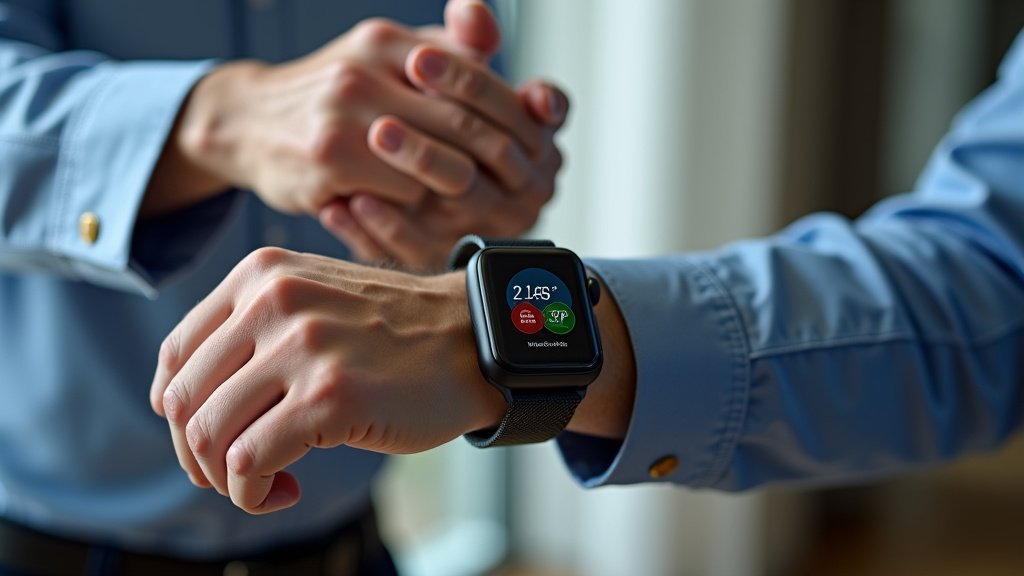
Your smartwatch with an ECG feature is designed for quick, on-demand checks. Think of it like having a personal assistant for your heart’s rhythm. When you feel something might be off, or just want peace of mind, you can usually start a reading with a few taps on your watch. It typically uses sensors on the watch case and the back of the device. You’ll place your finger on the watch case for a set amount of time, usually 30 seconds. The smartwatch then records the electrical signals from your heart.
What a Smartwatch ECG Can Detect
Most consumer smartwatches are cleared by the FDA to detect signs of atrial fibrillation (AFib). AFib is a common type of irregular heartbeat. If your watch detects a heart rhythm that suggests AFib, it will usually prompt you to share this information with your doctor. It’s important to know that these devices are not meant to diagnose AFib on their own. They are screening tools. They can also sometimes show if your heart rate is too fast or too slow.
Limitations of Smartwatch ECGs
While convenient, smartwatch ECGs have limitations. They provide a single-lead ECG, which is a very basic snapshot of your heart’s electrical activity. A medical-grade ECG often uses 12 leads to get a much more detailed view from different angles. Experts point out that smartwatch ECGs may miss certain types of arrhythmias or other heart conditions. They are not designed for continuous monitoring or for diagnosing complex heart issues. You can’t just rely on your watch; you still need to talk to a healthcare professional.
Dedicated ECG Monitors: Medical-Grade Heart Monitoring
Dedicated ECG monitors, often called Holter monitors or cardiac event recorders, are different. These are medical devices prescribed by your doctor for specific diagnostic purposes. They are built for clinical accuracy and detailed data collection. If your doctor suspects a heart condition that isn’t always present, they might recommend one of these. They are serious tools for serious medical evaluation.
Types of Dedicated ECG Monitors
There are a few main types of dedicated monitors you might encounter. The most common is the Holter monitor. This device typically records your heart’s electrical activity continuously for 24 to 48 hours, or sometimes even longer. You wear it discreetly under your clothes. It has electrodes attached to your chest that feed into a small, portable recording unit. Then there are cardiac event recorders. These are used for longer periods, sometimes weeks or months. You activate them only when you feel symptoms. They capture data around the time you notice something unusual.
How Dedicated Monitors Work and What They Capture
Dedicated ECG monitors use multiple leads, often more than a smartwatch. This allows them to capture a much richer, more detailed picture of your heart’s electrical signals. For instance, a 12-lead ECG provides 12 different views of the heart’s activity. This helps doctors spot subtle abnormalities that a single-lead device might miss. These monitors are designed to detect a wider range of arrhythmias, heart blocks, and other cardiac issues. They provide the depth of data needed for a proper diagnosis.
Clinical Accuracy and Reliability
The biggest advantage of dedicated monitors is their medical-grade accuracy. They are designed and validated for clinical use. Their readings are considered highly reliable by healthcare professionals. When a doctor reviews the data from a Holter monitor or event recorder, they are looking at precise, medically relevant information. This data is crucial for making informed decisions about your treatment and care. The CDC notes that accurate diagnostic tools are vital for managing cardiovascular health.
Direct Comparison: Smartwatch vs. Dedicated Monitor
Let’s break down how these two types of devices compare side-by-side. It’s helpful to see their strengths and weaknesses laid out clearly. Think of it like comparing a quick snapshot to a detailed movie.
| Feature | ECG Smartwatch | Dedicated ECG Monitor |
|---|---|---|
| Primary Use | On-demand screening for AFib, general health awareness | Medical diagnosis and monitoring of heart rhythm abnormalities |
| Monitoring Duration | Short, on-demand readings (e.g., 30 seconds) | Continuous (24-48+ hours) or event-triggered recording |
| Number of Leads | Typically single-lead | Multiple leads (more detailed electrical picture) |
| Data Detail | Basic rhythm information, potential AFib detection | Comprehensive electrical data, wide range of arrhythmias |
| Accuracy | Consumer-grade, for screening purposes | Medical-grade, for diagnostic purposes |
| Prescription Needed? | No | Yes, prescribed by a doctor |
| Cost | Included with smartwatch purchase | Varies, often covered by insurance when medically necessary |
| User Experience | Convenient, accessible, easy to use | Requires medical setup, potentially less convenient |
Who Is Each Device Best For?
Your personal health needs will determine which device is more appropriate. A smartwatch is great for someone who wants general awareness of their heart rhythm. If you’re active and want a quick way to check in, a smartwatch could be a good fit. It’s for those who want to be alerted to potential issues before they become serious. Think of it as a friendly nudge.
A dedicated ECG monitor is for individuals with a doctor’s recommendation. If you’ve experienced symptoms like palpitations, dizziness, or shortness of breath, and your doctor wants to investigate further, this is your tool. It’s for when you need a thorough medical evaluation. You might need it if you have a known heart condition and your doctor wants to track it closely. It’s also for people who experience infrequent symptoms that are hard to catch.
When to Consider a Smartwatch ECG
You might want to consider an ECG-enabled smartwatch if you:
- Are generally healthy but want to keep an eye on your heart rhythm.
- Experience occasional, mild palpitations and want a quick check.
- Have a family history of heart conditions and want an extra layer of awareness.
- Are looking for a device that offers broader health tracking features.
- Want immediate alerts for potential irregularities.
- Are comfortable that this is a screening tool, not a diagnostic one.
When a Dedicated ECG Monitor Is Necessary
A dedicated ECG monitor is likely necessary if you:
- Are experiencing symptoms your doctor wants to investigate thoroughly.
- Have been diagnosed with a heart condition that requires ongoing monitoring.
- Need a medical-grade reading for diagnostic purposes.
- Your doctor has specifically recommended a Holter monitor or event recorder.
- Your smartwatch ECG has shown irregular results that need further medical evaluation.
- Your doctor needs to see your heart’s activity over a longer period.
It’s all about matching the tool to the task. A smartwatch is a fantastic piece of personal technology. But when it comes to pinpointing a medical diagnosis, especially for complex or intermittent heart issues, you need the robust capabilities of a dedicated medical device. Always discuss your symptoms and concerns with your healthcare provider. They can guide you toward the most appropriate solution for your heart health journey.
Conclusion
You’ve learned that while ECG smartwatches offer convenient, on-demand heart rhythm checks for general awareness, dedicated ECG monitors provide medical-grade, detailed data for diagnosis. Your smartwatch is a helpful screening tool, alerting you to potential issues like AFib. A dedicated monitor, prescribed by your doctor, captures more comprehensive information over longer periods for precise medical evaluation. Always remember to discuss any concerns or symptoms with your healthcare provider. They are your best resource for determining which type of device, if any, is right for your personal heart health journey.
Frequently Asked Questions
Can my smartwatch ECG replace a doctor’s visit?
No, your smartwatch ECG is a screening tool, not a diagnostic one. It can alert you to potential heart rhythm irregularities, but it cannot replace a doctor’s professional diagnosis or medical advice.
How often should I use my smartwatch ECG feature?
You can use your smartwatch ECG feature whenever you feel the need for peace of mind or experience mild symptoms. However, relying on it too frequently for reassurance without discussing results with a doctor isn’t recommended.
What happens if my smartwatch detects an irregular heartbeat?
If your smartwatch detects an irregular heartbeat, it will usually prompt you to record the result and consult your doctor. This information is important for your doctor to review during your next appointment.
Are dedicated ECG monitors uncomfortable to wear?
Dedicated ECG monitors, like Holter monitors, are designed to be worn discreetly under clothing. While you’ll have electrodes attached to your chest, most people find them manageable to wear for the prescribed monitoring period.
Can a dedicated ECG monitor detect more heart issues than a smartwatch?
Yes, dedicated ECG monitors typically use multiple leads to capture a much more detailed view of your heart’s electrical activity. This allows them to detect a wider range of arrhythmias and other cardiac conditions than a single-lead smartwatch ECG.