Can You Use a Pulse Oximeter on Your Earlobe?
You can use a pulse oximeter on your earlobe only when the device and sensor support ear placement. A standard fingertip clip may not fit or read correctly on an earlobe.
On this page (8 sections)
- Can you use a pulse oximeter on your earlobe?
- Why would you use a pulse oximeter for earlobe readings?
- What kind of sensor works on an earlobe?
- How do you place a pulse oximeter on an earlobe?
- What can make an earlobe reading unreliable?
- Can a probe wrap help secure an ear sensor?
- When should you stop relying on the reading?
- Is a pulse oximeter on the earlobe right for you?
You can use a pulse oximeter on your earlobe only with a compatible ear sensor or flexible probe. A standard fingertip clip is made for finger placement, so moving it to the ear may give an unstable reading or fail to fit.
The earlobe contains tissue that can transmit the red and infrared light used by pulse oximeters. The sensor still needs steady contact, correct alignment, and protection from outside light.
That means the device matters as much as the site. A monitor that expects a flexible probe will handle placement, cable routing, and display timing in a way a small hinged clip is not built to do.
An earlobe is also smaller and softer than a fingertip. A clip that closes too firmly can pinch, while one that closes too loosely can slip whenever the person turns their head.
Choosing the right sensor starts with reading the monitor instructions. Look for clear approval for ear placement rather than assuming any probe will work on any body part.
If finger readings are hard because of movement, injury, or access, an ear sensor can offer a useful alternative. It does not promise a better result in every case.
Keep the person seated and still while the reading settles. Warm cold skin naturally before you begin, and remove jewelry that could block full contact.
Place the optical parts on the fleshy center of the lobe. Avoid the thin outer edge, where contact and alignment are harder to maintain.
Shield the sensor from strong direct light when the instructions call for it. Then wait for the number to steady before you judge the result.
Repeat the check once if the first number surprises you. Compare it with symptoms and seek medical advice rather than trusting one home reading alone.
Can you use a pulse oximeter on your earlobe?
Yes, an earlobe can be a sensor site when the monitor supports it. Hospitals and home-care setups may use flexible optical probes that attach to a monitor instead of a small hinged fingertip clip.
A dedicated ear sensor is usually shaped to sit on the lobe or attach around it. It may connect to a separate monitor through a cable, while the monitor displays oxygen saturation and pulse rate.
The sensor must touch the fleshy part of the lobe. The thin outer edge may not provide the same contact, and a loose probe can allow room light to affect the optical signal.
A pulse oximeter device with only a finger clip should stay on the finger unless its instructions specifically allow another site. The Pulse Oximeters: The Complete Buying Guide explains the main device and sensor types.
Why would you use a pulse oximeter for earlobe readings?
An earlobe sensor can help when finger placement is difficult or produces an inconsistent signal. It may be useful when a finger is injured, covered, moving often, or hard to access during care.
Ear placement can also suit a flexible probe connected to a monitor. The probe may be secured without asking the person to hold a clip on a finger.
This does not make the earlobe automatically better. Cold skin, poor circulation, movement, bright light, and a loose fit can affect either site.
The Food and Drug Administration advises using pulse oximeters as one part of an overall health picture, since readings can be affected by several factors. Review its pulse oximeter safety information if you rely on readings at home.
What kind of sensor works on an earlobe?
A flexible optical probe or ear-specific sensor is the right type for an earlobe. It must connect to a compatible monitor and hold the optical components in the intended position.
A probe wrap can help keep a flexible sensor from shifting. The TIDI Posey Pulse Oximeter Probe Wrap is made to secure many flexible optical transducers and probe sensors without adhesive tape.
The wrap fits a neonatal foot, infant toe, pediatric finger, or adult finger, and it can be cut to fit a needed length. Its 5 in by 1 in size and soft foam construction may suit home-care setups that need a non-adhesive way to secure a probe.
It is a securing accessory, not an ear sensor or a complete pulse oximeter. Confirm that the probe and monitor you already use are compatible before choosing a wrap.
For sensor types and connector details, see how to choose a pulse oximeter ear lobe sensor. If you need a different replacement style, compare the best replacement pulse oximeter sensors.
How do you place a pulse oximeter on an earlobe?
Place the sensor on the fleshy center of the earlobe and keep the person still. The optical parts should face the tissue as directed by the monitor's instructions.
Use these steps:
- Warm the ear naturally if it feels cold.
- Remove jewelry or anything that prevents full contact.
- Place the probe on the fleshy part of the earlobe.
- Check that the sensor is not twisted or pressing on the thin edge.
- Shield the area from strong direct light if the instructions call for it.
- Sit still and wait for the display to settle.
- Repeat the reading if the number changes sharply or the signal looks weak.
Do not tape a probe tightly around the ear. Pressure, slipping, and poor alignment can all interfere with the reading.
A wrap may help with movement, but it should not cause pain, numbness, skin damage, or a pale ear. Remove it if the skin becomes irritated.
Does a fingertip pulse oximeter work on an earlobe?
Usually, no. A hinged fingertip device is shaped for a finger and may not clamp securely onto an earlobe, so the light path and contact can be wrong.
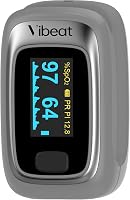
The AccuMed CMS-50D1 Fingertip Pulse Oximeter Blood Oxygen is designed for finger sizes from children above 4 years old to adults. It reads oxygen saturation and pulse rate after the finger is inserted and held still.
AccuMed describes the device for home use, exercise, and travel rather than medical use. It includes 2 AAA batteries, a travel case, and a lanyard, and the display rotates between portrait and landscape views.
Use this device on a finger as intended. If you need an ear reading, choose a compatible ear probe and monitor instead of forcing the clip onto the earlobe.
What can make an earlobe reading unreliable?
Movement, cold skin, poor contact, and outside light can make an earlobe reading unreliable. A single unexpected number should be checked with better placement and a second reading.
Common problems include:
- The probe sits on the thin edge instead of the fleshy lobe.
- The sensor is loose and shifts between readings.
- Strong light reaches the optical components.
- The ear is cold or circulation is reduced.
- The person moves, talks, or grips the sensor.
- The cable pulls the probe out of alignment.
- The skin is irritated or compressed.
Keep the person seated and relaxed during the reading. Compare the displayed pulse rate with how the person feels, but do not treat a pulse oximeter as an EKG.
For rhythm questions, read Why Home EKG is Better Than Just Pulse Checks and Using EKG to Check Pulse Regularity: Is It Accurate?.
Can a probe wrap help secure an ear sensor?
A probe wrap can help reduce movement when it is suitable for the sensor and placement. It should hold the probe gently without squeezing the ear or blocking the intended optical path.
The Threlaco 24 Pcs Pediatric Pulse Oximeter is a set of probe wraps for flexible optical transducers and probe sensors. Its soft foam, hook and loop fastener, and 6.3 in by 1.2 in dimensions give it room for different wrapping needs.
Threlaco describes the wraps for neonatal feet, infant toes, pediatric fingers, and adult fingers. That does not confirm that every wrap or probe combination is suitable for an earlobe, so check the sensor instructions first.
If you need single-use options for care settings, read how to choose disposable pulse oximeter sensors. Never reuse a disposable sensor unless its instructions specifically permit it.
When should you stop relying on the reading?
Stop and seek medical guidance when a reading conflicts with symptoms, stays abnormal after a careful repeat, or the person appears seriously unwell. A pulse oximeter number should not replace urgent care or professional advice.
Check the probe position, warm the ear naturally, keep still, and repeat the reading once. If breathing trouble, chest pain, blue or gray lips, confusion, fainting, or severe weakness is present, seek urgent medical help rather than waiting for a home device to settle.
People with ongoing concerns about oxygen or circulation should ask a health professional which sensor site and monitor are appropriate. Device instructions and clinical advice take priority over general placement tips.
Is a pulse oximeter on the earlobe right for you?
Choose an earlobe sensor when you have a compatible monitor and need a flexible alternative to finger placement. Choose the AccuMed fingertip device when a standard finger reading is easy and steady.
The AccuMed CMS-50D1 suits children above four years old and adults who can keep a finger still. It reads oxygen saturation and pulse rate in eight to ten seconds.
Its portable size, travel case, lanyard, and two included AAA batteries make it easy to carry for home use, exercise, or travel. Those features do not change its finger-only placement.
The TIDI Posey wrap suits a compatible flexible probe that needs gentle securement without adhesive tape. It is made of soft foam and can be cut to fit a needed length.
The Threlaco wraps suit buyers who need multiple soft wraps for compatible transducers and different users. The set includes 24 pieces with a hook and loop fastener.
Neither wrap is a sensor or a complete oximeter. Confirm the probe, monitor, and placement instructions before buying either option.
For a pulse oximeter on earlobe use, the decision rule is simple: confirm the monitor supports ear placement, use the correct sensor, place it on the fleshy lobe, and repeat any surprising result carefully.
Frequently asked questions
Can you put a pulse oximeter on your earlobe?
Yes, but only with a sensor designed or approved for ear placement. A flexible optical probe can sit on the earlobe when positioned correctly and connected to a compatible monitor.
A regular fingertip clip may not fit the tissue or maintain reliable contact.
Is an earlobe pulse oximeter accurate?
An earlobe reading can be useful when the sensor fits well, blocks outside light, and the person stays still. Accuracy can be affected by movement, cold skin, poor circulation, bright light, nail products, or incorrect placement.
Compare unexpected results with symptoms and medical advice.
Where should an ear pulse oximeter sensor go?
Place the sensor on the fleshy part of the earlobe, away from the thin edge and any jewelry. Follow the monitor's instructions, keep the optical parts aligned, and wait for a steady reading while sitting still.
Do not force a sensor that pinches or slips.
Should you use a fingertip or earlobe pulse oximeter?
Use a fingertip device when its instructions call for finger placement and you can get a stable reading. Use an earlobe sensor when the monitor supports it and finger readings are difficult because of movement, circulation, injury, or access.