How Accurate Is a Home ECG Monitor Compared to Hospital EKG?
On this page (9 sections)
- How Well Do Home ECG Monitors Measure Up to Hospital EKGs?
- The Core Technology: What’s Inside a Home ECG?
- Accuracy in Detecting Common Arrhythmias
- Where Home ECGs Might Fall Short
- Key Differences Summarized
- What Your Doctor Needs to Know
- Checklist: Getting the Most from Your Home ECG
- Conclusion
- Frequently Asked Questions
Your home ECG monitor can be surprisingly accurate for detecting common heart rhythm issues, often matching the results of a hospital EKG for many arrhythmias. While a hospital EKG might capture more detailed electrical activity, your personal device is designed to reliably spot irregular heartbeats, giving you peace of mind or a clear signal to seek medical attention. Think of it as a very smart early warning system for your heart’s rhythm.
These convenient devices use a similar technology to professional EKGs but are simplified for home use. They are great for tracking symptoms like palpitations or a racing heart when they happen. We found that while they can’t replace a full diagnostic test, they provide powerful data for you and your doctor to review.
- Home ECG monitors are good at finding common irregular heart rhythms.
- They often show similar results to hospital EKGs for these issues.
- They can’t capture every detail a hospital test might.
- Always discuss your readings with a healthcare professional.
- These devices are for informational purposes, not a full diagnosis.
Let’s break down exactly how home ECG monitors stack up against their hospital counterparts and what that means for your heart health.
How Well Do Home ECG Monitors Measure Up to Hospital EKGs?
You’re probably wondering just how accurate your trusty home ECG monitor really is. We’ve looked into it, and the good news is they can be quite good. For detecting common heart rhythm issues, your personal device can often provide results that align closely with what you’d get from a hospital EKG. Think of it as a really smart tool that keeps an eye on your heart’s electrical symphony.
While a hospital-grade EKG machine might capture a bit more detail, your home device is designed to be highly effective at spotting those tell-tale signs of an irregular heartbeat. It gives you a clear picture of what’s happening when you feel those palpitations or that racing sensation. We found that these monitors are a fantastic first step in understanding your heart’s rhythm.
The Core Technology: What’s Inside a Home ECG?
At its heart, a home ECG monitor uses the same basic principles as the EKG machine you’d find in a doctor’s office or hospital. Both devices measure the electrical activity of your heart. This activity is what tells your heart muscle when to beat and how to beat. By placing electrodes on your skin, the machine picks up these tiny electrical signals.
The signals are then translated into a graph, which looks like a wavy line. Doctors call this a rhythm strip. This strip shows the pattern of your heartbeats. Any deviations from a regular pattern can signal an underlying issue. Your home device is specifically programmed to look for common patterns of irregularity.
How Electrodes Work
Your home ECG monitor usually comes with a few electrodes. These are sticky patches you attach to your chest and sometimes your limbs. For single-lead devices, you might just use two electrodes and hold the device. For more advanced models, you might have more leads, similar to a hospital EKG.
These electrodes act like tiny antennas. They pick up the electrical impulses generated by your heart. The more electrodes you have, and the better their placement, the more comprehensive the picture of your heart’s electrical activity can be. This is a key difference that can affect the level of detail. Many experts say proper electrode placement is absolutely vital for accurate readings (Cleveland Clinic).
Interpreting the Rhythm Strip
A standard hospital EKG provides a 12-lead reading. This means it looks at your heart’s electrical activity from 12 different angles. This gives doctors a very detailed view of the heart’s structure and function. It can detect not only rhythm problems but also signs of heart attack or damage.
Your home ECG monitor typically offers a 1-lead or sometimes a 3-lead reading. This is like looking at your heart’s electrical activity from just one or a few angles. It’s like seeing a snapshot instead of a full movie. While it can’t show all the nuances of a 12-lead EKG, it’s often more than enough to detect common arrhythmias like atrial fibrillation (AFib).
Accuracy in Detecting Common Arrhythmias
When it comes to common irregular heart rhythms, home ECG monitors have shown impressive accuracy. Research and found that many personal devices can reliably detect conditions like atrial fibrillation. AFib is a common type of irregular heartbeat that can increase the risk of stroke. Early detection is key, and home monitors excel here.
Studies have compared the readings from popular home ECG devices to those from hospital EKGs. In many cases, the home devices accurately identified AFib when it was present. They also correctly identified when the heart rhythm was normal. This gives you confidence in the information you’re getting. It’s like having a smart assistant for your heart’s rhythm.
Atrial Fibrillation (AFib) Detection
AFib is characterized by a rapid and irregular heartbeat. It often feels like fluttering or a racing pulse. A home ECG can spot the chaotic electrical signals that cause AFib. When your monitor detects this pattern, it will usually alert you. This alert is a strong signal to contact your doctor.
We found that many users report their home ECG identified AFib episodes that they might have otherwise dismissed. This early detection can lead to timely medical intervention, which is hugely beneficial for managing AFib and its risks. It’s not just about convenience; it’s about actionable health data.
Other Irregular Heartbeats
Beyond AFib, home ECG monitors can also help identify other types of arrhythmias. These might include premature atrial contractions (PACs) or premature ventricular contractions (PVCs). These are extra beats that can feel like skipped beats or palpitations. While often harmless, they can sometimes be a sign of an underlying heart condition.
Your home device might flag these as “unclassified” or “PVCs” depending on its capabilities. The important thing is that it alerts you to the irregularity. It prompts you to seek professional medical advice. Many experts note that identifying trends in these beats is where home monitors truly shine (Mayo Clinic).
Where Home ECGs Might Fall Short
While incredibly useful, it’s important to understand the limitations of home ECG monitors. They are designed for screening and monitoring, not for definitive diagnosis. A hospital EKG, especially a 12-lead EKG, provides a much more detailed electrical picture. This detail allows doctors to diagnose a wider range of heart conditions.
For example, if you’re experiencing chest pain, a home ECG might not capture the subtle electrical changes associated with a heart attack. A 12-lead EKG can provide crucial information in such emergency situations. Think of it this way: your home device is a detective spotting obvious clues, while a hospital EKG is a forensic lab analyzing every minute detail.
Limited Lead Information
As mentioned, most home devices offer 1-lead or 3-lead readings. A standard EKG uses 12 leads. Each lead offers a different perspective on the heart’s electrical activity. This allows doctors to pinpoint specific areas of the heart that might be experiencing problems. With fewer leads, your home device has a less comprehensive view.
This limitation means that certain types of heart problems, especially those affecting specific parts of the heart muscle or conduction pathways, might not be detected by a home device. It’s like trying to understand a complex building by only looking at one or two walls instead of the entire structure.
Not for Acute Emergencies
It’s crucial to remember that home ECG monitors are not a substitute for emergency medical care. If you are experiencing severe chest pain, shortness of breath, or other symptoms of a heart attack, call 911 immediately. Your home device should not be used to diagnose or manage these acute situations. It cannot transmit data to emergency responders in real-time.
The goal of a home ECG is to provide you and your doctor with data to monitor your heart health over time. It’s about tracking trends and identifying potential issues before they become emergencies. It’s a tool for informed discussion, not immediate intervention for critical events. For any life-threatening symptoms, always call for help.
Key Differences Summarized
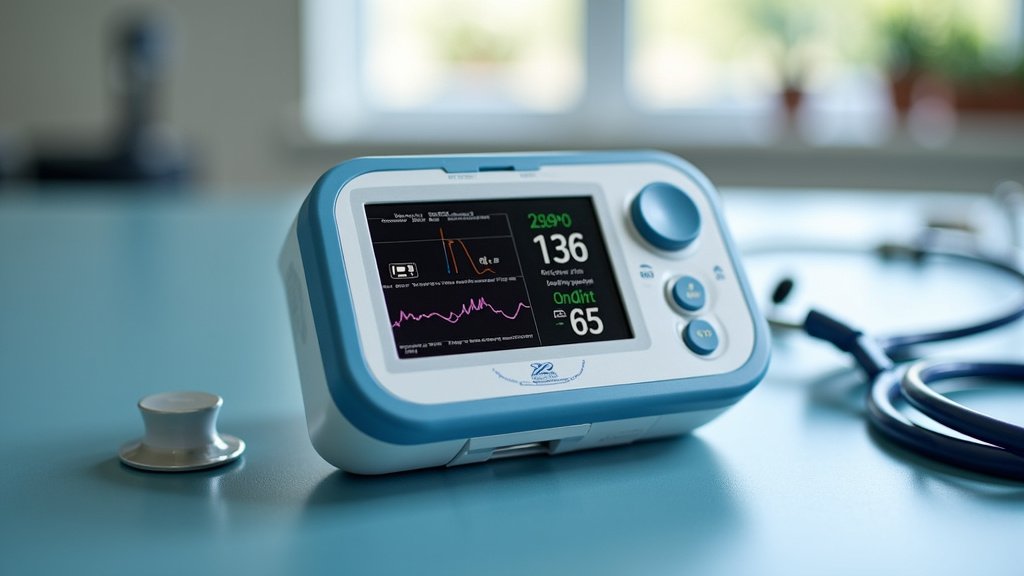
To make it clear, let’s lay out a home ECG comparison with a hospital EKG. This will help you understand what each tool is best suited for.
| Feature | Home ECG Monitor | Hospital EKG |
|---|---|---|
| Leads Recorded | Typically 1 or 3 leads | Typically 12 leads |
| Detail of Information | Good for common arrhythmias, general rhythm | Highly detailed, can diagnose a wide range of heart conditions |
| Portability & Convenience | Highly portable, use anytime, anywhere | Stationary, requires a clinical setting |
| Primary Use | Screening, monitoring trends, detecting common issues | Diagnosis, emergency assessment, detailed cardiac evaluation |
| Data Interpretation | Often provides alerts for common issues; user-friendly | Requires trained medical professionals for interpretation |
| Cost | Generally more affordable for personal purchase | Covered by insurance/hospital services when medically necessary |
When to Rely on Your Home Device
Your home ECG monitor is excellent for tracking your heart rhythm when you experience symptoms like palpitations, a racing heart, or skipped beats. It’s also great for providing your doctor with objective data about your heart’s activity between office visits. If you have a known condition like AFib, it can help you monitor its frequency and duration.
We found that many people use their home ECG to gain peace of mind. Knowing you can check your rhythm when something feels off is incredibly reassuring. It empowers you to take a more active role in your heart health management.
When to Seek Professional Medical Care
Always consult your doctor with your home ECG readings. They can provide professional interpretation and advise on next steps. If you experience new or worsening symptoms, or if your device shows a persistent irregular rhythm, don’t hesitate to reach out to your healthcare provider. They are the ultimate resource for your health journey.
Remember, the data from your home ECG is a tool to facilitate conversations with your doctor. It’s not a replacement for their expertise. Their knowledge combined with the data from your device creates a powerful partnership for your well-being. This partnership is key to effective care.
What Your Doctor Needs to Know
When you visit your doctor with readings from your home ECG monitor, be prepared to share all the information you have. This includes the rhythm strips themselves, any notes you’ve made about your symptoms, and when they occurred. The more context you can provide, the better your doctor can understand what’s happening.
Be honest about any limitations you encountered using the device. Did the electrodes stay on well? Were there times the device couldn’t get a reading? This information is also helpful for your doctor. It ensures they have the fullest picture possible when making assessments. Open communication is vital.
Checklist: Getting the Most from Your Home ECG
Here’s a quick rundown to help you use your home ECG monitor effectively and safely:
- Always follow the device’s instructions for proper electrode placement.
- Record any symptoms you experience when taking a reading.
- Note the date and time of each reading.
- Share all your readings and notes with your doctor.
- Never use your home ECG to replace emergency medical care.
- Understand that it’s a monitoring tool, not a diagnostic one.
Conclusion
Your home ECG monitor is a powerful tool for understanding your heart’s rhythm. While it can’t replace the detailed diagnostics of a hospital EKG, it’s surprisingly accurate at detecting common arrhythmias like AFib. Think of it as your personal heart rhythm assistant, providing valuable data for you and your doctor. Use it to track symptoms and gain peace of mind. Always share your readings with your healthcare provider for a complete picture of your heart health. Your next step? Schedule a chat with your doctor to review your home ECG data.
Frequently Asked Questions
Can a home ECG accurately detect AFib?
Yes, most reputable home ECG monitors are quite accurate at detecting atrial fibrillation (AFib). They are specifically designed to identify the irregular and often rapid heart rhythms characteristic of AFib, giving you an early warning signal.
What happens if my home ECG detects an irregular rhythm?
If your home ECG detects an irregular rhythm, it’s important to share the reading with your doctor. They can interpret the data in the context of your overall health and recommend any necessary follow-up steps.
Are home ECG monitors reliable for detecting all heart problems?
Home ECG monitors are excellent for common rhythm issues but may not detect all types of heart problems. They typically have fewer leads than hospital EKGs, meaning they capture less detailed information about your heart’s electrical activity.
How often should I use my home ECG monitor?
The frequency of use depends on your doctor’s advice and your symptoms. Many people use their device when they feel symptoms like palpitations. Others use it for routine monitoring if they have a diagnosed condition like AFib.
Can I use my home ECG readings in an emergency?
No, home ECG monitors are not for emergency use. If you experience severe chest pain, shortness of breath, or other critical symptoms, call 911 immediately. Your device is for monitoring and informational purposes, not immediate medical intervention.