How to Choose a Continuous Blood Pressure Monitor
A continuous blood pressure monitor should match the measurement pattern you actually need: true continuous tracking records frequent readings through the day and night, while timed ambulatory checks record at set intervals. Choose based on cuff fit, validation, and how you will use the data.
On this page (12 sections)
- Why the measurement pattern comes first
- What does continuous blood pressure monitor actually mean?
- How does a continuous blood pressure monitor device work?
- Which type fits your goal: clinic, home, or daily wear?
- How can you tell if a blood pressure continuous monitor is accurate?
- What features matter in a continuous blood pressure monitor device?
- How should you set up a continuous blood pressure monitor at home?
- What are the limits of a finger blood pressure monitor and wrist devices?
- When does timed ambulatory monitoring beat continuous tracking?
- How do you compare manual, automatic, and wearable options?
- How should you care for and store a blood pressure monitor?
- Which continuous blood pressure monitor should you choose?
A continuous blood pressure monitor should record in the pattern your care plan requires, and that pattern matters more than the shape of the device. Some devices take timed readings through the day, and others track trends more often.
Start by asking what you need the readings for. Do you want a snapshot when you feel unwell, a record of morning and evening values, or data that shows how pressure changes during activity and sleep?
Our best blood pressure monitor guide compares the main device types. Use it to see how upper arm, wrist, and wearable models differ before you narrow your choice.
Why the measurement pattern comes first
A device that measures every 15 minutes can create a different record from one that measures when you press a button. The first can show overnight trends, while the second only shows the moments you choose to check.
Continuous does not always mean uninterrupted. Many systems work on a schedule, and the schedule can be changed or paused.
Read the instructions to learn what happens during sleep, exercise, and charging.
Choose the pattern before the brand. A clear schedule you will follow beats a complex system you will stop using.
What does continuous blood pressure monitor actually mean?
Continuous blood pressure monitor usually means a system that takes repeated readings over hours rather than a single spot check. Readings may come from a cuff, a wrist sensor, or a wearable that estimates pressure from pulse signals.
Clinical systems also use this name, but they differ from home devices even when the names sound similar. Ambulatory monitors take readings at set times during daily activity.
Look for the stated interval, not just the word continuous. Ask how often readings occur, whether the schedule can change, and what happens when the device is removed.
Timed checks, scheduled checks, and true tracking
Timed checks happen when you decide to measure. Scheduled checks happen on a timer, such as every 20 or 30 minutes.
True tracking aims for more frequent data, but home devices still work in intervals.
A wearable blood pressure monitor may use the word continuous for trend tracking. That does not guarantee the same method as a cuff based system.
Check whether the device measures pressure directly or estimates it from other signals.
Match the claim to the method. If the method is unclear, treat the device as a trend tool and confirm its role with your clinician.
How does a continuous blood pressure monitor device work?
A continuous blood pressure monitor device works by repeating a measurement cycle over time. A cuff inflates and deflates, a sensor reads pulse signals, or a combination of sensors estimates changes in pressure.
Upper arm cuffs remain the most familiar home method. They squeeze the arm, sense the pulse, and calculate systolic and diastolic values.
Correct cuff size and arm position still matter for each reading.
Wrist and wearable devices place sensors closer to the pulse. They can be easier to wear, but arm position, movement, and sensor contact can affect the result.
Some estimate pressure by tracking pulse wave changes.
Direct cuff measurement is easier to judge than an estimate. Ask what signals the device uses and how it handles movement.
What happens during sleep and activity
Night readings can show whether pressure stays high, drops, or rises in the early morning. A schedule that wakes you every hour may ruin the very sleep you want to record.
Activity can change pressure quickly. Heavy movement, talking, and arm position can distort a reading.
A good system should mark or discard readings that fail quality checks.
Plan for comfort before you plan for data. A device you can wear through the night is more useful than a precise device you remove by midnight.
Which type fits your goal: clinic, home, or daily wear?
Choose the type that fits where and how you will use it. A clinic style cart suits staff who move between rooms, while a compact home monitor suits a bedside table.
A manual kit suits travel and backup use. It has no batteries to fail, but it needs training and a stethoscope to hear the pulse sounds.
Our wearable blood pressure monitor guide explains the trade-offs of wrist and watch style devices. Read it if you want readings during work, walking, or sleep.
Clinic style monitoring
A rolling stand helps staff move a monitor between beds or exam rooms. Height adjustment keeps the gauge at eye level, and a storage basket keeps spare cuffs close.
The Graham-Field model has a 6 inch aneroid gauge that swivels 110 degrees. That design helps in tight spaces where a fixed gauge would be hard to read.
Pick a cart when several people share one device. Pick a compact home unit when one person uses it at a single table.
Home monitoring
Home use needs simple setup, repeatable position, and a cuff that fits your arm. A stored memory helps you compare readings across days without writing each value by hand.
The Greater Goods model stores readings for two users in its built-in memory. Greater Goods says it has no Bluetooth or app connection, so the device itself is the record.
Pick home monitoring for routine morning and evening checks. Pick a wearable system when you need data during movement or sleep.
How can you tell if a blood pressure continuous monitor is accurate?
Accuracy starts with correct cuff size and arm position, not with extra features. A cuff that is too small or large can change the result.
The same arm, bare skin, and a supported position give more consistent readings.
Look for independent validation that matches the device type and population. Validation for one arm size or age group may not apply to another, so ask which groups were included.
Greater Goods says its monitor flags an irregular pulse pattern, but that indicator does not diagnose heart conditions. Persistent irregular readings should be discussed with a clinician.
Cuff size and arm position
Measure around the upper arm at the midpoint between shoulder and elbow. Compare that measure with the cuff range before you order.
If you fall between sizes, ask the maker which size gives the closer fit.
Place the cuff on bare skin, at heart level, with your back supported and feet flat. Rest for several minutes before you start.
Keep your arm still and avoid talking during the reading.
Use the same arm for trend tracking. Switching arms can make normal variation look like a change in your condition.
Validation and calibration
Check whether the device has been validated under a recognized protocol for home use. A general claim of accuracy is less useful than a named protocol and population.
Manual aneroid gauges need periodic checks against a known standard. A gauge that has been dropped or stored in heat may need service.
Keep the device away from knocks and extreme temperatures.
Ask who checked the device and how often. A clear answer matters more than a bold accuracy claim on the box.
What features matter in a continuous blood pressure monitor device?
Features should solve a real problem in your routine. Memory, user profiles, and cuff options help more than extra screens that you never use.
A two-user memory helps households where two people track readings. It keeps results separate and makes clinic visits easier because you can show trends by person.
Greater Goods includes a wall adapter for plug-in power and four AAA batteries for portable use. That mix helps if the monitor sits on a dresser or moves to another room.
Choose features you will use every day. Skip extras that add setup steps without improving fit or repeatability.
Memory, alerts, and data review
Memory should hold enough readings for your schedule. Twice daily checks need room for weeks of results, while checks every 30 minutes need far more space.
Some systems flag readings outside a range you set. Treat that flag as a reminder to rest and repeat, not a diagnosis.
Never change medication based on one flagged reading.
Our blood pressure monitor bracelet guide covers wrist style tracking in more detail. It is useful for a device that stays on your arm through the day.
Power and portability
Battery power helps during travel or a power outage. Plug-in power helps when the device stays in one place.
A model with both gives you options.
The Primacare manual kit has no batteries at all. That makes it reliable as a backup, but it needs a stethoscope and practice to use well.
Keep a simple backup if your main device depends on power. A manual kit can help when batteries fail or you travel light.
How should you set up a continuous blood pressure monitor at home?
Set up the device in one consistent place so position and routine stay the same. A bedside or kitchen table works if you can sit with your back supported and feet flat.
Place the cuff on bare skin, align it with the printed guide, and start after a quiet rest. Wait at least three minutes between readings, as Greater Goods advises.
Use the same arm each time and record the time, arm, and symptoms beside each reading. Time, posture, and symptoms make the record more useful for your clinician.
A simple routine for repeatable readings
Sit quietly for five minutes before you start. Keep feet flat, your back supported, and your arm at heart level.
Avoid caffeine, exercise, and smoking right before a reading unless your clinician advises otherwise.
Take two readings a minute or more apart and record both. If they differ a lot, take a third after a short rest and use the average your clinician prefers.
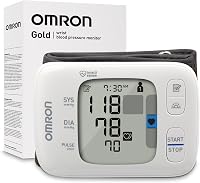
Our omron blood pressure monitor watch guide explains how a watch style device handles position and movement. Measure at the same times each day.
What are the limits of a finger blood pressure monitor and wrist devices?
A finger blood pressure monitor places sensors on a finger, where blood flow changes with temperature and hand position. That makes readings sensitive to cold hands, tight sensors, and movement.
Wrist devices face similar issues because the wrist moves and the arm is rarely at heart level. A watch style device can be convenient, but convenience does not remove those effects.
Our finger blood pressure monitor guide explains why finger readings can vary. Use it before you rely on a finger device for treatment decisions.
Treat finger and wrist estimates as trend tools. Confirm important readings with an upper arm cuff that fits correctly.
Movement, temperature, and sensor contact
Cold fingers narrow blood vessels and can change pulse signals. Warming your hands and resting can help, but it does not make a finger reading equal to an upper arm reading.
Loose sensors lose contact and create gaps in the record. Tight sensors can also change the signal.
Check fit each time you put the device on.
Note temperature and activity beside odd readings. A strange value after exercise or in cold air may say more about conditions than about your pressure.
When does timed ambulatory monitoring beat continuous tracking?
Timed ambulatory monitoring beats continuous tracking when you need a clear schedule during normal daily life. It records during work, meals, and sleep without asking you to press a button each time.
A schedule also makes results easier to explain. You can compare night readings with day readings and see whether pressure drops during sleep.
Our Best ECG Monitor For Continuous Monitoring guide shows how continuous style tracking works for heart rhythm. Pick timed monitoring for pattern questions, and spot checks for readings during symptoms.
Nondipping patterns and morning rise
Some people show little drop in pressure during sleep, while others show a sharp morning rise. Timed night readings can reveal those patterns over one or two nights.
A device that wakes you too often can distort sleep and pressure. Look for a schedule that allows longer stretches of rest between readings.
Ask your clinician how many nights of data they need. One night may not show a reliable pattern.
How do you compare manual, automatic, and wearable options?
Manual, automatic, and wearable options differ in skill, speed, and data storage. A manual kit needs a trained ear, while an automatic cuff inflates and reads on its own.
The Primacare kit includes a stethoscope and a leatherette case. Its gauge has large contrasting figures, and the air release valve can be operated with one thumb, according to Primacare.
The Graham-Field cart uses an aneroid gauge with bold markings that glow in the dark. Choose automatic for daily home use and manual for backup or travel.
Skill and training
Manual measurement takes practice. You need to place the stethoscope correctly, inflate at the right rate, and hear the first and last pulse sounds.
Automatic cuffs reduce that skill barrier. They still need correct placement and a quiet rest, but they handle inflation and reading.
Learn the manual method before you travel with it. Practice at home so the kit works when you need it most.
Cost of ownership in time and effort
A cheap device that needs complex setup may cost more time than a simple one. Consider batteries, cuffs, cleaning, and the effort of wearing a sensor all day.
A metal am pm pill organizer can help keep medication times aligned with reading times. It does not measure pressure, but it can make your routine more consistent.
Our metal am pm pill organizer guide covers storage options for daily medication. Count the daily effort, not just the purchase.
How should you care for and store a blood pressure monitor?
Care for the device by keeping cuffs clean and gauges protected. Wipe the cuff with a damp cloth as directed, let it dry fully, and avoid harsh cleaners that can crack materials.
Store a manual kit in its case with the gauge protected from pressure. The Primacare leatherette case helps keep the stethoscope and cuff together during travel.
Store the Graham-Field cart where wheels and tubing will not be pinched. Its basket holds extra cuffs, but keep the gauge face clean and free from knocks.
Check tubing and cuffs for cracks or leaks. A small leak can change readings and make inflation slow or uneven.
Cleaning and inspection
Inspect the cuff bladder and tubing every few months. Look for stiff spots, cracks, and loose connections.
Replace parts that no longer hold air evenly.
Our Using EKG to Monitor High Blood Pressure guide explains how heart rhythm data can sit beside pressure readings. It does not replace pressure measurement, but it can help your clinician see the fuller picture.
Keep a short log of service and cleaning. Dates help you spot leaks, battery changes, and calibration checks.
Which continuous blood pressure monitor should you choose?
Choose a continuous blood pressure monitor by matching the device to your schedule, cuff fit, and skill level. Start with the pattern you need, then check validation and cuff options.
For routine home checks, the Greater Goods upper arm monitor fits a bedside routine with plug-in or battery power. Its two-user memory helps households track separate trends.
For care across rooms, the Graham-Field mobile monitor fits a shared clinic setting. Its rolling stand, swivel gauge, and storage basket help staff move and read quickly.
For a travel backup, the Primacare manual kit fits a case and needs no batteries. Confirm cuff size and discuss your schedule with your clinician before relying on results.
Frequently asked questions
What is a continuous blood pressure monitor?
A continuous blood pressure monitor is a device that records blood pressure repeatedly over time, often on a set schedule or through the day and night. Some systems measure at timed intervals, while others aim for more frequent tracking.
Check the exact measurement method before you buy.
Is a wearable blood pressure monitor truly continuous?
Not always. A wearable blood pressure monitor may take readings on a schedule rather than without interruption.
Some wrist or watch style devices estimate pressure from pulse signals, while cuff based systems take direct readings.
Look for clear information on how and how often it measures.
Can a finger blood pressure monitor replace an upper arm cuff?
A finger blood pressure monitor is better treated as a supplement than a replacement for an upper arm cuff. Finger position, temperature, and movement can change readings.
If accuracy matters most, an upper arm cuff that fits correctly is the safer starting point.
How often should you take blood pressure at home?
Take readings under similar conditions, seated quietly, with the same arm and correct cuff size. Many clinicians suggest paired morning and evening readings over several days.
Your own clinician can set a schedule that fits your treatment plan and symptoms.