Can You Take an ECG Reading While Exercising?
On this page (3 sections)
Yes, you can absolutely take an ECG reading while exercising, and it’s actually quite common. This process is often called a stress test or exercise ECG. It helps doctors see how your heart performs under physical strain.
Doctors often recommend this to diagnose certain heart conditions that might not appear at rest. Monitoring your heart during activity gives a clearer picture of its health. It can reveal issues like reduced blood flow to the heart.
- You can take an ECG during exercise.
- Doctors call this an “exercise ECG” or “stress test.”
- It helps check your heart’s performance under strain.
- The test can diagnose hidden heart issues.
- Specialized equipment is used for accurate readings.
Let’s dive into the details of why and how these exercise ECGs are performed, giving you all the information you need.
Understanding ECG Readings During Exercise
You can definitely have your heart activity monitored with an ECG while you’re moving. This method offers unique insights into your cardiovascular health.
Why Do Doctors Recommend an Exercise ECG?
An ECG at rest shows how your heart works when you’re relaxed. But your heart’s demands change dramatically during activity. An exercise ECG, also known as a stress test, helps doctors see these changes. It’s like checking a car engine under load, not just at idle.
Many heart conditions only show up when your heart is working hard. For example, blockages in your arteries might not cause symptoms at rest. But during exercise, your heart needs more blood, and a blockage can then become clear. This test can reveal if your heart muscle is getting enough blood flow (Mayo Clinic).
The goal is often to find the cause of symptoms like chest pain, shortness of breath, or dizziness that occur with physical exertion. It can also help evaluate the effectiveness of heart medications or assess your heart’s health before surgery.
Diagnosing Specific Heart Conditions
An exercise ECG is a powerful tool for spotting several issues. It can help identify coronary artery disease, where the blood vessels supplying your heart become narrowed or blocked. It also helps assess heart rhythm problems that only surface under stress.
Sometimes, this test is used to evaluate your exercise capacity. This is especially helpful after a heart attack or heart surgery. It helps doctors understand how much activity your heart can safely handle.
How Does an Exercise ECG Work?
The process is quite straightforward. You’ll have electrodes placed on your chest, arms, and legs. These small, sticky patches connect to an ECG machine. This machine records your heart’s electrical signals throughout the test.
You’ll then start exercising, usually on a treadmill or a stationary bike. The exercise intensity gradually increases. This means you’ll walk faster or pedal harder. Your blood pressure and heart rate are also monitored regularly.
Medical staff will be with you the entire time. They watch for any changes in your ECG, blood pressure, or symptoms. If you feel uncomfortable or experience any new symptoms, you should tell them immediately. Safety is always the top priority.
Equipment Used for Mobile ECG Monitoring
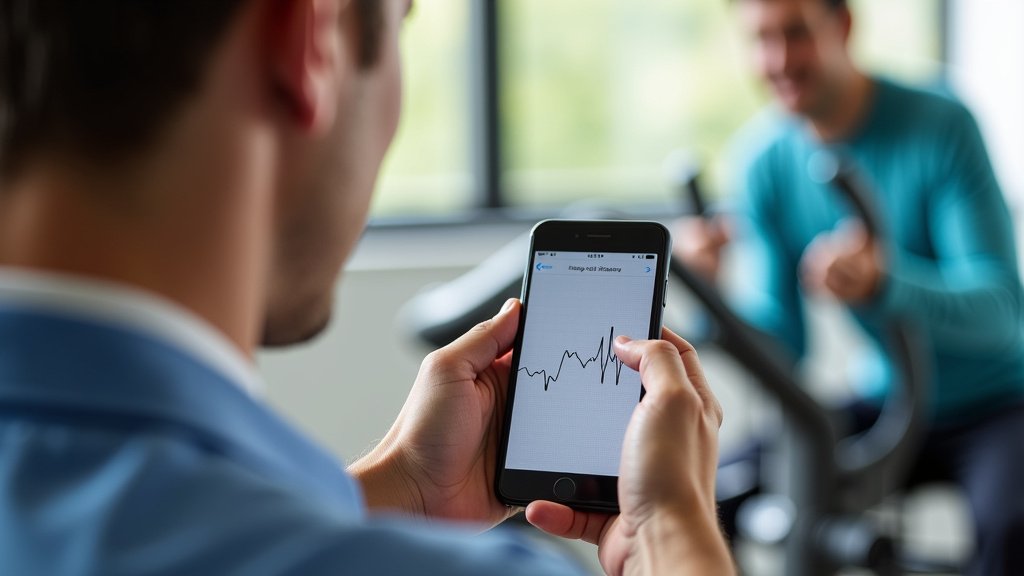
Traditional stress tests use large, hospital-grade ECG machines. But technology has advanced. Smaller, portable devices are now available. These can continuously monitor your heart even during daily activities. Think of wearable patches or small recorders that you can take home. They capture data over 24 hours or more (Cleveland Clinic).
These devices are often called Holter monitors or event recorders. They are especially useful for detecting irregular heartbeats that happen infrequently. While not always “during exercise” in the formal sense, they capture heart activity during your normal routines, which often includes physical activity.
What to Expect During Your Exercise ECG
Your doctor will give you specific instructions before your test. You might need to avoid caffeine or certain medications on the day of the test. It’s important to wear comfortable clothes and walking shoes.
Before you start exercising, a resting ECG will be taken. This provides a baseline. Then, you’ll begin your exercise protocol. The intensity will increase every few minutes. The goal is to reach a target heart rate, if possible, or until you experience symptoms.
The test usually lasts about 10-15 minutes of actual exercise. After exercising, you’ll cool down. Your heart rate and blood pressure will continue to be monitored. This is important to see how your heart recovers. Recovery patterns can also provide valuable diagnostic information.
Preparing for Your Test
Preparation is key for accurate results. Here’s a quick checklist:
- Talk to your doctor about all your current medications.
- Wear loose, comfortable clothing and supportive shoes.
- Avoid eating a heavy meal for 3-4 hours before the test.
- Do not consume caffeine or smoke on the test day.
- Ask any questions you have beforehand to ease your mind.
Interpreting the Results: What Do They Mean?
After your exercise ECG, a cardiologist will review the data. Learn more about how long ECG results take. They look for several key indicators. Changes in the ECG waveform, like ST-segment depression, can suggest reduced blood flow to the heart. Your blood pressure response and heart rate during exercise are also important.
Did your blood pressure rise appropriately? Did your heart rate reach the target without abnormal rhythms? These are all pieces of the puzzle. How quickly your heart rate returns to normal during recovery is also very telling about your heart’s health.
The results will help your doctor understand your heart’s capacity. They can then discuss any potential diagnoses or recommend further tests or treatments. It’s a vital step in managing your cardiovascular well-being.
Benefits and Risks of Exercise ECGs
There are many benefits to undergoing an exercise ECG. It’s a non-invasive way to assess heart health under stress. It can detect problems that might go unnoticed at rest. This early detection can lead to timely treatment and better health outcomes.
Like any medical procedure, there are minor risks, but they are generally very low. The medical staff carefully monitors you. Serious complications like a heart attack or abnormal heart rhythms are rare. Your doctor will weigh the benefits against the risks for your specific situation.
Weighing the potential for early diagnosis against these minimal risks often makes the exercise ECG a very worthwhile diagnostic tool. It offers peace of mind or a clear path forward for treatment.
When is a Stress Test the Right Choice?
So, when might your doctor suggest an exercise ECG for you? If you’re experiencing chest pain or discomfort, especially with physical activity, it’s a strong indicator. If you have unexplained shortness of breath or fatigue, this test can provide answers.
It’s also used for people with known heart conditions. For instance, after a heart attack or stent placement, an exercise ECG helps evaluate recovery. It helps optimize your treatment plan. It can also be part of a routine check-up for individuals with risk factors for heart disease, like high blood pressure or diabetes.
Your doctor will always discuss if this test is appropriate for your unique health situation. They will explain why they recommend it and what they hope to learn from the results.
Comparison: Resting ECG vs. Exercise ECG
It’s helpful to understand the different roles of these two tests.
| Feature | Resting ECG | Exercise ECG (Stress Test) |
|---|---|---|
| Purpose | Evaluates heart at rest; detects baseline abnormalities. | Assesses heart function under physical strain; reveals issues provoked by activity. |
| Activity Level | Lying down or sitting still. | Walking/running on treadmill or cycling on stationary bike. |
| What it shows | Resting heart rate, rhythm, signs of past heart attack. | Heart rate/BP response to stress, signs of reduced blood flow, exercise-induced arrhythmias. |
| Duration | About 5-10 minutes. | About 30-60 minutes (including prep, exercise, and recovery). |
| Indications | Routine check-ups, evaluation of stable symptoms. | Chest pain with exertion, unexplained shortness of breath, post-heart event assessment. |
Both tests are valuable, but they offer different pieces of information. Together, they provide a more complete picture of your heart’s health. Think of it like examining a house both when it’s quiet and when it’s bustling with activity.
Conclusion
You now know that taking an ECG while exercising, often called a stress test, is a vital tool for understanding your heart’s health under strain. It reveals how your heart truly performs when it’s working hard, uncovering issues that a resting ECG might miss. This can lead to earlier diagnosis and more effective treatment plans.
If you’re experiencing symptoms like chest pain with activity or unexplained shortness of breath, discussing an exercise ECG with your doctor is a smart next step. It’s a safe and effective way to gain clarity and take charge of your cardiovascular well-being.
Frequently Asked Questions
Is it safe to do an ECG while running on a treadmill?
Yes, it’s generally very safe. Medical professionals supervise the entire test, monitoring your heart rate, blood pressure, and ECG readings constantly. They are ready to stop the test immediately if any concerns arise, ensuring your safety throughout.
Can a smartwatch ECG replace a doctor’s exercise stress test?
No, a smartwatch ECG cannot replace a formal exercise stress test performed in a medical setting. While smartwatches can detect some heart rhythm abnormalities, they don’t provide the detailed diagnostic information about heart function under increasing stress that a clinical stress test does.
What kind of exercise is involved in an exercise ECG?
Most exercise ECGs involve walking on a treadmill or riding a stationary bicycle. The intensity gradually increases, simulating mild to moderate exertion. The goal is to safely increase your heart rate to see how your heart responds.
How long after a heart attack can you have an exercise ECG?
The timing can vary greatly depending on your individual recovery and your doctor’s assessment. Often, a stress test might be performed weeks or months after a heart attack to evaluate heart function and guide rehabilitation, but your cardiologist will determine the appropriate time for you.
Will I need to stop taking my medications before an exercise ECG?
Your doctor will provide specific instructions regarding your medications. Sometimes, you might be asked to temporarily stop certain heart medications before the test to get the clearest picture of your heart’s natural response to stress. Always follow your doctor’s exact advice.