Can You Detect a Heart Attack with an ECG Monitor?
On this page (7 sections)
Yes, an ECG monitor can detect a heart attack by showing changes in your heart’s electrical activity. Doctors rely on these readings to diagnose heart attacks quickly and accurately. This quick diagnosis is vital for getting you the right treatment fast.
While an ECG is a powerful tool, it’s not the only thing doctors look at. They also consider your symptoms and other test results. Even with an ECG, a doctor’s expertise is key to making a full diagnosis.
TL;DR:
- ECG monitors can show signs of a heart attack.
- They record your heart’s electrical signals.
- A doctor interprets these readings.
- Other tests and symptoms are also important.
- Don’t self-diagnose; always seek medical help.
Let’s walk through exactly how an ECG works and what it can tell us about your heart health.
How ECG Monitors Detect Heart Attacks
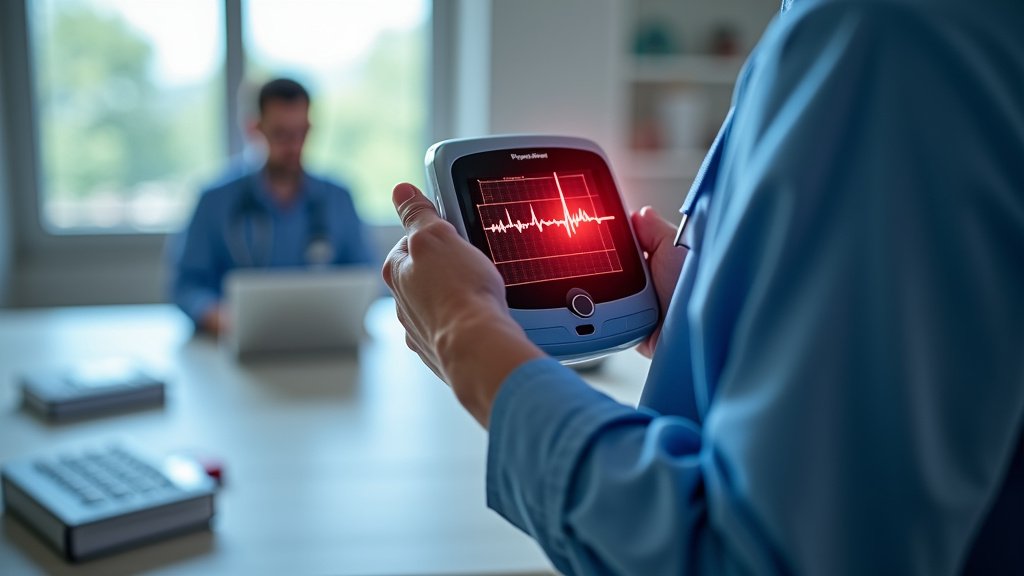
An ECG monitor works by recording the tiny electrical signals your heart makes. Think of your heart as a very powerful, natural pump with its own electrical system. Every beat is triggered by an electrical impulse. An ECG “listens” to these impulses and translates them into wavy lines on a screen or paper. When you have a heart attack, this electrical activity changes, and the ECG captures those changes.
These electrical changes show up as distinct patterns. Doctors are trained to recognize these patterns. It’s like reading a secret code that reveals what’s happening inside your heart. The speed and accuracy of this detection can be life-saving.
The Science Behind the Waves
Your heart has different parts that contribute to its electrical rhythm. An ECG uses electrodes, which are small sticky patches placed on your skin. These electrodes pick up the electrical signals from various angles of your heart. It’s like having multiple microphones placed around a room to get a full sound picture (American Heart Association).
Each wave and segment on an ECG tracing represents a different phase of your heart’s contraction and relaxation. When a heart attack occurs, it often means that blood flow to a part of your heart muscle is blocked. This lack of blood flow, or ischemia, causes the heart muscle cells to become damaged. Damaged cells don’t conduct electricity the same way healthy cells do.
This disruption in electrical activity is what an ECG detects. It’s a direct window into your heart’s immediate health status.
What Specific ECG Changes Indicate a Heart Attack?
When you’re having a heart attack, certain electrical patterns often appear. The most common type of heart attack detected by an ECG is called an ST-elevation myocardial infarction, or STEMI. This is a severe type of heart attack where a major coronary artery is completely blocked.
The “ST segment” on an ECG tracing refers to a specific part of the wave. During a STEMI, this segment becomes elevated. It literally looks like it’s lifted off the baseline. This ST-elevation is a critical sign that alerts doctors to act quickly.
Other changes might include T-wave inversions or new Q waves. These also suggest heart muscle damage. Doctors look at the entire picture, not just one wave, to make an accurate assessment.
Limitations and When an ECG Might Not Tell the Full Story
While incredibly useful, an ECG isn’t foolproof. Sometimes, even if you are having a heart attack, your first ECG might appear normal. This can be confusing and a little scary, right? It doesn’t mean you’re not having a problem; it just means the damage might not yet be severe enough to show up on the electrical reading.
This is why doctors don’t rely solely on one test. They combine the ECG results with your symptoms, your medical history, and other diagnostic tests. It’s about piecing together the whole puzzle.
Other Conditions Mimicking Heart Attack on ECG
An ECG can sometimes show changes that look like a heart attack but are actually caused by something else. For example, conditions like pericarditis (inflammation of the sac around the heart) or even certain electrolyte imbalances can cause ST-elevation. This is why an experienced doctor is so important for interpreting the results (National Heart, Lung, and Blood Institute).
It’s also possible for people to have what’s called a “non-ST elevation myocardial infarction” (NSTEMI). In this case, the ECG might not show the classic ST-elevation, even though you are indeed having a heart attack. Other blood tests, like cardiac enzyme tests, become very important in these situations.
Why Your Symptoms Are Still Crucial
Your symptoms are the first and most important clue. If you’re experiencing chest pain, shortness of breath, pain radiating to your arm, or sweating, you should seek immediate medical attention. Do not wait for an ECG to confirm anything. Tell the emergency responders everything you’re feeling.
Many experts say that symptoms, especially in the early stages, can be more telling than an initial ECG. Your doctor will always ask about your symptoms before, during, and after any tests. This personal account helps guide the diagnostic process.
The Role of Other Diagnostic Tools
Because an ECG has its limitations, doctors use a suite of tools to confirm a heart attack. Think of it as building a strong case with multiple pieces of evidence. Each test adds another layer of information.
Here’s a quick overview of what else might be used:
| Diagnostic Tool | What It Does | How It Helps Detect Heart Attacks |
|---|---|---|
| Blood Tests (Cardiac Enzymes) | Measures specific proteins released when heart muscle is damaged. | Elevated levels confirm heart muscle injury, even if ECG is unclear. |
| Echocardiogram | Uses sound waves to create moving pictures of your heart. | Shows how well your heart is pumping and if any areas are damaged. |
| Cardiac Catheterization (Angiogram) | A thin tube is inserted to visualize blockages in coronary arteries. | Directly identifies blocked arteries and allows for immediate treatment. |
| Stress Test | Monitors heart function during exercise or with medication. | Identifies blood flow problems that might not show at rest. |
This combination approach ensures that doctors get the most complete picture of your heart health. It also helps them differentiate a heart attack from other conditions that might have similar symptoms.
Understanding Different Types of ECGs
You might hear about different kinds of ECGs. They all measure electrical activity, but they do it in slightly different ways or over different periods. Knowing the difference can help you understand your care better.
Resting ECG (12-Lead ECG)
This is the most common type of ECG used in emergency rooms and doctor’s offices. You lie down calmly while electrodes are placed on your chest, arms, and legs. It takes only a few minutes. This type of ECG provides a snapshot of your heart’s electrical activity at that specific moment. It’s excellent for detecting acute events like a STEMI.
Holter Monitor (Ambulatory ECG)
A Holter monitor is a portable ECG device you wear for 24 to 48 hours, or sometimes even longer. It continuously records your heart’s electrical activity as you go about your daily life. This is useful for catching irregular heartbeats or symptoms that come and go, which a short resting ECG might miss.
While a Holter monitor might not directly diagnose an acute heart attack that’s happening right now, it can help identify underlying heart conditions that could increase your risk for one in the future. It gives doctors a longer view of your heart’s rhythm.
Event Monitor
Similar to a Holter monitor, an event monitor is also portable and worn for an extended period, often weeks. The difference is that it only records your heart’s activity when you manually activate it (like when you feel a symptom) or when it automatically detects an abnormal rhythm. This is particularly helpful for very infrequent symptoms.
Again, this isn’t designed for immediate heart attack diagnosis. Instead, it’s for finding arrhythmias or other issues that might eventually contribute to heart problems.
What to Do If You Suspect a Heart Attack
Your actions in a suspected heart attack situation are critical. Do not try to diagnose yourself with an at-home monitor. Even if you have a personal ECG device, it cannot replace professional medical care. Understanding the life-saving benefits of home EKG monitoring can provide valuable context for its appropriate use.
Here’s a simple checklist of what to do:
- Call 911 immediately. This is the most important step.
- Describe your symptoms clearly. Tell them everything you are feeling.
- Do not drive yourself to the hospital. Paramedics can start treatment on the way.
- Rest quietly. Try to remain calm and comfortable.
- Do not take aspirin unless advised by emergency services.
- Follow all instructions given by emergency personnel.
Time is muscle when it comes to a heart attack. The sooner you get help, the better your chances of a full recovery. An ECG will be one of the first tests performed by medical professionals, but it’s part of a larger, coordinated response.
Conclusion
You’ve learned that an ECG is a powerful tool for detecting heart attacks, showing vital electrical changes in your heart. However, it’s just one piece of the puzzle. Doctors combine ECG results with your symptoms and other tests to get a complete picture. Your direct input and quick action are absolutely essential.
Never try to diagnose yourself. If you ever suspect you’re having a heart attack, the most important thing you can do is call 911 immediately. Getting fast professional medical help can truly save your life and preserve your heart health.
Frequently Asked Questions
Can a normal ECG rule out a heart attack completely?
No, a normal ECG doesn’t always rule out a heart attack. For attacks without obvious symptoms, see our guide to silent heart attack detection. In the early stages, an ECG might not show changes, especially if the blockage isn’t complete or if it’s a non-STEMI heart attack. Doctors will consider your symptoms and might order further tests.
How accurate are at-home ECG devices for detecting a heart attack?
At-home ECG devices are generally not designed or approved to diagnose a heart attack. They can monitor heart rhythm but lack the detailed diagnostic capabilities and expert interpretation needed. Always seek professional medical attention if you have heart attack symptoms.
What’s the difference between an ECG and an EKG?
There is no difference! ECG and EKG refer to the exact same test: an electrocardiogram. EKG is the abbreviation commonly used in German-speaking countries, and it became popular in English to avoid confusion with EEG (electroencephalogram), which measures brain activity.
Will an ECG show past heart attacks?
An ECG can sometimes show signs of a past heart attack, especially if there was significant damage. It might reveal “Q waves” which indicate areas of scar tissue. However, an ECG is primarily used to diagnose current heart events.
How long does it take for an ECG to show heart attack changes?
Changes on an ECG can appear very quickly, sometimes within minutes of a heart attack starting, especially for a STEMI. However, in other cases, changes might develop gradually or be less obvious, requiring repeat ECGs or other tests to confirm.