9 Best Talking Blood Pressure Monitors (November 2026)
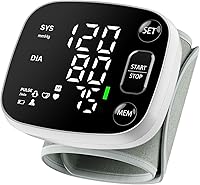
The best talking blood pressure monitors include the iHealth Track Smart Upper Arm Blood Pressure for app-based tracking, the Alcedo Blood Pressure Monitor for Home Use for spoken results at home, and the Oklar Wrist Blood Pressure Monitor for rechargeable wrist use.
On this page (6 sections)
- The best talking blood pressure monitors for home use
- How we compared talking blood pressure monitors
- Upper-arm versus wrist talking blood pressure monitors
- How to use a talking blood pressure monitor
- Do talking blood pressure monitors replace an ECG?
- Which talking blood pressure monitor should you choose?
The best talking blood pressure monitor for most homes is the Alcedo Blood Pressure Monitor for Home Use, with live voice results, adjustable volume, 3-reading averaging and separate memory for 2 users. Choose yuwell for the widest upper-arm cuff, Oklar for rechargeable wrist use, or ProHeal when 3 people need spoken readings.
We compared voice features, cuff ranges, memory, power options and display controls. The goal is to help you find a blood pressure monitor that speaks without ignoring the basics of repeatable home readings.
For age-focused options, see blood pressure monitors for seniors.
If you want broader buying criteria, start with our guide to the best blood pressure monitor. People who prefer a smaller device can also compare the best talking blood pressure wrist monitor.
Our picks at a glance
-
1
 Best for app-based tracking
iHealth Track Smart Upper Arm Blood Pressure
9.7/10 our score
See it on Amazon -
2
 Best for spoken results at home
Alcedo Blood Pressure Monitor for Home Use
9.5/10 our score
See it on Amazon -
3
 Best for rechargeable wrist use
Oklar Wrist Blood Pressure Monitor
9.5/10 our score
See it on Amazon
- 4
 Best for a wide upper-arm cuffCheck it
- 5
 Check it
GUAEVER Blood Pressure Monitor Rechargeable Upper Arm
Best for rechargeable upper-arm readings - 6
 Check it
Sinocare Blood Pressure Monitor
Best for flexible power choices - 7
 Check it
ProHeal Talking Blood Pressure Monitor for Seniors
Best for 3-person households - 8
 Check it
Maynovia Upper Arm Blood Pressure Monitor
Best for simple dual-user tracking - 9
 Check it
NOUYAN Blood Pressure Monitor Upper Arm Machine
Best for basic visual home use
The best talking blood pressure monitors for home use
The best talking blood pressure monitor depends on where you need audio feedback, how many people will use it and whether you prefer upper-arm or wrist placement. For a brand-specific device review, see the Garmin Index BPM.
Upper-arm models dominate this list, while Oklar offers the main rechargeable wrist option.
iHealth Track Smart Upper Arm Blood Pressure: Best for app-based tracking
- Wide-range upper-arm cuff
- Stores 99 readings
- iOS and Android app support
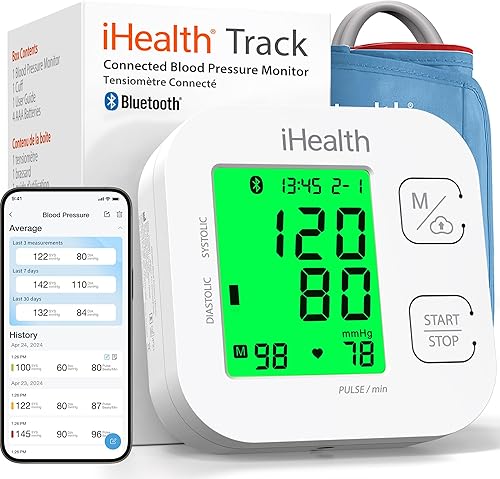
- Large multi-color backlit display
The iHealth Track is the strongest overall choice for readers who want a wide upper-arm cuff, large color display and smartphone tracking. It does not announce results aloud, so it suits buyers who value app history over voice feedback.
Pros
- Wide cuff range
- Smartphone tracking
- Large color display
Cons
- No spoken results stated
- Uses 4 AAA batteries
The iHealth Track earns the highest score for buyers who want strong visual feedback and app-based history. Its large multi-color backlit display uses green, yellow and red coding, while the upper-arm cuff fits arms from 8.7 to 16.5 inches.
That size range suits many adults, but you should measure your upper arm before ordering. A cuff that is too tight or too loose can make home readings harder to repeat.
It stores up to 99 readings on the monitor and can send unlimited readings to iHealth's free iOS and Android apps. The app requires iOS 12 or later or Android 9 or later, plus Bluetooth 4.0 or higher.
This setup works best for people who like to review trends on a phone. It is less useful if you want spoken results without looking at a screen.
This monitor also identifies and alerts you to heart rhythm disturbances with a warning symbol after the measurement. It uses 4 AAA batteries, which are included, and has a two-button design.
The simple controls can help with daily use at home. Still, battery power needs checking, and the manual should be read before first use.
The trade-off is central to this roundup: the product details describe a large visual display and smartphone tracking, but not spoken results. Pick it when app history matters more than an audible blood pressure reading.
Choose a talking model instead if you need voice feedback for low vision or quiet use.
Alcedo Blood Pressure Monitor for Home Use: Best for spoken results at home
- Live voice broadcast
- Adjustable volume
- 3-reading averaging
- 2 users with 120 readings each
Alcedo puts spoken feedback at the center of the experience. Its adjustable volume, one-push design, 3-reading average and separate memory for 2 people make it a practical upper-arm pick for shared homes.
Pros
- Adjustable voice volume
- 3-reading average
- Large 2-user memory
Cons
- Upper-arm cuff only
- Uses 4 AAA batteries
Alcedo is the strongest voice-first upper-arm pick for most households. Its live voice broadcast announces blood pressure levels, and the volume can be adjusted for different listening needs.
The one-push design keeps the start process simple. It also averages 3 values automatically, which can give you a more useful session summary than relying on one isolated measurement.
Compare automatic blood pressure monitors for other one-touch options.
Two user modes separate readings for 2 people, with 120 readings stored for each user. The wide cuff fits arms from 8.7 to 16.5 inches, so measure your arm before choosing it.
Visual support includes cuff-position self-checking and movement detection symbols. Those reminders can help you pause and correct setup before repeating a reading.
Choose Alcedo if spoken feedback is the main reason you're shopping. It runs on 4 included AAA batteries and is a strong choice for a shared home where both users want their own history.
Oklar Wrist Blood Pressure Monitor: Best for rechargeable wrist use
- Voice broadcast
- Built-in rechargeable battery
- 240 readings for 2 users
- 35-second measurement
Oklar is the best fit when a compact wrist monitor and spoken results matter more than an upper-arm cuff. It has a large backlit display, adjustable voice and 240 shared records, but its charging adapter is not included.
Pros
- Rechargeable design
- Voice can be adjusted or turned off
- Large 2-user memory
Cons
- Wrist readings require careful positioning
- Charging adapter not included
Oklar is the best talking blood pressure monitor here for buyers who want a rechargeable wrist design. Compare more rechargeable wrist blood pressure monitors if you want additional options.
Its voice broadcast can be adjusted or turned off, and the large LED backlit display keeps the result visible in low light.
The device stores up to 240 readings for 2 users. Its wrist cuff adjusts from 4.92 to 8.46 inches, so compare that range with your wrist measurement rather than assuming an upper-arm cuff will fit the same way.
A measurement takes about 35 seconds, and the device turns off after 60 seconds of inactivity. The built-in lithium-ion battery charges through the included Type-C cable, but the charging adapter is not included.
Wrist placement needs extra care. Sit upright, keep your feet flat, support the wrist at heart level and stay still and quiet during the measurement.
Pick Oklar for travel, compact storage and rechargeable power. Choose an upper-arm model instead if you prefer a wider cuff area or find wrist positioning difficult to repeat.
yuwell Blood Pressure Monitor: Best for a wide upper-arm cuff
- Voice broadcasting
- 8.7–17.7 in cuff
- 99 memory records
- Latest 3-reading average
yuwell stands out for its upper-arm cuff range, which reaches 17.7 inches. Voice guidance, posture reminders, irregular-heartbeat alerts and a 3-reading average add useful support for routine home tracking.
Pros
- Widest cuff range here
- Voice guidance
- Power adapter included
Cons
- Stores fewer records than some 2-user models
- Upper-arm setup needs a stable seat and table
yuwell is the best choice when cuff range is your first concern. Its soft upper-arm cuff fits 8.7 to 17.7 inches, the widest stated range among these picks.
Voice broadcasting follows the measurement, and an intelligent diagnosis feature indicates whether the result is normal. The device stores 99 records and can show the average of the latest 3 measurements.
The monitor also includes posture and movement reminders, an irregular-heartbeat alert and a self-test function. Its package includes the host, arm cuff, power adapter, manual, storage bag and packing box.
Because it uses upper-arm placement, set it up at a table where you can support your arm. The wide cuff may be a better match than a smaller option for users near the upper end of the available ranges.
Choose yuwell if you want voice guidance and a wide cuff with a power adapter included. Its 99-record memory is smaller than the 240-record options from Oklar and GUAEVER.
GUAEVER Blood Pressure Monitor Rechargeable Upper Arm: Best for rechargeable upper-arm readings
- Voice prompts
- Large LED screen
- 240 records for 2 users
- Built-in rechargeable battery
GUAEVER combines spoken instructions with an upper-arm cuff, a large screen and rechargeable power. It fits 2 users with 120 records each, while the AC adapter must be supplied separately.
Pros
- Rechargeable power
- Voice can be turned off
- 240 total memory records
Cons
- AC adapter not included
- No date and time display
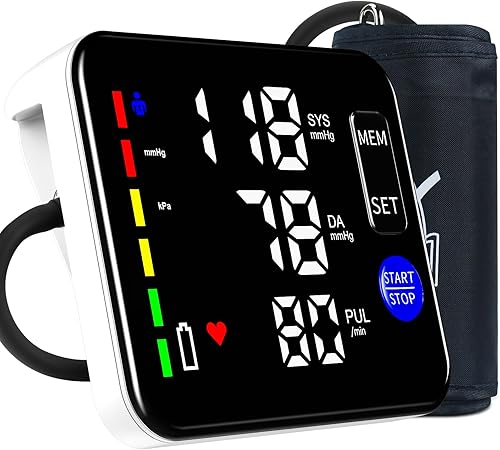
GUAEVER is the best talking upper-arm option for buyers who want rechargeable power and large shared memory. It stores 120 readings for each of 2 users and includes a built-in battery with a USB charging cable.
Voice prompts provide instructions and announce results, and the voice can be turned off. The large LED screen shows the numbers clearly, while green, yellow and red indicators help sort the result visually.
Its adjustable cuff fits arms from 8.7 to 16.5 inches. The package includes the monitor, cuff, user manual and USB charging cable, but an AC adapter is not provided.
GUAEVER does not show the date and time. That matters if you want every stored reading labeled for a detailed timeline, so consider whether the 240-record memory or time stamps matter more to you.
Pick it for a rechargeable upper-arm setup with spoken feedback. The built-in battery removes regular AAA battery changes, but you will need a compatible power source for charging.
Sinocare Blood Pressure Monitor: Best for flexible power choices
- One-button operation
- Large 3.6-inch screen
- Dual-user memory
- Color-coded indicators
Sinocare suits buyers who want a simple upper-arm monitor with two power options, posture detection and 2-user memory. Spoken results are not stated in the product details, so it is better for visual tracking than voice-first use.
Pros
- Battery or Type-C power
- One-button operation
- 2-user memory
Cons
- Type-C cable not included
- No spoken feedback stated
Sinocare is a practical upper-arm monitor for buyers who want simple controls and flexible power. It uses one-button operation, a large 3.6-inch screen and a cuff that fits arms from 8.6 to 16.5 inches.
Two user profiles can each store up to 99 readings. The monitor also detects incorrect posture, uses color-coded indicators and alerts you to irregular heartbeats.
Power comes from 4 AAA batteries or a Type-C connection. The batteries are included, but the Type-C cable is not, so plan around the power method you expect to use.
The product details do not state spoken results or voice prompts. That makes Sinocare a visual alternative rather than a first choice for someone who needs a blood pressure monitor that talks to them.
Choose it when one-button use, posture reminders and dual power matter most. For audible instructions and announced readings, Alcedo, yuwell or GUAEVER are better matches.
ProHeal Talking Blood Pressure Monitor for Seniors: Best for 3-person households
- Audio instructions and results
- 3 user profiles
- 240 total readings
- Carry bag included
ProHeal is the clearest match for a household with 3 people who need separate records. It speaks the user, date, memory and measurement information, and its carry bag supports use at home, work, the gym or while traveling.
Pros
- 3-user memory
- Audio instructions and results
- Batteries and USB-C cable included
Cons
- Smaller cuff range than several picks
- 80 records per user
ProHeal is the best talking blood pressure monitor for a 3-person household. It stores 240 total readings, with 80 records per profile across 3 users, and each record includes the date and time.
The monitor announces systolic, diastolic and pulse results aloud. It also gives audio instructions and can identify the user, date, memory and other functions, while volume can be adjusted or switched off.
Its upper-arm cuff fits arms from 8 to 16 inches. The package includes 4 AA batteries, a USB Type-C cable, an instruction manual and a carry bag.
The large backlit display adds visual support, with green, orange and red indicators plus an irregular-heartbeat symbol. The carry bag makes the unit easier to move between a nightstand, office, gym or trip.
Pick ProHeal when 3 separate profiles matter more than a wider cuff. If only 1 or 2 people will use the monitor, Alcedo and GUAEVER provide more records per user.
Maynovia Upper Arm Blood Pressure Monitor: Best for simple dual-user tracking
- Talking function
- Large backlit LCD
- 2-user memory
- Storage bag included
Maynovia keeps the controls simple with one-button use, spoken guidance and a bright display. Its 60-record memory per user is enough for routine tracking, but less than the larger-memory choices above.
Pros
- Talking function
- One-button operation
- Dual power options
Cons
- 60 records per user
- USB cable details are limited
Maynovia suits buyers who want a simple talking upper-arm monitor for 2 people. Its one-button operation, bright backlit LCD and voice guidance are aimed at routine home use, including users with visual challenges.
The cuff fits arms from 8.6 to 16.5 inches. It stores 120 total readings, split as 60 per user, and each record includes a date and time stamp.
Power options include 4 AAA batteries or a USB cable. A storage bag is included, which helps keep the monitor and accessories together when it moves between rooms.
The memory is smaller than Alcedo's 240 total readings and GUAEVER's 240 total readings. That is the main trade-off for choosing Maynovia as a straightforward dual-user option.
Choose it when talking guidance, one-button use and time-stamped records are more important than a large memory bank. Measure your arm first so the stated cuff range matches your needs.
NOUYAN Blood Pressure Monitor Upper Arm Machine: Best for basic visual home use
- One-button design
- Large LED display
- 2-user memory
- Cuff self-check
NOUYAN is the simplest choice for buyers who want an upper-arm monitor with a large display, cuff self-check and shared 2-user memory. It is not described as a talking monitor, so choose it for visual readings rather than audio feedback.
Pros
- Simple one-button start
- Large display
- 2-user memory
Cons
- Batteries not included
- No voice feature stated
NOUYAN is the basic visual pick for buyers who want one-button upper-arm readings and 2-user memory. Its large 3.32 x 2.19 in display is designed to keep the numbers easy to see.
The cuff fits arms from 8.7 to 16.5 inches and includes a self-check function for cuff position. The monitor records 120 blood pressure data points for 2 users and supports battery or plug-in power.
Batteries are not included, so plan for that before the first reading. The product details also do not state voice broadcasting, so it does not fit a voice-first need as closely as the talking models above.
NOUYAN weighs 182 g according to its product information and is described as portable for outdoor travel. Keep the cuff at heart level and use the same setup each time for more consistent tracking.
Choose it for a simple upper-arm monitor with a large display and shared memory. Choose Alcedo or ProHeal if the monitor must speak results aloud.
How we compared talking blood pressure monitors
We weighted spoken feedback first because the main search need is a blood pressure monitor that talks to you. Adjustable volume and the option to turn audio off also matter when more than one person uses the device.
Cuff fit came next. An upper-arm cuff must match the arm circumference, while a wrist cuff must match the wrist range and be used at heart level.
Memory affects daily tracking. A 2-user monitor with 120 records per person works differently from a 3-user monitor with 80 records per person, even when both store 240 records in total.
Power changes how easy the monitor is to keep ready. AAA batteries are simple to replace, while rechargeable models reduce battery changes but require charging.
Some USB-powered picks include a cable but not an AC adapter.
Our score weighs specs, features and buyer feedback against what you're shopping for. It does not mean that every person will get the same result, and a spoken reading does not replace medical advice.
Upper-arm versus wrist talking blood pressure monitors
Upper-arm talking blood pressure monitors give you more cuff range options in this group, including yuwell's 8.7 to 17.7 in range. They are a strong fit when you can sit at a table and support your arm.
The larger cuff can feel more secure during the measurement. It also gives you room to follow the position marks on the cuff.
Upper-arm use still needs a steady setup. Sit with your feet flat and your back supported.
Keep the cuff at heart level and avoid talking during the reading. These steps help you get a calmer result that is easier to compare over time.
Wrist monitors are smaller and easier to carry. Oklar adds voice broadcast, a rechargeable battery and 240 records, but you need to keep the wrist at heart level and remain still during the reading.
Its compact shape can suit travel or a small nightstand. That benefit comes with stricter placement at the wrist.
Wrist position matters because the sensor site is smaller. Use the same wrist each time when your care plan allows it.
Support the arm on a desk and keep the palm in the position shown in the manual. If the reading looks odd, wait a few minutes and repeat it with the same setup.
If you need more information about wrist placement and product choices, see the guide to the best talking blood pressure wrist monitor. For users shopping around accessibility needs, our guide to the best talking blood pressure monitor for the blind offers a narrower comparison.
The right choice depends on cuff fit, voice controls and how well you can repeat the same position.
How to use a talking blood pressure monitor
Avoid eating, smoking, caffeine, bathing or exercise for at least 30 minutes before a reading. These activities can affect your body in the short term.
A short wait makes the result easier to interpret. It also helps you compare readings taken at different times.
Sit quietly for about 5 minutes before you start. Keep both feet flat on the floor and support the measuring arm.
A chair with a backrest and a table can make this easier. Try to stay calm and avoid conversation during that time.
Wrap the cuff on bare skin when possible and follow the device's position marks. Do not place it over thick clothing.
Make sure the cuff feels snug but not painful. If the monitor shows a position warning, adjust the cuff and repeat the reading.
Keep the cuff at heart level, stay silent during the measurement and wait about 5 minutes between repeated readings. Movement can affect the result and create a need to repeat it.
Keep your arm still until the cycle ends. Listen for the voice result if your model announces it.
Use the same arm or wrist each time when your care plan allows it. Record the date, time and result so you can discuss patterns with a health professional.
Notes help you see whether readings change by time of day. They also give a clinician more context than a single number.
Voice announcements make results easier to hear, but they do not confirm that the reading is normal for you. A spoken value still depends on cuff fit and posture.
Treat the announcement as reporting, not medical advice. Follow the instructions for your device and your care plan.
Seek medical help for concerning symptoms or readings, especially if they are new or severe. Chest pain, severe breathlessness or sudden severe symptoms need urgent care.
Do not wait for the next home reading in those cases. A monitor can support tracking, but it cannot assess urgent symptoms.
Check the battery or charge level before a set of readings. Low power can slow inflation or change the display.
Store the cuff in a clean place and avoid sharp folds. Keep the manual nearby so you can check position marks when needed.
Do talking blood pressure monitors replace an ECG?
No. A talking blood pressure monitor measures blood pressure and pulse, while an ECG or EKG records the heart's electrical activity.
These tools answer different questions. One gives pressure values during cuff inflation.
The other records electrical signals from the heart.
Some monitors can flag an irregular heartbeat, but that is not the same as an ECG test. An alert during a blood pressure cycle is limited in scope.
It does not show the same detail as a dedicated ECG tracing. Treat the symbol as a prompt to seek professional advice when needed.
Read Using EKG to Monitor High Blood Pressure to see how the tools differ. That guide can help you understand when electrical recording may be discussed.
It also clarifies why pressure readings and ECG data are not interchangeable. Use it to set realistic expectations before you buy.
You can also learn more from Can an ECG Monitor Detect High Blood Pressure? before choosing a heart-monitoring device. The answer depends on what the device is designed to measure.
Blood pressure and heart electrical activity need separate assessment. A clinician can advise which test fits your symptoms.
For a brand-specific question, our guide answers whether an Omron talking blood pressure monitor can read results aloud. Brand features vary, so check the exact model details.
Voice output does not change the type of measurement being made. It only changes how the result is delivered.
If a monitor flags an irregular heartbeat, note when it happened. Write down the time, your symptoms and the blood pressure result.
Share that record with a health professional for context. Do not try to diagnose the rhythm from a single cuff alert.
Home blood pressure tracking still has value for routine monitoring. It can show patterns across days and times.
It can also support discussions about lifestyle and treatment. An ECG serves a different clinical purpose when heart rhythm needs closer review.
Which talking blood pressure monitor should you choose?
Pick Alcedo if you want the best balance of spoken results, adjustable volume, 3-reading averaging and 2-user memory. Pick yuwell if you need the widest upper-arm cuff, or choose Oklar if a rechargeable wrist design fits your routine.
Each option suits a different home setup. The cuff and power method should guide your choice as much as the voice feature.
Choose ProHeal for 3 separate users and time-stamped records. Choose GUAEVER for rechargeable upper-arm use with 240 shared records, and choose iHealth Track if smartphone tracking matters more than spoken feedback.
These picks cover shared households and app-based tracking. They also show why one model cannot fit every need.
If only one person will use the monitor, a large multi-user memory may be less important. Cuff fit and clear controls may matter more.
Measure your arm or wrist before you compare prices or features. A poor fit can undermine even a well-designed device.
Think about where readings will happen each day. A table and chair suit upper-arm models well.
A compact wrist model may suit travel or desk use. The same setup each time helps you compare readings over weeks.
Your power preference also matters. Batteries are easy to replace when they run low.
Rechargeable models need a charging routine and a compatible adapter. Confirm what is included before the first use.
The best talking blood pressure monitor is the one whose cuff fits, whose power method you can maintain and whose voice controls suit the person taking the readings. Confirm the cuff range, follow the positioning instructions and treat unusual results as a reason to seek professional advice.
Voice feedback should support a repeatable routine, not replace it.
Our top 3 picks at a glance
-
1
Best for app-based tracking
iHealth Track Smart Upper Arm Blood Pressure
9.7/10 our score
See it on Amazon -
2
Best for spoken results at home
Alcedo Blood Pressure Monitor for Home Use
9.5/10 our score
See it on Amazon -
3
Best for rechargeable wrist use
Oklar Wrist Blood Pressure Monitor
9.5/10 our score
See it on Amazon
Frequently asked questions
What is the best talking blood pressure monitor for seniors?
The Alcedo Blood Pressure Monitor for Home Use is the best talking blood pressure monitor for many seniors because it broadcasts results, has adjustable volume, uses one-button operation and averages 3 readings. ProHeal is a better fit when 3 people need separate memory profiles.
Are talking blood pressure monitors accurate?
A talking feature only announces the result. It does not by itself prove measurement accuracy.
Follow the monitor instructions, use the correct cuff size, sit quietly, keep your arm supported and compare unusual readings with advice from a health professional.
Is an upper-arm or wrist talking blood pressure monitor better?
An upper-arm talking blood pressure monitor gives you a larger cuff area and more options in this group. A wrist model such as Oklar is smaller and rechargeable, but wrist position matters more.
Keep the wrist at heart level and stay still during the reading.
Can a blood pressure monitor talk to you?
Yes. Alcedo, Oklar, yuwell, GUAEVER, ProHeal and Maynovia include voice broadcasting, voice prompts or audio instructions in their product details. iHealth, Sinocare and NOUYAN are better treated as visual monitors because spoken feedback is not stated for them.
What should you look for in a talking blood pressure monitor?
Check the voice control first, including volume adjustment and whether audio can be turned off. Then match the cuff range to your arm or wrist, review memory size, confirm the power method and choose upper-arm or wrist placement based on how you will measure consistently.