How to Choose a Pulse Oximeter for Infants
The best pulse oximeter for infants must fit an infant safely and produce steady readings without relying on an adult fingertip clip. Check the sensor size, intended age range, monitoring instructions and whether a clinician recommends home use before choosing a device.
On this page (10 sections)
- What makes the best pulse oximeter for infants?
- Why does infant sensor sizing matter?
- Can you use a pulse oximeter on an infant's finger?
- Which pulse oximeter examples should parents compare?
- What should you check before buying a pulse oximeter for an infant?
- How should you take a pulse oximeter reading on an infant?
- What can make an infant pulse oximeter reading unreliable?
- Is an infant pulse oximeter enough for home monitoring?
- When should you avoid relying on a home pulse oximeter?
- What is the final buying rule for infant pulse oximeters?
The best pulse oximeter for infants is an infant sized or pediatric monitor with a sensor that fits securely. It also needs instructions that cover your baby's age and approved measurement site.
An adult fingertip clip can be too large for a baby's small finger. It may slip during movement and fail to position its light and detector correctly.
Infant size matters before any other feature. A sensor that is too tight can irritate delicate skin and may interfere with circulation.
A secure fit is a safety issue, not just comfort. It helps keep the sensor in place and reduces the chance of marks or irritation.
A pulse oximeter estimates blood oxygen saturation, called SpO2, and pulse rate. It can support a clinician's care plan, but it cannot replace an examination.
It also cannot explain why a reading changed. A number gives information at that moment only.
Symptoms, breathing and general condition still need attention. A monitor is data, not a diagnosis.
Price, screen brightness and portability matter later, after sensor type and age range have been checked. A compact adult device is still an adult device if its chamber was not made for an infant.
Movement is another reason infant monitoring needs a different approach. Babies kick, wave and cry, and that motion can disrupt the signal.
A pediatric sensor and clear placement instructions help you know when a result may be unstable. If the baby has a medical concern, the care team should explain which monitor to use.
Following those directions matters more than trying to make an adult clip fit. The guidance may specify a foot, toe or another approved site rather than a finger.
If you are learning the basics first, start with our pulse oximeter device guide. It explains the measurements, common display features and general buying terms.
Reading that guide can make later product descriptions easier to understand. You will know what SpO2 and pulse rate mean and why signal quality matters.
You can then compare claims about display orientation or battery life without losing sight of sizing. Check the age range, approved body site and cleaning steps before the first real use.
Store the monitor dry and keep the sensor clean according to its instructions. Replace batteries before they run low so the sensor makes good contact when you need it.
What makes the best pulse oximeter for infants?
The best pulse oximeter for infants has the right sensor, a secure fit and clear instructions for the baby's age. These details matter more than a bright screen or a compact adult design.
Look for these features before choosing:
- Infant or pediatric sizing: The sensor should be made for the baby's body size, not simply described as fitting a wide range of adult fingers.
- Secure attachment: The sensor should stay in place without being tight, pinching or leaving marks.
- Motion tolerance: Babies move, and movement can make readings unstable. A monitor that needs a still hand may be difficult to use during crying or restlessness.
- Clear instructions: The manual should explain the approved measurement site, age range, placement and limits.
- Readable results: A clear display can help you read the number, but display quality does not make an adult sensor suitable for an infant.
- A care plan: If the monitor is being used because of a medical concern, the clinician should explain when to measure and what action to take.
The U.S. Food and Drug Administration explains that pulse oximeters have limitations and that several factors can affect readings.
See the FDA's pulse oximeter information for general safety guidance.
Why does infant sensor sizing matter?
Infant sensor sizing matters because a loose or oversized sensor can move, allow outside light in or fail to position the light and detector correctly. A sensor that is too tight can irritate delicate skin and may interfere with circulation.
A fingertip device designed for adults usually assumes the finger can fill the sensor chamber. Babies may have fingers too small for that chamber, so the device may not sit in the intended position.
A wraparound or adhesive-style pediatric sensor may be designed for a different body site. An ear probe for pulse oximeters is another sensor style, but confirm its age and placement instructions.
Do not assume that a sensor made for a child's finger can be moved to a baby's foot or toe without checking the instructions.
Check the following before use:
- Confirm the minimum age or size.
- Check the approved body site.
- Look for instructions about skin contact and sensor position.
- Confirm how long to wait for a stable reading.
- Learn what to do if the number does not appear.
- Check the skin after removing the sensor.
Do not choose a monitor only because it says it fits many finger sizes. That wording may describe a range for older children and adults rather than newborns or young infants.
Can you use a pulse oximeter on an infant's finger?
You can use a pulse oximeter on an infant's finger only when the device is designed for that size and the instructions approve that site. An adult fingertip model should not be forced onto a baby's finger or used as though it were an infant monitor.
A baby who is moving, crying or cold may produce an unstable result. Keep the child comfortable, place the sensor as instructed and wait for a steady signal if the care plan allows a repeat measurement.
Do not tape, squeeze or hold an oversized sensor tightly in place. That can create a poor fit and may cause skin or circulation concerns.
If you need a general explanation of placement and reading steps for one common brand, see how to use a Zacurate pulse oximeter. The instructions for an adult or older-child model still do not make it appropriate for an infant.
Which pulse oximeter examples should parents compare?
The 3 models below are useful comparison examples, but the available product information does not mean they are infant monitors. Check age and sensor suitability before considering any of them for a baby.
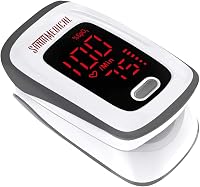
Santamedical Generation 2 Fingertip Pulse Oximeter
Santamedical's Generation 2 model is a compact fingertip device with an OLED display, 2 AAA batteries, a lanyard and automatic power-off after 10 seconds. It displays pulse rate, a pulse bar and SpO2 in 4 directions.
The device accommodates a wide range of finger sizes, but that phrase does not confirm a fit for an infant. Its product information does not give an infant age range or identify an infant sensor.
The included lanyard and batteries may be useful for keeping the monitor ready, but convenience features do not solve a sizing problem. A baby needs the correct sensor and measurement method first.
AccuMed CMS-50D1 Fingertip Pulse Oximeter Blood Oxygen
The AccuMed CMS-50D1 is described for children above 4 years old and adults, with readings in about 8 to 10 seconds when the user stays still. It includes 2 AAA batteries, a lanyard and a travel case.
The rotating LED display can show oxygen saturation and pulse rate in portrait or landscape formats. Its instructions also describe a pulse intensity bar and pulse wave display.
This age guidance is useful because it shows why product descriptions matter. A device that fits children above 4 years old should not be treated as a baby monitor simply because it is small or portable.
For children who have outgrown infant sizing, compare this type of device with our best pulse oximeter for kids guide.
Zacurate Pro Series 500DL Fingertip Pulse Oximeter
The Zacurate Pro Series 500DL is designed for ages 12 and above. It displays SpO2, pulse rate and pulse strength, and includes 2 AAA batteries, a silicone cover and a lanyard.
The finger chamber uses a spring system, and the display faces the user. Zacurate gives a measuring range of 70% to 100% SpO2 and states that the device is for sports and aviation use rather than medical use.
The age limit makes the buying decision clear. This model may be relevant for an older child or adult, but it should not be selected for an infant.
What should you check before buying a pulse oximeter for an infant?
Check the sensor, age range and monitoring instructions before comparing display features or accessories. If a clinician has recommended home monitoring, ask for the exact type of sensor and the body site to use.
Use this checklist:
- Age: Does the device specifically cover your baby's age?
- Weight or size: Does it give a minimum body size, finger size or foot size?
- Sensor type: Is it an infant, neonatal or pediatric sensor rather than an adult fingertip clip?
- Attachment: Can it stay in place without pressure or slipping?
- Site: Does the manual approve the finger, toe, foot or another location?
- Signal: Does it show when the reading is stable, or does it require a still hand?
- Instructions: Are placement, cleaning and alarm steps clear?
- Care plan: Do you know when to measure and whom to call?
- Backup: Can you contact the clinician if the monitor gives repeated unusual readings?
A device with no clear infant age or size guidance is not automatically unsafe, but it gives you less basis for choosing it. Ask the seller or manufacturer for the exact sensor information, or choose a device recommended by your child's care team.
How should you take a pulse oximeter reading on an infant?
Take an infant reading according to the device instructions and your clinician's plan, with the baby calm and the sensor placed on the approved site. A single moving or poorly fitted reading should not be treated as a diagnosis.
Before measuring:
- Wash and dry the approved measurement site.
- Check that the skin is warm and free from anything that could block contact.
- Keep the baby as calm and still as practical.
- Place the sensor in the direction shown in the instructions.
- Wait for a stable signal if the device requires one.
- Record the reading with the time and the baby's condition if your clinician asks you to track it.
Remove the sensor after the recommended monitoring period and check for redness, pressure marks or irritation. Stop and ask for guidance if the sensor does not fit safely.
Do not compare numbers from different devices as though they were identical. Sensor design, placement, movement and signal quality can all affect the result.
What can make an infant pulse oximeter reading unreliable?
Movement, poor fit, cold skin and weak circulation can make an infant pulse oximeter reading unreliable. A changing number should be interpreted with the baby's symptoms and the device's signal information.
Other possible problems include:
- The sensor is too large or has shifted.
- The sensor is placed on an unapproved site.
- The baby is crying or moving.
- The hand or foot is cold.
- Outside light reaches the sensor.
- The monitor has low batteries.
- The device has no stable pulse signal.
- The reading was taken during a change in position.
If the baby looks well but the number is unexpected, check the fit and repeat the measurement only as directed by the care plan. If the baby has breathing difficulty, unusual sleepiness, blue or gray coloring or another serious symptom, seek urgent medical help instead of waiting for a better home reading.
Is an infant pulse oximeter enough for home monitoring?
An infant pulse oximeter is enough for home monitoring only when it matches a clinician's instructions and the family knows how to respond to the readings. It should support care, not replace medical advice.
Ask the clinician:
- What number or trend should prompt a call?
- How long should each reading take?
- Which body site should you use?
- How often should you measure?
- Should you record pulse rate as well as SpO2?
- What symptoms require urgent help regardless of the number?
Parents should also learn how to check the sensor and recognize a poor signal. The monitor cannot explain whether a result changed because of breathing, movement, circulation or a placement problem.
If you are also comparing heart monitoring for a child, read Is EKG Safe for Infants? Parent's Guide.
An ECG and a pulse oximeter measure different things, so one does not replace the other.
When should you avoid relying on a home pulse oximeter?
Avoid relying on a home pulse oximeter when the infant has serious symptoms, the sensor does not fit, the device gives no stable signal or you do not have an action plan. A normal-looking number should not overrule visible breathing trouble or a rapidly worsening condition.
Call a clinician for advice when readings are repeatedly unusual, the monitor behaves inconsistently or the baby seems different from usual. Seek emergency help for severe breathing trouble, blue or gray skin, collapse or an infant who is difficult to wake.
If you are comparing other home heart monitors for a family member, our guide on how to choose the right ECG monitor explains why device purpose and measurement type should come before screen features.
What is the final buying rule for infant pulse oximeters?
Choose an infant or pediatric pulse oximeter only when its sensor size, approved body site and age range match your baby. If a product is labeled for children above 4 years old or ages 12 and above, it is not an infant choice.
That rule protects you from vague sizing language. Phrases about fitting a wide range of fingers usually describe older children and adults, not newborns or young infants.
Age and size guidance comes before convenience features.
The Santamedical and AccuMed models can serve as comparison points for older users, while the Zacurate model states an age range of 12 and above. None of the supplied product information establishes that these three fingertip models are designed for infants.
The AccuMed description gives guidance for children above 4 years old, which clearly excludes babies. The Zacurate description gives an even higher age limit, so it should be ruled out for infant use at the first check.
The Santamedical example is different because it does not state an infant age range in the supplied information. That absence is not permission to use it on a baby.
Without clear infant sizing and placement instructions, you have no sound basis for choosing it for an infant. For a baby with a medical monitoring need, follow the clinician's recommendation for the sensor and measurement routine.
Ask which body site to use, how long to wait for a stable reading and what to do if the number looks low or the signal will not settle. For general shopping, prioritize safe fit and clear age guidance before display orientation, lanyards or battery life.
A rotating screen, a lanyard or long battery life cannot correct a chamber that is too large for a tiny finger or toe. Daily use should stay simple and consistent with the care plan.
Use the approved site, keep the baby as calm and warm as practical, and remove the sensor after the recommended period to check the skin. Note the time and condition if tracking readings has been requested.
Check how batteries are replaced, how the sensor is cleaned and how the device is stored between uses. A monitor that is hard to clean or keep ready may be used less reliably, even if the sensor type is correct.
A correct infant sensor may take longer to place than an adult clip, and it may still struggle with movement or cold skin. That does not make it a poor choice.
It means the monitor should support your care plan rather than promise certainty on its own. If the listing does not answer the age, size or site questions, ask the manufacturer or seller for the exact sensor information.
If the answer remains unclear, choose a device recommended by your child's care team instead of hoping an adult fingertip model will work.
Frequently asked questions
Can you use a fingertip pulse oximeter on an infant?
A standard fingertip pulse oximeter may not fit an infant safely or read accurately because infant fingers are smaller and movement can affect the result. Check the device's stated age range and sensor design first, and ask your child's clinician which monitor and measurement site are appropriate.
What type of pulse oximeter is best for infants?
The best pulse oximeter for infants is one with a sensor designed for an infant's size, a secure fit, and instructions that cover infant monitoring. A pediatric or neonatal sensor may be more suitable than an adult fingertip clip, but your clinician should guide the choice when monitoring is medically necessary.
Where do you put a pulse oximeter on a baby?
Use the body site and sensor position described by the device instructions or your child's clinician. Infant monitors may use a foot, toe, finger or another approved site, but an adult fingertip device should not be improvised on a baby's small toe or finger.
Can a pulse oximeter diagnose a problem in an infant?
A pulse oximeter shows oxygen saturation and pulse rate, but one reading does not diagnose the cause of a problem. Poor fit, motion, cold skin and weak circulation can affect results.
Contact a clinician for concerning symptoms instead of relying on a home monitor alone.
What should I do if an infant's oxygen reading looks low?
Follow your clinician's action plan and seek urgent medical help for breathing trouble, blue or gray skin, unusual sleepiness or other serious symptoms. Recheck the sensor position only if the child is stable and the monitor instructions allow it, but do not delay care while chasing a number.