How to Choose a Medical Grade Pulse Oximeter
The best medical grade pulse oximeter is one that matches your intended use and has clear accuracy and regulatory information. Check whether it is meant for medical use, how its accuracy is described, and whether you can get steady readings from your finger.
On this page (9 sections)
- What should you check first in a medical grade pulse oximeter?
- Does medical grade mean FDA cleared?
- How do you compare pulse oximeter accuracy claims?
- Which features help you get a steady reading?
- How should you use a fingertip pulse oximeter?
- Which pulse oximeter fits each use?
- Should you choose fingertip or handheld?
- What should you avoid when buying a medical grade pulse oximeter?
- How do you choose the best medical grade pulse oximeter?
The best medical grade pulse oximeter is the one with a clear intended use, understandable accuracy information and a design you can use correctly. A bright display and quick reading are helpful, but they don't make a sports device suitable for clinical monitoring.
A pulse oximeter estimates blood oxygen saturation, shown as SpO2, and pulse rate. Before you compare models, decide whether you need general wellness information, exercise tracking, travel use or a device intended for medical monitoring.
This guide explains how to assess those differences without treating a marketing label as proof. For a broader overview of device types and buying factors, read our pulse oximeter device guide.
What should you check first in a medical grade pulse oximeter?
Start with intended use and regulatory information, then compare accuracy details and everyday handling. A device designed for sports or aviation may be useful for those activities but still be a poor choice for medical monitoring.
Read the product description and manufacturer information for these points:
- Is it intended for medical use, home use, sports or aviation?
- Does the manufacturer identify the device's regulatory status?
- Is an accuracy range provided?
- Is the measuring range stated?
- Does the device explain how to obtain a steady reading?
- Can you read the display in the place where you plan to use it?
- Does the finger chamber fit the intended user?
The US Food and Drug Administration explains that pulse oximeter readings have limitations and should be interpreted with symptoms and other information. You can review its general pulse oximeter information for consumers before relying on any home monitor.
The phrase medical grade is not enough by itself. Look for details that show what the device is designed to do and how its accuracy is described.
Does medical grade mean FDA cleared?
No. A medical grade label alone does not prove that a pulse oximeter is FDA cleared or appropriate for your care.
Check the exact device, model and intended use in manufacturer documentation and regulatory records when that status matters.
Terms such as clinical, professional, hospital or medical grade can describe positioning rather than a specific regulatory category. A responsible comparison should separate a maker's stated purpose from a buyer's assumption.
If you need a device for a diagnosed condition, ask your clinician what type of monitor is appropriate. You may need a model with a specific intended use, sensor arrangement or documentation that a general fingertip device does not provide.
For another sensor format, see our pulse oximeter ear probe guide.
Also check the model number carefully. A brand can sell several oximeters with similar names, while their intended uses, displays and accuracy information differ.
For readers comparing oxygen monitoring with heart rhythm tools, our guide to the Best FDA Approved EKG Device covers a different type of home measurement. An EKG device records electrical heart activity, while a pulse oximeter estimates oxygen saturation and pulse rate.
How do you compare pulse oximeter accuracy claims?
Compare accuracy claims only when the range, conditions and intended use are clear. A single claim such as accurate or reliable gives you less useful information than a stated accuracy range linked to a stated SpO2 range.
Ask these questions:
- What SpO2 range does the accuracy claim cover?
- Is the accuracy written as plus or minus a percentage?
- Does the manufacturer identify the intended user and setting?
- Are there instructions about remaining still?
- Does the device show pulse strength or another signal indicator?
- Are limitations explained?
The Zacurate Pro Series 500DL lists a measurement accuracy of plus or minus 2% and a measuring range of 70% to 100% SpO2. That gives you more information to assess than a general statement about accuracy, although it does not turn the device into a substitute for professional care.
The Santamedical Generation 2 description emphasizes accurate and reliable readings and says it has a small error margin. Its product information also describes a bright OLED display, readings in four directions and a pulse rate bar.
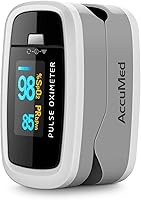
AccuMed describes the CMS-50D1 as providing oxygen saturation and pulse rate readings in 8 to 10 seconds. It also stresses that you should remain stationary for a precise reading.
These details show why accuracy should be judged with use instructions. A device can have a stated accuracy range and still give a poor reading if your hand moves or your finger is not positioned correctly.
Which features help you get a steady reading?
The most useful features are a clear display, a secure finger fit, a signal indicator and simple operation. These features reduce handling errors, but they cannot remove every source of measurement variation.
Look for:
- A display that is readable in your usual lighting
- Automatic orientation or several viewing directions
- A finger chamber that fits the intended user
- Pulse strength, pulse wave or pulse bar information
- A one-button start
- Automatic shutoff
- Batteries that are easy to replace
- A lanyard or case if you carry the device
The Santamedical model has a bright OLED display and shows SpO2, pulse rate and a pulse rate bar. It accommodates a wide range of finger sizes and automatically powers off after 10 seconds.
The AccuMed CMS-50D1 has a rotating LED display that works in portrait or landscape formats. It includes a travel case and lanyard, which may help if you use it while traveling or before and after exercise.
The Zacurate 500DL has a large LED display that faces the user. It is designed for ages 12 and above, includes a silicone cover and lanyard, and displays SpO2, pulse rate and pulse strength.
A signal bar or pulse wave can help you notice whether the device is detecting a pulse consistently. It does not independently confirm that the oxygen value is correct.
How should you use a fingertip pulse oximeter?
Use a fingertip pulse oximeter while sitting still with a warm, relaxed hand, then wait for the numbers to settle. Follow the specific instructions for the model and repeat the reading if the result changes quickly.
A practical routine is:
- Sit down and rest your hand.
- Make sure the finger is clean and dry.
- Open the clip and place your finger in line with the light.
- Keep the hand still and supported.
- Wait for a stable reading.
- Record the value and time if you are tracking a health concern.
- Repeat the measurement if the result seems unusual or the pulse signal is weak.
Movement can interfere with readings. Cold fingers, poor circulation, nail products and an incorrect finger position may also affect the result.
Don't use one number as a diagnosis. If you have trouble breathing, chest pain, blue lips or another urgent symptom, seek medical help rather than waiting for a home monitor to explain the cause.
Which pulse oximeter fits each use?
The best choice depends on why you need the device and who will use it. These 3 models fit different buying situations based on their stated features and intended uses.
Santamedical Generation 2: a simple home fingertip option
The Santamedical Generation 2 suits someone who wants a compact fingertip device with a bright display, multiple viewing directions and a lanyard.
It displays SpO2, pulse rate and pulse rate bar information. The finger chamber accommodates a wide range of finger sizes, and the automatic shutoff occurs after 10 seconds.
Its product information describes accurate and reliable readings, but it does not provide the same specific measurement accuracy range shown for the Zacurate model. Keep that difference in mind when comparing accuracy claims.
The box includes 2 AAA batteries, a neck or wrist cord and a user manual. The manufacturer also includes a 1-year warranty and customer service.
Choose it for straightforward home or portable checks when display direction and compact size matter. If you need documented medical-use status, confirm the exact model's intended use before buying.
For another fingertip comparison, see our best Masimo fingertip pulse oximeter guide.
AccuMed CMS-50D1: exercise and travel use
The AccuMed CMS-50D1 fits buyers who want a lightweight device for exercise, travel or aviation-related use. AccuMed says it is not intended for medical use, so it should not be your default choice for clinical monitoring.
The device measures oxygen saturation and pulse rate and also shows pulse intensity as a bar graph and pulse wave. Its display rotates between portrait and landscape formats.
The product information says it fits children above age 4 through adults. It uses 2 AAA batteries and automatically powers off when not in use.
The most important limitation is the stated purpose. Choose it for general vital-sign awareness around exercise or travel, not as a medical device for managing a condition.
If you need a different form factor for professional work, compare our best pulse oximeter for nurses guide.
Zacurate Pro Series 500DL: a clear accuracy range and large display
The Zacurate Pro Series 500DL fits buyers who want a large LED display, a stated accuracy range and a device designed for sports and aviation use.
Zacurate lists measurement accuracy of plus or minus 2% and a measuring range of 70% to 100% SpO2. It also states that the device determines SpO2, pulse rate and pulse strength in 10 seconds.
The finger chamber uses a spring system and is designed for ages 12 and above. The package includes 2 AAA batteries, a silicone cover and a lanyard, while the listed battery life is 30 hours.
Zacurate describes this device for sports and aviation use only and says it is not a medical device. Choose it when those intended uses fit your needs and the stated accuracy range helps you compare options.
For a different heart-monitoring category, our Best ECG Monitor With Medical Grade Accuracy guide explains why ECG accuracy claims should also be read alongside intended use.
Should you choose fingertip or handheld?
Choose a fingertip pulse oximeter for quick checks, and consider a handheld model when your care plan or work setting calls for a separate sensor and display arrangement. The larger format can be useful in some professional routines, but it is not automatically more accurate.
Compare:
- Intended use
- Sensor type
- Display size
- Portability
- Battery setup
- Cable management
- Instructions for positioning
- Available accuracy information
A fingertip model is usually easier to carry and start with one button. A handheld model may suit a buyer who wants a display separate from the finger sensor or needs a particular setup for repeated observations.
Read our best pulse oximeter handheld guide if a fingertip clip does not match your intended routine. Choose based on documented purpose and handling rather than cabinet size alone.
What should you avoid when buying a medical grade pulse oximeter?
Avoid choosing a device based only on the words medical grade, a bright display or a high number without context. Those details do not answer whether the monitor is suitable for your intended use.
Watch for these warning signs:
- No clear intended-use statement
- No accuracy range or measuring range
- Confusing model names
- Instructions that don't explain positioning
- A sports-only device presented as a medical monitor
- A device that does not fit the user's finger
- A display you cannot read in your normal setting
- Claims that sound absolute rather than measurable
You should also avoid treating a home reading as a diagnosis. A pulse oximeter is one source of information, and symptoms or a clinician's advice may matter more than a single number.
Check batteries before use and keep the instructions with the device. A simple setup error, such as incorrect battery direction or a poorly placed finger, can stop a working monitor from starting or reading properly.
How do you choose the best medical grade pulse oximeter?
Pick the model whose intended use, accuracy information and handling features match your reason for buying. For general home portability, compare the Santamedical's bright display and multiple viewing directions.
For exercise or travel, the AccuMed has a clear sports and aviation purpose. For a stated accuracy range and large display, the Zacurate provides more specific comparison details, but it is also described for sports and aviation use only.
If you need medical monitoring for a diagnosed condition, ask a clinician which device category and regulatory information you should require. If you need a broader brand comparison, our best Nonin pulse oximeter guide is a useful next step.
The right medical grade pulse oximeter is not defined by a label alone. Check the exact model, read the intended-use wording, compare accuracy details in context and make sure you can take a steady reading.
Frequently asked questions
What makes a pulse oximeter medical grade?
A medical grade pulse oximeter should have a clearly stated intended use, transparent accuracy information and appropriate regulatory documentation for that use. Check the device's labeling and manufacturer information instead of assuming that words such as professional, clinical or medical grade prove performance.
Is a fingertip pulse oximeter accurate enough for home use?
A fingertip pulse oximeter can be useful for home readings when you remain still, place your finger correctly and follow the instructions. Accuracy can vary with movement, cold fingers, poor circulation, nail products and other conditions, so use repeated readings and seek medical advice for concerning symptoms.
What accuracy should I look for in a pulse oximeter?
Look for a stated accuracy range tied to a stated oxygen saturation range and intended use. A number without context is difficult to compare.
The Zacurate Pro Series 500DL, for example, lists an accuracy of plus or minus 2% and a measuring range of 70% to 100% SpO2.
Can I use a sports pulse oximeter for medical monitoring?
Don't assume a sports or aviation pulse oximeter is suitable for medical monitoring. AccuMed describes the CMS-50D1 for home use, exercise or travel and says it is not intended for medical use, while Zacurate describes the 500DL for sports and aviation use only.
Should I buy a fingertip or handheld pulse oximeter?
Choose a fingertip model for quick, portable checks and a handheld model when your care plan calls for a different form factor or sensor arrangement. Compare the intended use, display, portability and instructions first.
Our handheld guide can help if a fingertip device does not fit your routine.