7 Best Easy-to-Use Heart Rate Monitors (October 2026)
The best easy heart rate monitors include the COOSPO H6 Heart Rate Monitor Chest Strap for app-connected workouts, the Zacurate Pro Series 500DL Fingertip Pulse Oximeter for a quick pulse check, and the Zacurate 500 Series Fingertip Pulse Oximeter Blood for a simple finger-clip readout.
On this page (6 sections)
The COOSPO H6 Heart Rate Monitor Chest Strap is the top-scoring pick for workouts, with Bluetooth and ANT+ connections for compatible apps and devices. For a quick spot check, choose a Zacurate fingertip pulse oximeter; for daily wrist wear, consider the MorePro tracker.
Our picks at a glance
-
1
 Best for app-connected workouts
COOSPO H6 Heart Rate Monitor Chest Strap
9.7/10 our score
See it on Amazon -
2
 Best for a quick pulse check
Zacurate Pro Series 500DL Fingertip Pulse Oximeter
9.7/10 our score
See it on Amazon -
3
 Best for a simple finger-clip readout
Zacurate 500 Series Fingertip Pulse Oximeter Blood
9.6/10 our score
See it on Amazon
- 4
 Best for stored ECG recordsCheck it
- 5
 Check it
Scosche Rhythm Heart Rate Monitor Armband
Best for avoiding a chest strap - 6
 Check it
GEOID HS500 Heart Rate Monitor
Best for a connection light - 7
 Check it
MorePro Health Fitness Tracker
Best for all-day wrist tracking
How we chose easy heart rate monitors
Easy-to-use heart rate monitors have clear controls or simple ways to view readings. We compared their setup steps, wearing styles, displays, app needs and stated battery details.
A spot-check device avoids app pairing, but it does not track a workout continuously. A connected sensor can send workout data to compatible apps or equipment, though you need to confirm support for your phone, watch or gym setup.
If Garmin Connect is part of yours, see how to change equipment settings.
Our scores weigh specs, features and buyer feedback against what you're shopping for.
Compare simple heart rate monitors
The COOSPO H6 and Zacurate Pro Series 500DL share the highest score, 9.7, but suit different needs. Use the table to compare wearing style and readout options.
| Product | Best for | Connection | Battery | Water rating | Our score |
|---|---|---|---|---|---|
| COOSPO H6 Heart Rate Monitor Chest Strap | app-connected workouts | Bluetooth and ANT+ | CR2032; up to 300 hours stated | IP67; not for swimming or soaking | 9.7 |
| Zacurate Pro Series 500DL Fingertip Pulse Oximeter | a quick pulse check | 9.7 | |||
| Zacurate 500 Series Fingertip Pulse Oximeter Blood | a simple finger-clip readout | 9.6 | |||
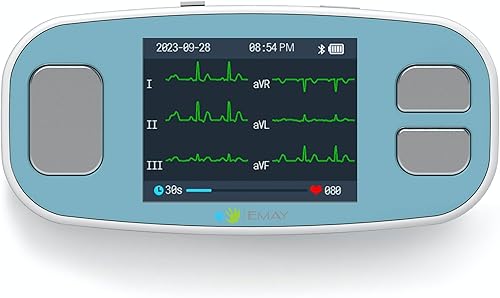
| EMAY 6L Portable ECG Monitor | stored ECG records | 9.6 | |||
| Scosche Rhythm Heart Rate Monitor Armband | avoiding a chest strap | Bluetooth and ANT+ | Up to 24 hours continuous use stated | 9.4 | |
| GEOID HS500 Heart Rate Monitor | a connection light | Bluetooth and ANT+ | CR2032; up to 800 hours stated | IP67; swimming not recommended | 9.3 |
| MorePro Health Fitness Tracker | all-day wrist tracking | 8.6 |
Easy-to-use heart rate monitors by use
The highest-scoring options come first, followed by picks for other uses. Choose the form that feels easiest to keep using.
COOSPO H6 Heart Rate Monitor Chest Strap: Best for app-connected workouts
- Bluetooth and ANT+
- Works with many fitness apps
- Pairs with compatible watches and gym equipment
- Replaceable CR2032 battery
The H6 sends heart-rate data to compatible apps, watches, bike computers and gym equipment over Bluetooth or ANT+. Moisten the strap electrodes before use, and pair through the app rather than the phone's Bluetooth menu.
Pros
- Two connection options
- Works with many named apps and devices
- Sensor separates from strap for storage
Cons
- Requires a chest strap
- Electrodes may need extra moisture in dry weather
The COOSPO H6 is the top pick for workouts if you want a chest strap to share heart-rate data with other gear. It supports Bluetooth and ANT+, and works with compatible sports watches, bike computers, gym equipment and fitness apps.
Moisten the plastic electrode areas before wearing it. Then search and connect to the H6 from the app you plan to use, rather than the phone's Bluetooth settings.
For Peloton-specific connection checks, see Peloton heart rate troubleshooting.
That small setup step is useful to know if a sensor does not appear right away. If you prefer a strap-free fit, consider the Scosche armband.
Zacurate Pro Series 500DL Fingertip Pulse Oximeter: Best for a quick pulse check
- One-button reading
- Large LED display
- Pulse rate and strength
- 2 AAA batteries included
A finger clip and user-facing LED display keep the basic steps simple for an occasional pulse check. It also measures SpO2, and Zacurate states it is for sports and aviation use only, not medical use.
Pros
- One-button operation
- Display faces the user
- Batteries and lanyard included
Cons
- Not a continuous workout monitor
- Not a medical device
The Zacurate Pro Series 500DL is a straightforward pick when you want a pulse reading without setting up an app. Place a finger in the chamber and press the button; its large LED display faces you while showing pulse rate, pulse strength and SpO2.
The package includes 2 AAA batteries, a silicone cover and a lanyard. Zacurate says the device is for sports and aviation use only, and it is not a medical device.
This model can suit an occasional check before or after activity, rather than heart-rate tracking throughout a workout. The quick, self-contained readout is its main simplicity advantage.
Zacurate 500 Series Fingertip Pulse Oximeter Blood: Best for a simple finger-clip readout
- One-button reading
- Large LED display
- Pulse rate and strength
- Silicone cover and lanyard included
This Zacurate finger clip displays pulse rate, pulse strength and SpO2 on a large LED screen. It is intended for sports and aviation use, not as a medical device.
Pros
- Simple clip-on operation
- Display faces the user
- Includes batteries and protective cover
Cons
- For spot checks rather than continuous tracking
- Not a medical device
The Zacurate 500 Series is another finger-clip option for a quick pulse reading. Its large LED display shows pulse rate, pulse strength and SpO2, and the clip is operated with a button.
It comes with 2 AAA batteries, a silicone cover and a lanyard. Like the pink Zacurate model above, it is intended for sports and aviation use only, not medical use.
Choose between the two Zacurate options based on the exact model and color you want. Neither is intended to replace a connected sensor for continuous workout tracking.
EMAY 6L Portable ECG Monitor: Best for stored ECG records
- Records and stores ECG signals
- Displays heart rate
- Bluetooth to phone
- USB connection to PC
EMAY records and stores ECG signals while displaying heart rate, with phone and PC connections for reviewing cases. It is a more involved choice than a simple pulse tracker, and EMAY says it is not a substitute for a hospital diagnostic ECG.
Pros
- Stores ECG signals
- Works with phones and computers
- No subscription required
Cons
- More steps than a basic pulse check
- Not intended for users with an implanted pacemaker
The EMAY 6L suits people who want to record ECG signals and review them on a phone or computer. It displays heart rate, connects to a phone over Bluetooth and to a PC over USB, and its software includes case review and measurement functions.
Those extra options add steps compared with a finger clip or wrist tracker. EMAY says the device is not intended to substitute for a hospital diagnostic ECG, and people with an implanted pacemaker are not recommended to use it.
For a simpler everyday routine, choose a pulse-rate monitor instead of an ECG recorder. If you need an easy-to-use ECG option for an older adult, see our Best Easy To Use ECG Monitor For Elderly guide.
Scosche Rhythm Heart Rate Monitor Armband: Best for avoiding a chest strap
- Optical armband sensor
- Bluetooth and ANT+
- Adjustable forearm, bicep or tricep fit
- Up to 24 hours stated battery life
The adjustable armband can sit on the forearm, bicep or tricep, offering a different fit from a chest strap. It connects to compatible watches, fitness equipment and apps over Bluetooth or ANT+.
Pros
- No chest strap
- Two connection options
- HRV mode captures RR interval data
Cons
- Requires charging
- App and device compatibility still matters
The Scosche Rhythm armband is a chest-strap alternative for workouts. For a Peloton-specific band setup, see our guide to the Peloton heart rate band.
Its adjustable band can be worn on the forearm, bicep or tricep, and it connects with compatible apps and devices over Bluetooth or ANT+.
Scosche says its HRV mode captures RR interval data for supported apps. If daily HRV is part of your tracking routine, our guide explains how to monitor heart rate variability daily.
The armband avoids a chest strap, but it still needs a compatible receiving device or app. Its battery life is up to 24 hours of continuous use.
GEOID HS500 Heart Rate Monitor: Best for a connection light
- Flashing LED confirms readiness and connection
- Bluetooth and ANT+
- Replaceable CR2032 battery
- Up to 800 hours stated battery life
The chest strap sensor uses a flashing LED to indicate readiness and connection, and supports Bluetooth and ANT+. Pair it within the app you plan to use, since direct phone Bluetooth pairing is not the recommended setup.
Pros
- Status light gives a visible cue
- Two connection options
- Long stated battery life
Cons
- Requires a chest strap
- Swimming is not recommended
The GEOID HS500 is another chest strap, with a flashing LED that confirms readiness and connection. It supports Bluetooth and ANT+, so it can connect with compatible phones, sports watches, bike computers and fitness equipment.
Like the H6, it should be paired through the app rather than directly from the phone's Bluetooth list. Its replaceable CR2032 battery has a stated life of up to 800 hours, and GEOID does not recommend swimming with it.
For help narrowing a chest strap, compare our best budget heart rate monitors guide. If a Suunto monitor has stopped sending data, our Suunto heart rate monitor troubleshooting guide covers common connection steps.
MorePro Health Fitness Tracker: Best for all-day wrist tracking
- 24/7 heart-rate feature
- 1.47-inch display
- Activity and sleep tracking
- Up to 7 days of daily use stated
This wrist tracker combines a heart-rate feature with steps, activity and sleep tracking in a single device. MorePro describes its health readings as general wellness and fitness reference, not medical use.
Pros
- Wrist-worn for daily tracking
- Tracks activity and sleep
- Call and message notifications
Cons
- Requires a compatible smartphone
- Health readings are not for medical use
The MorePro Health Fitness Tracker is the wrist-worn choice for people who want heart-rate features alongside activity and sleep tracking. If you also use an Apple Watch, see how to read its sleep chart.
Its 1.47 in display also shows call, text and app notifications from a compatible smartphone.
MorePro states up to 7 days of daily use, though battery life varies with settings and use. Its health features are for general wellness and fitness reference, not medical use.
A wrist tracker can reduce the steps needed to start a workout, since you wear it throughout the day. Confirm your phone meets the stated Android or iOS requirements before choosing it.
Which heart rate monitor style is simplest?
Choose a fingertip monitor for an occasional reading, a chest strap or armband for workout data, or a wrist tracker for daily activity features. The simplest fit depends on when and how you want to view a measurement.
Is a fingertip heart rate monitor easiest for spot checks?
Yes, a fingertip pulse oximeter is easy for a quick check because it does not need app pairing. Put a finger in the clip and read the screen, which makes it suitable for occasional pulse checks when you are still.
It is not the right format for continuous workout tracking. These Zacurate devices also measure SpO2, but Zacurate identifies them as sports and aviation devices, not medical devices.
Is a chest strap easy to use for workouts?
A chest strap can be simple once it is paired with the app or device you want to use. Moisten the electrodes, fit the strap, then connect through the compatible app; both the COOSPO H6 and GEOID HS500 support Bluetooth and ANT+.
Check the supported device or app before buying. Strap placement and electrode moisture are part of the routine, so choose an armband if you would rather wear a sensor on your arm.
Is an armband or wrist tracker more convenient?
An armband avoids wearing a strap around your chest, while a wrist tracker can remain on for daily activity tracking. The Scosche armband sends data to compatible apps and gear, and the MorePro combines heart-rate and activity features on the wrist.
Both depend on compatibility and regular charging. Check the phone requirements and the devices or apps you already use before deciding.
What should you check before buying?
Start with the reading you need and how you want to see it. That will help you focus on features you will use.
- For occasional checks: a finger clip offers a local display without an app connection.
- For workouts: confirm the strap or armband works with your sports watch, gym equipment or app.
- For daily trends: check the tracker’s phone compatibility, display and battery routine.
- For ECG records: distinguish ECG recording from simple pulse tracking, and review the device’s stated limits.
A heart-rate reading is not a diagnosis. Follow device instructions, and contact a health professional about symptoms or medical monitoring questions.
Which easy heart rate monitor should you choose?
Pick the COOSPO H6 Heart Rate Monitor Chest Strap for workouts with compatible apps and equipment. Choose the Zacurate Pro Series 500DL for a self-contained spot check, the MorePro for wrist-based daily activity, Scosche for an armband fit, or the EMAY 6L for recorded ECG signals, keeping its stated limits in mind.
If you want a dedicated chest strap, read our Suunto Smart Heart Rate Belt review and Polar H10 heart rate monitor review to compare other options.
Our top 3 picks at a glance
-
1
Best for app-connected workouts
COOSPO H6 Heart Rate Monitor Chest Strap
9.7/10 our score
See it on Amazon -
2
Best for a quick pulse check
Zacurate Pro Series 500DL Fingertip Pulse Oximeter
9.7/10 our score
See it on Amazon -
3
Best for a simple finger-clip readout
Zacurate 500 Series Fingertip Pulse Oximeter Blood
9.6/10 our score
See it on Amazon
Frequently asked questions
What is the easiest type of heart rate monitor to use?
A fingertip pulse oximeter is simple for an occasional spot check: clip it on and read the display. For workout tracking, a chest strap or armband sends data to a compatible app or device, while a fitness tracker can keep heart-rate and activity features on your wrist.
Choose by when and how you want to see the reading.
Are chest strap heart rate monitors hard to set up?
Setup depends on pairing the sensor with a compatible app or device. For the COOSPO H6 and GEOID HS500, moisten the strap electrodes and search for the sensor inside the app rather than pairing through the phone's Bluetooth menu.
Check compatibility before choosing a strap.
Can a pulse oximeter track heart rate during exercise?
A fingertip pulse oximeter can show pulse rate, but it is designed for a spot reading rather than continuous workout tracking. Its finger clip and display suit a quick check when you are still.
For exercise data sent to an app or sports watch, consider a compatible chest strap or armband.
Is a heart rate monitor the same as an ECG monitor?
No. A heart rate monitor may report pulse rate, while an ECG monitor records electrical signals from the heart.
The EMAY 6L records and stores ECG signals and displays heart rate, but it is not a substitute for a hospital diagnostic ECG.
Ask a health professional about symptoms or medical monitoring needs.


