Is a Home ECG Monitor a Replacement for Hospital EKG?
No, a home ECG monitor is not a replacement for a hospital EKG. While convenient, these devices serve different purposes and offer varying levels of diagnostic detail. They are helpful for monitoring heart rhythm, but they cannot provide the comprehensive analysis of a clinical EKG.
Many people wonder if personal heart monitors can substitute for professional medical evaluations. We found that at-home devices are excellent tools for tracking your heart’s activity between doctor visits. However, they are not designed for diagnosing complex heart conditions on their own.
- Home ECGs monitor heart rhythm.
- Hospital EKGs diagnose complex conditions.
- Home devices are not replacements.
- They offer different levels of detail.
Let’s walk through why this distinction is so important for your heart health and what each device truly offers.
Understanding Home ECG Monitors vs. Hospital EKGs
You’re right to wonder about the differences. We found that these two tools, while both measuring your heart’s electrical activity, serve distinct roles in your health journey.
Think of it like comparing a home blood pressure cuff to a full physical exam. Both give you important information, but one is for routine checks, and the other provides a deep dive.
What is a Home ECG Monitor?
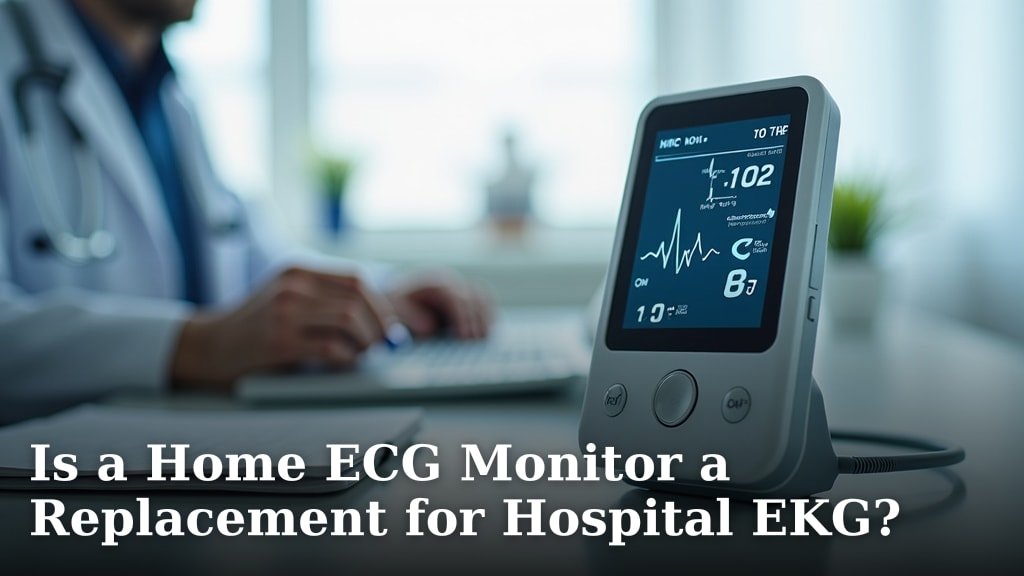
A home ECG monitor is a small, portable device you can use yourself. Many models are worn on your wrist or chest, or you might hold one between your fingers. If you’re considering purchasing one, our guide to the best portable ECG monitor can help you choose the right device for your needs.
These devices record your heart’s electrical signals. They are designed for convenience and quick checks, often providing results you can see on your phone.
We found that they are excellent for spot-checking your heart rhythm. They can tell you if your heart is beating regularly or if there are any obvious rhythm disturbances.
How Do Home ECG Devices Work?
Most home ECGs use just one or a few leads. These leads pick up electrical impulses from your skin. You place them on your body, and the device captures the data.
This data is then often sent to an app on your smartphone. The app can then display a simple trace of your heart rhythm, or it might offer a basic analysis.
Some devices can even detect common issues like atrial fibrillation (AFib). This makes them valuable for people who need to monitor their AFib between doctor visits (American Heart Association).
What is a Hospital EKG (Electrocardiogram)?
A hospital EKG, also called a 12-lead EKG, is a more involved medical test. It’s usually done in a clinic, hospital, or doctor’s office by trained medical staff.
This test provides a much more detailed view of your heart’s electrical activity. It’s a standard diagnostic tool for many heart conditions.
We found that EKGs are used to diagnose a wide range of heart issues. This includes heart attacks, abnormal heart rhythms, and even structural problems.
The Science Behind a 12-Lead EKG
Unlike home monitors, a 12-lead EKG uses ten electrodes placed at specific points on your chest, arms, and legs. These electrodes create 12 different “views” of your heart.
Each view captures electrical signals from a different angle. This gives doctors a comprehensive picture of how electricity flows through your entire heart muscle.
A cardiologist then interprets these detailed readings. They look for specific patterns, deviations, and subtle changes that indicate underlying heart problems (Mayo Clinic).
Key Differences: Home ECG vs. Hospital EKG
Let’s break down the main ways these two types of heart monitoring differ. Understanding these points is crucial for managing your heart health.
| Feature | Home ECG Monitor | Hospital EKG (12-Lead) |
|---|---|---|
| Purpose | Monitoring heart rhythm, general wellness checks, tracking known conditions (e.g., AFib). | Diagnosing heart conditions, assessing heart attack, evaluating symptoms, pre-surgical screening. |
| Number of Leads | 1-6 leads (typically 1-2) | 12 leads |
| Data Detail | Basic rhythm strip, heart rate, some rhythm irregularities. | Detailed electrical activity from 12 angles, precise timing, wave morphology, signs of damage. |
| Interpretation | Automated algorithms (may have limitations), self-interpretation, or shared with doctor. | Interpreted by a cardiologist or trained medical professional. |
| Diagnostic Power | Limited diagnostic capability for specific rhythm issues. | High diagnostic power for a wide range of heart conditions. |
| Setting | Home, office, on the go. | Clinic, hospital, doctor’s office. |
Diagnostic Capability and Accuracy
This is where the biggest difference lies. Home ECGs are not designed for diagnosis. They are monitoring tools.
A hospital EKG, on the other hand, is a powerful diagnostic instrument. Doctors use it to make critical decisions about your heart care.
We found that while home devices can alert you to potential issues, they cannot definitively say what those issues are. You still need a doctor to confirm.
When to Use Which Device?
So, when should you reach for your home monitor, and when is it time for a full EKG?
Your home ECG is fantastic for:
- Checking your heart rhythm if you feel palpitations.
- Tracking the effectiveness of heart medication.
- Sharing data with your doctor during virtual appointments.
- Gaining peace of mind between scheduled check-ups.
A hospital EKG is necessary for:
- New or worsening chest pain.
- Sudden dizziness or fainting spells.
- Diagnosing a heart attack.
- Evaluating persistent symptoms like shortness of breath.
- Routine screenings if you have risk factors for heart disease.
Always remember that if you have concerning symptoms, seeking professional medical attention is paramount. Do not rely solely on a home device for urgent care.

Your Role in Monitoring Heart Health
Your involvement in your heart health is incredibly important. Home ECG monitors can be a valuable part of this, but they require you to be smart about their use.
Using Your Home Monitor Responsibly
Think of your home ECG as a helpful companion, not a sole guardian. It gives you data, but it doesn’t give you a diagnosis.
We found that the best way to use these devices is to keep good records. Note down when you took readings, how you felt, and any unusual results.
Share this information with your doctor. They can interpret it in the context of your overall health history and other tests.
Checklist for Responsible Home Monitoring
- Always consult your doctor before using a home ECG for a new condition.
- Understand the limitations of your specific device.
- Keep a log of your readings and any symptoms.
- Do not self-diagnose or change medication based on home readings.
- Seek immediate medical attention for concerning symptoms, regardless of home readings.
- Ensure your device is FDA-cleared for accuracy and safety.
The Importance of Medical Consultation
No matter how advanced technology gets, nothing replaces your doctor’s expertise. They have the training and tools to accurately assess your heart health.
Many experts emphasize that home devices are supplements to, not substitutes for, professional medical care (National Institutes of Health).
If you have any doubts, or if your home monitor shows something unusual, please reach out to your healthcare provider. Your heart is too important to guess.
Conclusion
As we’ve explored, your home ECG monitor is a wonderful tool for personal heart rhythm awareness, but it’s not a substitute for professional medical care. We found that these devices offer convenient snapshots of your heart’s activity, which can be very reassuring or flag potential issues.
However, for accurate diagnosis of complex heart conditions, a hospital EKG is essential. Remember to use your home monitor responsibly, always sharing results with your doctor. Your healthcare provider can interpret these readings within your full medical context, guiding you toward the best care for your heart health.
Frequently Asked Questions
Can a home ECG monitor detect a heart attack?
While some advanced home ECGs might show irregular patterns, they are not designed to definitively diagnose a heart attack. A hospital EKG with multiple leads provides the detailed information doctors need for this critical diagnosis. If you suspect a heart attack, seek emergency medical care immediately.
Are home ECG monitors accurate enough for medical decisions?
Home ECG monitors provide a good indication of heart rhythm and can detect certain common arrhythmias, especially those that are FDA-cleared. However, medical decisions, especially those involving diagnosis or treatment changes, should always be based on the comprehensive assessment of a healthcare professional, often including a hospital EKG.
How often should I use my home ECG monitor?
The frequency depends on your individual health needs and your doctor’s recommendations. Some people use them daily for tracking known conditions, while others use them only when experiencing symptoms. Always follow your healthcare provider’s guidance on how and when to use your specific device.
Will my doctor accept readings from my home ECG monitor?
Many doctors welcome data from home ECG monitors, especially if the device is FDA-cleared. This data can offer valuable insights into your heart’s activity between appointments. Be sure to discuss your home monitoring habits with your doctor to understand how they prefer to receive and interpret this information.
Is there a specific brand of home ECG monitor that doctors recommend?
Recommendations can vary based on individual patient needs and doctor preference. Look for devices that are FDA-cleared, as this indicates they meet certain standards for accuracy and safety. Your cardiologist or primary care physician can offer personalized advice on which devices might be most suitable for you.