How to Detect Heart Palpitations with a Home Monitor?
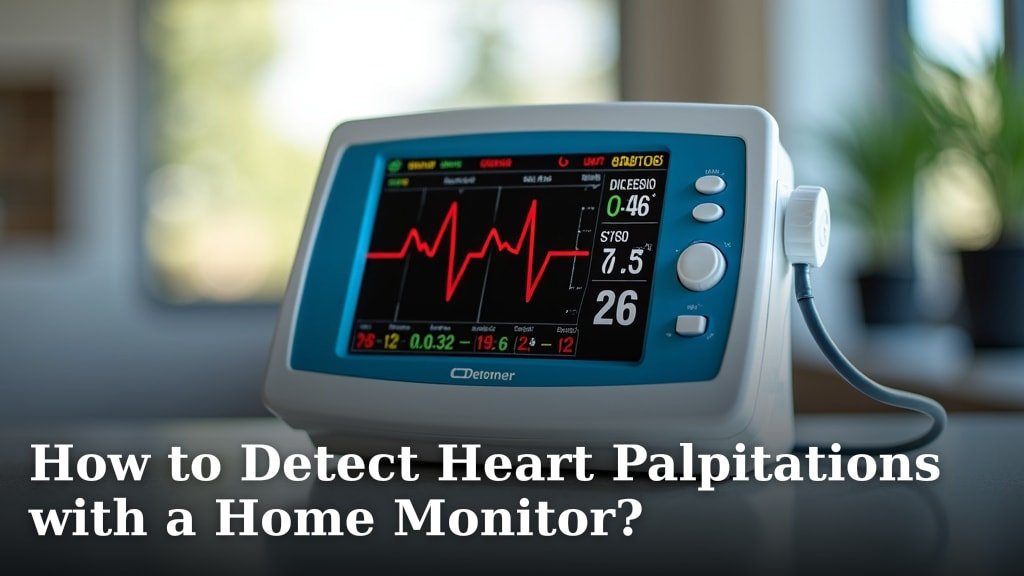
To detect heart palpitations with a home monitor, you typically use a portable ECG device or a smartwatch with ECG capabilities. These tools can record your heart’s electrical activity when you feel symptoms, helping to capture important data for your doctor.
Many people experience a fluttering or racing heart now and then. Knowing how to monitor these heart palpitations at home can provide peace of mind and valuable information. We’ll show you how these devices work and what to look for.
- Home monitors help record heart palpitations.
- Portable ECG devices and smartwatches are common tools.
- Capture your heart’s electrical activity during symptoms.
- This data is helpful for your healthcare provider.
Ready to learn more? Let’s walk through exactly how you can use these home monitors to track your heart health.
Monitoring Heart Palpitations with At-Home Devices
You can effectively monitor heart palpitations at home using readily available technology. These devices help you capture vital information when you feel symptoms. This data can then be shared with your doctor for a clearer diagnosis and treatment plan.
Think of it as being your own personal heart detective. You’re gathering clues that might otherwise be missed during a short clinic visit. Your doctor often can’t see what’s happening the moment you feel a flutter.
Understanding Home Heart Monitors
What exactly are these home heart monitors, and how do they work? Primarily, we’re talking about devices that can perform an electrocardiogram (ECG), sometimes called an EKG. An ECG measures the electrical signals of your heart (Cleveland Clinic).
These signals show how fast your heart is beating and if it’s beating with a regular rhythm. When you have palpitations, your heart’s rhythm might change, and an ECG can record these changes.
Portable ECG Devices
Portable ECG devices are small, handheld gadgets. You usually place your fingers on sensors, and the device records your heart’s activity. Many are very user-friendly and discreet.
Some models have sticky patches you place on your chest, similar to what a doctor uses. This can provide a more detailed recording. The goal is to capture the ECG while you’re actually feeling a palpitation.
Smartwatches with ECG Capabilities
Many modern smartwatches now include ECG functionality. You typically activate the ECG feature and place a finger from your opposite hand on the watch’s crown or sensor. It takes about 30 seconds to record (Mayo Clinic).
This method is incredibly convenient because you likely wear your smartwatch daily. It allows for on-the-spot recording whenever you sense an irregular heartbeat. The results are often displayed right on your watch screen or a paired smartphone app.
How to Use Your Home Monitor During a Palpitation
The key to effective home monitoring is to use your device immediately when symptoms occur. Don’t wait until the palpitation passes. The quicker you record, the better the data you’ll capture.
It’s like trying to catch a fleeting moment in a photograph – timing is everything. If you wait, the event might be over, and your recording will appear normal, which isn’t helpful for your doctor.
Step-by-Step Recording with a Handheld ECG
Using a handheld ECG is quite simple. First, make sure the device is charged. When you feel a palpitation, find a quiet place to sit down. You’ll typically need to be still for the best reading.
- Turn on the device.
- Place your fingers (often thumbs) on the designated sensors.
- Remain still and try to relax.
- Wait for the recording to complete (usually 30 seconds to 1 minute).
- Check the device or app for initial results.
- Save the recording so you can share it.
Remember, your focus is to get a clear signal. Movement or talking can interfere with the recording quality.
Step-by-Step Recording with a Smartwatch ECG
Smartwatches make recording even more convenient. You’re already wearing it, so you just need to initiate the process. Just like with a handheld device, stillness is important.
- Open the ECG app on your smartwatch.
- Rest your arm on a table or your lap.
- Place the finger of your opposite hand on the watch’s digital crown or sensor.
- Hold still for about 30 seconds until the recording is done.
- Review the reading on your watch or phone app.
- Save the data for later review with your doctor.
Many smartwatches provide immediate feedback, such as whether your rhythm appears “normal sinus rhythm” or if there are signs of atrial fibrillation. However, these are not diagnostic tools; they are informational (American Heart Association).
What Data Do These Monitors Provide?
Home monitors provide a visual representation of your heart’s electrical activity. This is shown as a waveform. Your doctor is trained to interpret these waves to identify any irregularities.
The data typically includes your heart rate during the event, and crucially, the rhythm of your heartbeats. Is it regular? Is it irregular? These are the questions the ECG helps to answer.
| Feature | Portable ECG Device | Smartwatch ECG |
|---|---|---|
| Convenience | Small, easy to carry, but needs to be taken out. | Always on your wrist, very discreet. |
| Recording Time | Typically 30 seconds to 1 minute. | Usually 30 seconds. |
| Placement | Fingers on sensors, or chest patches. | Finger on watch crown/sensor. |
| Data Display | On device screen or paired app. | On watch screen and paired app. |
| Key Benefit | Dedicated heart monitoring, focused. | Immediate access, lifestyle integration. |
As you can see, both options offer unique advantages. Your choice might depend on your lifestyle and preferences.
What to Look For in Your Readings
While you shouldn’t self-diagnose, understanding what your monitor shows can be helpful. Most devices will indicate if your heart rhythm is “normal” or if it detects something like “possible atrial fibrillation.”
Normal sinus rhythm means your heart is beating regularly, usually between 60 and 100 beats per minute. If you see something different, it’s a good piece of information to share with your doctor.
Preparing for Your Doctor’s Visit
Capturing data is only half the battle. You need to present it effectively to your doctor. Think of yourself as a journalist reporting facts.
Most devices allow you to export your ECG recordings, often as a PDF file, which you can then email or print. Make sure these are easily accessible for your appointment.
Checklist for Your Doctor’s Visit
To make your doctor’s visit as productive as possible, we suggest you prepare a few things in advance:
- Bring your device or ensure your app is accessible.
- Have saved ECG recordings from when you felt symptoms.
- Note down the date and time of each palpitation.
- Describe what you were doing when the palpitation occurred.
- List any other symptoms you experienced with the palpitation (e.g., dizziness, shortness of breath).
- Prepare questions you have for your doctor.
This organized approach helps your doctor quickly understand your experience and review the objective data. It paints a more complete picture of your heart’s behavior.
Important Considerations and Limitations
While home monitors are incredibly useful, they aren’t a replacement for professional medical advice. They are screening tools, not diagnostic ones (National Institutes of Health).
Always remember that these devices are designed to help you and your doctor gather information. They cannot diagnose a heart condition on their own. Only a healthcare professional can do that.
Also, some palpitations might not be serious. Many people experience occasional heart flutters due to stress, caffeine, or lack of sleep. Your doctor can help determine the cause and significance.
Conclusion
You now understand how home monitors can be powerful allies in managing your heart health. By using portable ECG devices or smartwatches, you can capture crucial data during a palpitation. This information transforms a fleeting symptom into an objective record for your doctor. Remember, these tools equip you to be an active participant in your care.
Don’t hesitate to discuss these monitoring options with your healthcare provider. Your proactive approach can lead to a quicker understanding and better management of any heart rhythm concerns.
Frequently Asked Questions
Can a home heart monitor detect all types of heart conditions?
No, home heart monitors, while excellent for capturing rhythm during symptoms, primarily focus on electrical activity. They are not designed to detect all heart conditions, such as structural issues or valve problems. Your doctor uses various tests for a complete diagnosis.
How accurate are home ECG devices compared to a clinical ECG?
Home ECG devices provide a single-lead recording, which is less comprehensive than the multi-lead ECG performed in a clinic. However, they are generally accurate for detecting common rhythm abnormalities like atrial fibrillation at the moment of symptom occurrence. Always share your readings with a professional for interpretation.
Should I buy a home heart monitor even if I don’t have palpitations?
If you don’t experience palpitations or have a diagnosed heart condition, a home monitor might not be necessary. These devices are most beneficial for those who have intermittent symptoms that are hard to catch during a doctor’s visit. Discuss with your doctor if a monitor is right for your situation.
Can stress or anxiety cause false readings on a home monitor?
Stress and anxiety can cause your heart rate to increase and may even lead to palpitations. While the monitor will accurately record your heart’s activity during these times, the “reading” itself isn’t false. It accurately reflects what your heart is doing. It’s important to note any emotional factors when you record.
How often should I use my home heart monitor?
You should use your home heart monitor whenever you experience symptoms like palpitations, a racing heart, or a fluttering sensation. It’s not typically meant for continuous, daily use if you are asymptomatic. Follow your doctor’s specific recommendations for how and when to monitor your heart.