
Can You Use an ECG Monitor without a Smartphone?

Yes, you can often use an ECG monitor without a smartphone, especially with standalone devices. Many modern ECG monitors offer built-in screens and storage for your readings. This means you don’t always need to pair them with another device.
However, connecting to a smartphone or tablet can enhance your experience significantly. You might get more detailed data analysis or easier sharing options. It really depends on the specific monitor you choose and what features are important to you.
- Some ECG monitors work totally independently.
- Others offer enhanced features with a smartphone connection.
- Look for devices with built-in screens for standalone use.
- Smartphones often provide deeper data insights.
- Your needs will guide your best choice.
Let’s dive deeper into how different types of ECG monitors work and what to consider when making your decision.
Operating an ECG Monitor Without a Phone
Yes, many ECG monitors work perfectly fine on their own. You don’t always need a smartphone or tablet to get your readings. It really depends on the type of device you pick.
Think of it like buying a basic digital camera versus a smartphone camera. Both take pictures, but one offers more features and connectivity. Your ECG monitor choices follow a similar path.
Standalone ECG Monitors: Freedom from Your Phone
Imagine a small, portable device you can slip into your pocket. Many ECG monitors are built just like this. They are designed for simplicity and direct use.
These devices often have a small screen built-in. This screen shows your heart rhythm in real-time. You can immediately see if your heart rate is too fast or too slow.
After a reading, the device usually stores the data. You can often scroll through past readings right on the device. This gives you instant feedback without needing to connect to anything else.
How Standalone Monitors Typically Work
Using one is usually very easy. You might place your fingers on two electrodes, or hold the device to your chest. Within seconds, it starts recording your heart’s electrical activity.
The device then displays a simple interpretation. It might say “Normal Sinus Rhythm” or alert you to a possible issue. This quick check can offer great peace of mind.
Some models allow you to transfer data to a computer later using a USB cable. This is helpful if you want to save or print your readings for your doctor (American Heart Association).
ECG Monitors That Pair with Smartphones: Enhanced Features
While standalone devices offer independence, many modern ECG monitors are designed to work with your phone. They aren’t always *required*, but they add a lot to the experience.
Think of it like adding extra apps to your basic phone. The phone still makes calls, but apps give you more power. Smartphone-connected ECGs work in a similar way.
These devices typically transmit data wirelessly, often using Bluetooth, to an app on your phone. The app then becomes your command center for your heart health data.
Benefits of Smartphone Integration
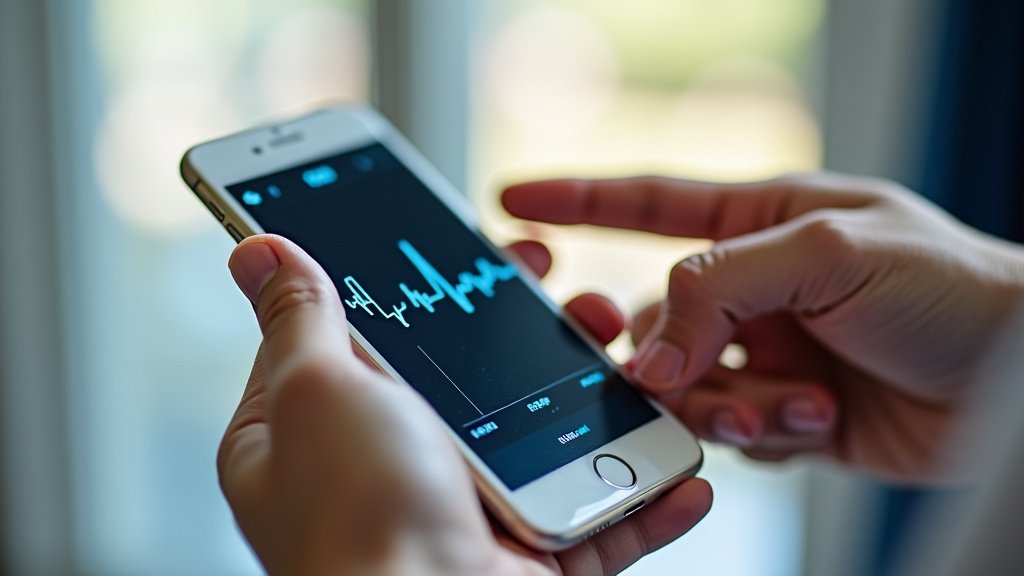
When an ECG monitor connects to your phone, you usually get a much bigger, clearer view of your heart rhythm. The app can show a detailed waveform, not just a simple text readout.
The app also often provides more sophisticated analysis. It might automatically detect specific arrhythmias like atrial fibrillation. This is a common irregular heartbeat that often needs medical attention (CDC).
Your phone app also acts as a convenient storage hub. All your readings are saved in one place, usually with dates and times. You can easily track changes over days, weeks, or months.
Sharing your results with your doctor becomes much easier too. Most apps let you generate a PDF report with a tap. You can then email it directly to your healthcare provider before your appointment.
Key Differences: Standalone vs. Smartphone-Connected
Let’s break down the main things that set these two types of ECG monitors apart. Knowing these differences helps you decide what’s best for you.
| Feature | Standalone ECG Monitor | Smartphone-Connected ECG Monitor |
|---|---|---|
| Screen | Small, basic, built-in display. | Uses your phone’s large, high-resolution screen. |
| Data Storage | Limited internal memory, often stores raw data. | Stores unlimited data in the app/cloud, easy access. |
| Analysis | Basic interpretation (e.g., normal/possible AFib). | More advanced algorithms, detailed insights. |
| Data Sharing | Manual transfer (USB) or requires printing. | Easy email, PDF export, or direct sharing from app. |
| Portability | Very portable, one single device. | Requires carrying both the device and your phone. |
| Cost | Often slightly less expensive for basic models. | Can be similar, but apps might have subscription options. |
Choosing the Right Monitor for Your Needs
So, how do you pick? It comes down to what you prioritize. Are you looking for ultimate simplicity, or do you want all the bells and whistles?
If you’re not tech-savvy or just want quick, on-the-spot checks, a standalone unit might be your best friend. It offers immediate results without extra steps.
If you like detailed tracking, want to share professional-looking reports, and are comfortable with apps, then a smartphone-connected device will likely serve you better.
Consider Your Daily Routine
Think about where and when you’ll use the monitor. Do you travel often and prefer fewer gadgets? Or do you always have your phone nearby?
If you’re buying it for an older family member, consider their comfort level with technology. A simple device with a clear screen might be less overwhelming for them.
When a Smartphone is Truly Beneficial for ECG Monitoring
Even if you prefer a standalone device, there are times when a phone connection is really helpful. It’s not always about *needing* it, but about *maximizing* your health insights.
For example, if your doctor asks you to track your heart over several weeks, an app makes this much simpler. You don’t have to manually log each reading.
Some advanced features, like AI-powered analysis or trends over time, are almost always found in app-based systems. They can spot patterns you might miss (National Institutes of Health).
Checklist for Choosing Your ECG Monitor
Here’s a quick list to help you think through your options. Consider these points before making a purchase.
- Do you need immediate, on-screen results without any other device?
- Are you comfortable using smartphone apps for health tracking?
- How important is detailed data analysis and long-term trend tracking?
- Will you need to easily share reports with your doctor?
- What is your budget, and are you willing to pay for app subscriptions?
- Does the device need to be extremely simple for someone else to use?
Answering these questions honestly will guide you to the perfect ECG monitor for your unique situation. Remember, the best device is the one you will actually use consistently.
Conclusion
Choosing an ECG monitor doesn’t have to be complicated. You’ve learned that a smartphone isn’t always a necessity. Many reliable devices offer standalone operation with built-in screens for immediate feedback.
If you value simplicity and quick checks, a standalone unit is a great choice. If you prefer detailed analysis and easy sharing with your doctor, a smartphone-connected device might be better. Consider your tech comfort and daily routine. The best monitor is the one you will use consistently for your heart health.
Frequently Asked Questions
Are standalone ECG monitors less accurate than those connected to a smartphone?
No, accuracy isn’t typically tied to smartphone connectivity. Both types of devices can provide accurate readings. The difference lies in how the data is displayed, analyzed, and stored, not in the initial measurement.
Can I still share my readings with my doctor if I use a standalone ECG monitor?
Yes, you can. Many standalone monitors allow you to connect to a computer via USB to download data. You can then print these reports or manually share them with your healthcare provider during appointments.
Do standalone ECG monitors store many readings?
The storage capacity varies by model. Most standalone devices can store a decent number of readings internally. Some might store dozens or even hundreds of recordings before needing to be cleared or connected to a computer for data transfer.
What if I change my mind and want to connect my standalone ECG to a smartphone later?
Generally, if a device is designed as standalone, it won’t have the capability to connect to a smartphone later. These are separate categories of devices. If you think you might want app features down the line, it’s best to choose a monitor that offers that option from the start.
Are there any hidden costs with standalone ECG monitors?
Standalone monitors usually have fewer ongoing costs compared to some app-connected devices. You buy the device, and that’s often it. Some app-based devices might have optional subscription fees for advanced features or cloud storage, which standalone units typically don’t.

