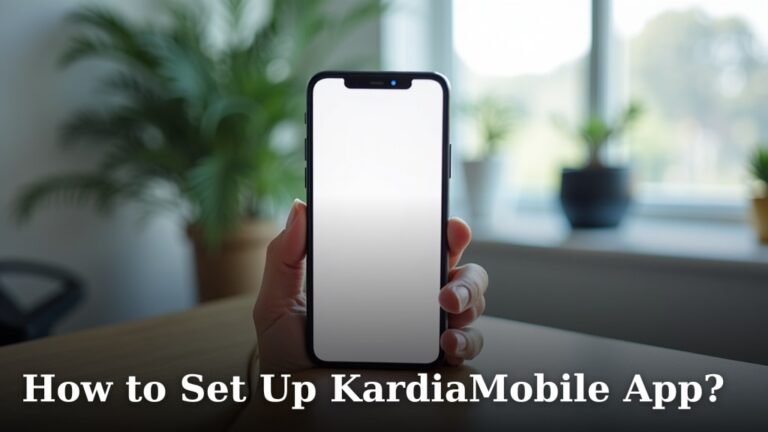
How to Set Up KardiaMobile App?
To set up the KardiaMobile app, you will first download the free Kardia app from your smartphone’s app store. Then, you’ll create an account by following the simple on-screen prompts,…
To set up the KardiaMobile app, you will first download the free Kardia app from your smartphone’s app store. Then, you’ll create an account by following the simple on-screen prompts,…

To properly apply EKG electrode pads, you must first prepare the skin by cleaning and, if needed, shaving the area, then carefully place each pad in the correct anatomical position…

To place ECG electrodes correctly, you need to first prepare the skin, then attach the ten electrodes in specific locations: four limb leads and six chest leads. This precise placement…

To take an ECG reading correctly, you need to first prepare the patient and equipment. Then, attach the electrodes to specific points on the body and ensure a good electrical…
While you can certainly learn to understand an EKG reading at home, it’s not a substitute for professional medical advice. Think of it as a tool for personal understanding, not…

To use a KardiaMobile device, you simply open the app on your smartphone, place your fingers on the two sensors, and wait for the recording to complete. It’s designed to…

A KardiaMobile is a personal EKG device that records your heart’s electrical activity. It allows you to take an EKG anytime, anywhere, directly from your smartphone or tablet. This device…

Supraventricular Tachycardia (SVT) is a type of arrhythmia where your heart beats abnormally fast, originating from above the heart’s lower chambers. This means your heart’s electrical signals misfire, causing a…

A Premature Ventricular Contraction (PVC) is when your heart has an extra, abnormal heartbeat that starts in the lower chambers (ventricles). It feels like your heart skips a beat or…

Tachycardia is a medical term for a heart rate that’s too fast, meaning your heart beats more than 100 times per minute. It’s not always dangerous, but it can be…