What to Look for in a Good Home ECG Monitor?
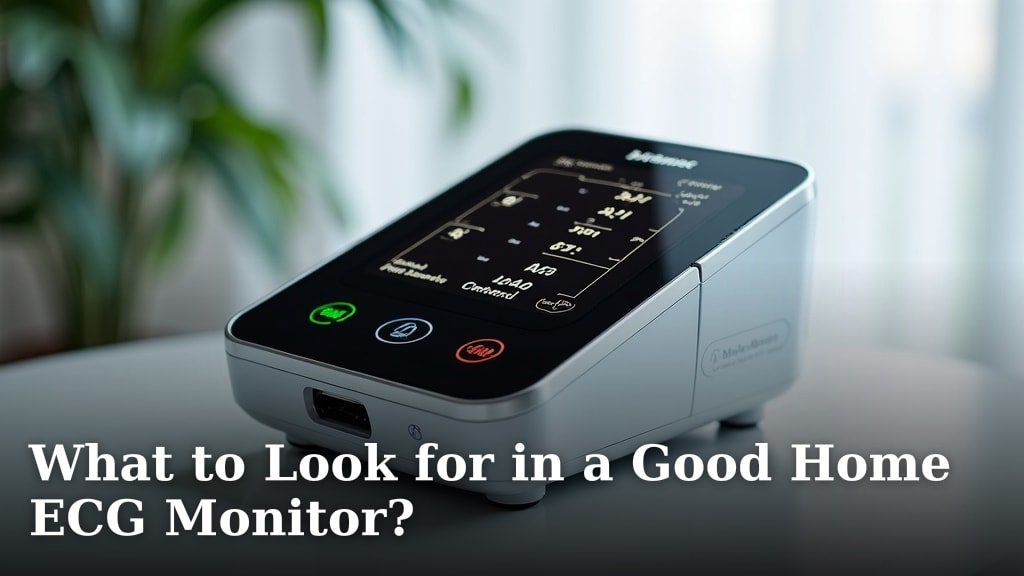
Finding a good home ECG monitor means prioritizing devices that offer clear, accurate readings and are easy to use. Look for FDA-cleared models that provide reliable data for you and your doctor. You want a monitor that gives you peace of mind.
Home ECG monitors can help you track your heart’s activity between doctor visits. This can be super helpful for managing conditions or just staying aware of your heart health. We found that the best ones blend accuracy with user-friendliness.
TL;DR:
- Look for FDA-cleared devices for safety.
- Prioritize ease of use and clear data.
- Check for good customer support and app integration.
- Consider features like portability and battery life.
Ready to learn more? Let’s walk through exactly what you should look for in a home ECG monitor so you can make the best choice for your health.
Essential Features for Your At-Home ECG Monitor
Choosing the right home ECG monitor can feel like a big decision. You want something that’s reliable and easy to use. We’ve done the research to help you understand what really matters in these devices.
Think of it like buying a new appliance for your home. You look for features that make your life easier and offer the best value. The same goes for your heart health tools.
Accuracy and Medical Validation
The number one thing you need in an ECG monitor is accuracy. What’s the point if the readings aren’t right? This is where medical validation comes in.
When you’re looking, prioritize devices that are FDA-cleared. This means the U.S. Food and Drug Administration has reviewed the device. They’ve determined it’s safe and effective for its intended use (FDA).
An FDA clearance isn’t just a fancy label. It shows that the device has gone through rigorous testing. It meets specific standards for performance and reliability.
Many experts say that an FDA-cleared device provides peace of mind. You can trust the data it provides to both you and your doctor. Always check for this clearance before you buy.
Ease of Use and User Experience
Let’s be honest, nobody wants a complicated gadget. Especially when it comes to your health. A good home ECG monitor should be simple to operate.
Think about how you’ll use it every day. Will it be something you dread, or something you can quickly do? Intuitive design is key here.
Device Design and Operation
Look for devices with minimal buttons and clear instructions. You shouldn’t need a manual every time you take a reading. Some models are so easy, you just touch a button or place your fingers on sensors.
Consider the physical size of the device. Will it fit comfortably in your hand? Is it easy to hold still during a reading? These small details make a big difference.
Companion App and Data Management
Most modern ECG monitors connect to a smartphone app. This app is where your readings are stored. It’s a central hub for your heart data.
The app should be user-friendly and visually clear. Can you easily see your past readings? Are the graphs simple to understand? Can you quickly share your data with your doctor?
We found that the best apps offer clear interpretations. They might highlight potential issues or patterns. This helps you understand what’s happening without being a medical expert.
Features That Enhance Monitoring
Beyond the basics, certain features can really set a home ECG monitor apart. These additions can make your monitoring experience more complete and useful.
Irregular Heartbeat Detection
One of the most valuable features is the ability to detect irregular heartbeats. This includes conditions like atrial fibrillation (AFib).
Many devices will alert you if they detect something unusual. This isn’t a diagnosis, but it’s a prompt to talk to your doctor. Catching these issues early can be very important (CDC).
Some monitors can also detect other types of arrhythmias. Check the product specifications to see what conditions the device is designed to identify.
Data Storage and Sharing Options
Where does your data go after you take a reading? Most devices store it in their companion app. But how much data can it hold? Is it securely backed up?
Look for monitors that offer cloud storage. This means your data is safely stored online. You won’t lose it if you get a new phone or the app is reinstalled.
The ability to easily share your data with your healthcare provider is also crucial. Can you export a PDF report? Can you email it directly from the app? This saves time during appointments.
Portability and Battery Life
Your heart doesn’t just act up when you’re sitting at home. Sometimes symptoms appear when you’re out and about. That’s why portability matters.
Consider how often you travel or move around. A small, lightweight device can be easily carried in a pocket or purse. This allows you to take a reading whenever you need to.
Battery life is another practical consideration. You don’t want your device dying when you need it most. Look for models with long-lasting batteries or easy recharging options.
Some devices use standard replaceable batteries, while others have rechargeable ones. Both can work well, just make sure it fits your lifestyle.
Customer Support and Warranty
Even the best devices can sometimes have issues. When they do, you want to know that help is available. Good customer support is truly valuable.
Check reviews about the company’s support team. Are they responsive? Do they offer clear solutions? Having a reliable contact can make all the difference.
A solid warranty period also shows a company stands behind its product. This protects your investment. It means they’re confident in the device’s durability and performance.
Understanding Cost Versus Value
Home ECG monitors range in price. It’s easy to think more expensive means better. But that’s not always the case. You want to find the best value for your needs.
A higher price might get you more advanced features. This could include more detailed analyses or greater storage capacity. A basic model, though, might be perfectly sufficient for simply tracking rhythm.
Consider what features are truly essential for you. Don’t pay for bells and whistles you won’t use. Focus on the core needs we’ve discussed: accuracy, ease of use, and reliability.
Comparison Table: Key Features at a Glance
To help you weigh your options, here’s a quick comparison of common features:
| Feature Category | What to Look For | Why it Matters |
|---|---|---|
| Medical Validation | FDA-cleared status | Ensures accuracy and safety for reliable readings. |
| User Interface | Intuitive buttons, clear display | Makes taking readings simple and stress-free. |
| App Integration | User-friendly, data storage, sharing | Organizes data, provides insights, and facilitates doctor communication. |
| Detection Capabilities | AFib detection, other arrhythmia alerts | Helps identify potential issues early for medical review. |
| Portability | Compact, lightweight design | Allows for convenient use anywhere, anytime. |
| Battery Life | Long-lasting or easily rechargeable | Ensures the device is ready when you need it. |
Your Home ECG Monitor Checklist
To summarize, here’s a quick checklist to guide your decision-making process. Keep these points in mind as you explore different models. This helps ensure you pick the right one for your heart health journey.
- Is the device FDA-cleared for accuracy and safety?
- Is it easy to use, with clear controls and a simple app?
- Does it offer reliable detection of irregular heart rhythms?
- Can you easily store and share data with your doctor?
- Is it portable and does it have good battery life?
- Does the company provide good customer support and warranty?
Conclusion
Choosing a home ECG monitor doesn’t have to be overwhelming. By focusing on FDA-cleared devices, prioritizing ease of use, and ensuring robust app integration for data management, you’re well on your way. Remember, this device is a tool to empower you in managing your heart health, offering peace of mind between doctor visits. Select a monitor that feels comfortable, is reliable, and helps you easily communicate important information to your healthcare provider. Your heart health is worth it!
Frequently Asked Questions
How often should I use my home ECG monitor?
How often you use your home ECG monitor really depends on your doctor’s recommendations and your specific health needs. Some people use it daily, while others only use it when they experience symptoms. Always follow your healthcare provider’s guidance.
Can a home ECG monitor diagnose a heart condition?
No, a home ECG monitor cannot diagnose a heart condition on its own. These devices are for monitoring and recording your heart’s electrical activity. Any irregularities detected should always be reviewed and diagnosed by a qualified medical professional.
Are home ECG monitors covered by insurance?
Coverage for home ECG monitors by insurance varies widely based on your specific plan and medical necessity. We recommend contacting your insurance provider directly. They can tell you about any potential coverage or reimbursement options available to you.
What’s the difference between a single-lead and multi-lead ECG monitor?
A single-lead ECG monitor provides a basic snapshot of your heart’s electrical activity, usually through two contact points. A multi-lead monitor, like those used in clinics, offers more detailed views from several angles. For home use, single-lead devices are typically sufficient and more convenient for tracking rhythm.
Can my smartphone act as an ECG monitor?
Some smartwatches and fitness trackers now include ECG capabilities, often certified as single-lead ECGs. While convenient, check if they are FDA-cleared for accuracy. These features can be helpful for general tracking, but always discuss their use with your doctor.