Can AFib Be Detected on a Smartwatch?
Yes, your smartwatch can detect signs of AFib, also known as atrial fibrillation. Many newer models now include features like ECG apps that can help you monitor your heart rhythm for irregularities right from your wrist. It’s a pretty cool way technology helps us keep an eye on our health.
We found that while smartwatches are not medical devices, they can often pick up on potential heart issues. This feature can be especially helpful for those who might not always feel symptoms or if you’re curious about your heart’s health. Think of it as a helpful early warning system, not a full doctor’s visit.
- Smartwatches can detect signs of AFib.
- Newer models often have ECG apps.
- They help monitor heart rhythm for irregularities.
- It’s a useful early warning tool.
- Smartwatches are not substitutes for medical advice.
Let’s dive into how these devices work and what you should know about using them to understand your heart health better.
Smartwatches and AFib Detection: What You Should Know
You’re probably wondering, how exactly can a tiny device on your wrist help with something as important as your heart rhythm? It’s a great question! We found that smartwatches use some clever technology to keep an eye on your heart.
Most smartwatches that detect AFib use an electrocardiogram (ECG) app. This app works similar to the ECG machines doctors use, but in a much simpler way. It measures the electrical signals that make your heart beat (Mayo Clinic). When you take a reading, you usually place a finger on the watch’s crown or bezel, completing a circuit.
This creates a closed loop, letting the watch record your heart’s electrical activity. It then looks for patterns that are typical of AFib. If it finds something irregular, it will alert you. Importantly, it’s not constantly monitoring in the same way a medical-grade device would, but it can provide on-demand checks.
How Smartwatches Detect AFib: The Technology Behind It
Let’s dive a little deeper into how these watches do what they do. It’s pretty fascinating. There are two main ways smartwatches look for AFib: optical heart sensors and electrical heart sensors (ECG).
Understanding Optical Heart Sensors
Many smartwatches have these sensors. They’re what give you your heart rate throughout the day. Optical sensors use green LED lights and light-sensitive photodiodes (Cleveland Clinic). These lights flash hundreds of times per second against your wrist.
Blood is red because it reflects red light and absorbs green light. So, when your heart beats, blood flow in your wrist increases, and more green light is absorbed. Between beats, less blood means less green light absorption.
The sensor detects these changes in light absorption, and the watch’s software translates them into your heart rate. While not a direct AFib detector, consistent irregular patterns from these sensors can sometimes trigger an alert to take an ECG.
The Role of Electrical Heart Sensors (ECG App)
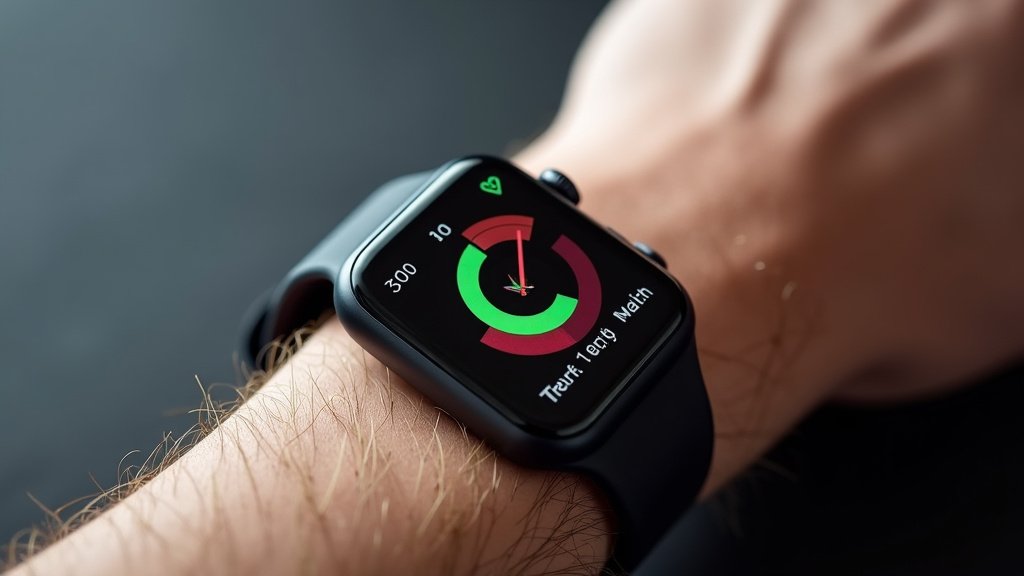
This is where the direct AFib detection comes in. Smartwatches with an ECG app have electrodes built into them. When you activate the ECG app, you typically touch a finger to the digital crown or the watch’s side.
This action creates an electrical circuit across your body, from your finger, through your arm and chest, to the electrodes on your wrist. The watch then measures the tiny electrical impulses generated by your heart (Apple Support). Think of it like a mini, single-lead ECG.
The data collected is then analyzed by the watch’s algorithm. If it detects a chaotic or irregular rhythm that matches the characteristics of AFib, it will notify you. It’s a quick measurement, usually about 30 seconds.
What an AFib Detection Alert Means for You
So, your smartwatch just sent you an alert that it detected signs of AFib. What now? It’s completely normal to feel a bit worried, but remember, this is an alert, not a diagnosis. It means your watch picked up an irregular heart rhythm that could be AFib. You definitely shouldn’t ignore it.
Your next step should always be to contact your doctor. Share the alert with them. Many watches allow you to export your ECG readings as a PDF. This can be very helpful information for your doctor to review.
They might recommend further tests, like a medical-grade ECG at their office or a Holter monitor, which records your heart rhythm for 24 hours or longer. These medical devices give a more complete picture of your heart’s activity. The smartwatch is a screening tool, not a diagnostic one.
Navigating False Positives and False Negatives
It’s important to understand that smartwatches, while helpful, aren’t perfect. You might get a false positive, meaning the watch says you have AFib, but you don’t. This can happen due to movement, poor contact with the skin, or other heart rhythm disturbances that aren’t AFib.
On the flip side, you could also experience a false negative. This means you do have AFib, but your watch didn’t detect it. AFib can be intermittent, meaning it comes and goes. If you take a reading during a time your heart rhythm is normal, the watch won’t pick up on it.
This is why constant communication with your doctor is key. Don’t rely solely on your watch; use it as a tool to open a conversation with your healthcare provider. Your doctor can help interpret the alerts in the context of your overall health.
Which Smartwatches Can Detect AFib?
The market for smartwatches with AFib detection has grown quite a bit. Many popular brands now offer this feature. Here’s a quick look at some of the most common ones that typically include an ECG app:
| Smartwatch Brand/Model Example | Key AFib Detection Feature | Regulatory Clearances |
|---|---|---|
| Apple Watch Series 4 and newer | ECG app and irregular rhythm notifications | FDA-cleared (U.S.), CE-marked (Europe) |
| Samsung Galaxy Watch Series | ECG app and irregular heart rhythm notifications | FDA-cleared (U.S.), CE-marked (Europe) |
| Fitbit Sense/Sense 2 | ECG app | FDA-cleared (U.S.), CE-marked (Europe) |
| Google Pixel Watch | ECG app and irregular heart rhythm notifications | FDA-cleared (U.S.), CE-marked (Europe) |
Before purchasing, always check the specific model’s features and verify its regulatory clearances in your region. Technology moves fast, so new devices are often coming out with similar capabilities.
Making the Most of Your Smartwatch for Heart Health
Having a smartwatch with AFib detection is like having a helpful assistant for your heart. But it works best when you use it wisely. Here are some tips to get the most out of it:
- Wear your watch consistently. The more data it collects, the better picture you have.
- Take ECG readings as instructed, or if you feel symptoms like palpitations.
- Understand its limitations. It’s a screening tool, not a diagnostic medical device.
- Share data with your doctor. Your readings can provide valuable information.
- Don’t self-diagnose or self-treat based solely on watch readings. This is really important.
- Keep the watch clean and ensure proper fit for accurate readings.
When to See a Doctor, Even Without a Smartwatch Alert
While your smartwatch can be a great tool, it shouldn’t replace listening to your body. If you experience certain symptoms, you should contact your doctor right away, regardless of what your watch says.
Symptoms of AFib (and other heart conditions) can include a racing heartbeat, fluttering in your chest, shortness of breath, dizziness, lightheadedness, or extreme fatigue (CDC). These are serious signs that warrant medical attention.
Sometimes, AFib doesn’t cause any symptoms at all. This is called “silent AFib.” In these cases, a smartwatch might be the first thing to pick up on an irregularity, which is where its value truly shines. However, if you suspect something is wrong, always trust your instincts and seek professional medical advice. Your health is too important to leave to chance.
Conclusion
Your smartwatch can be a really helpful tool for keeping an eye on your heart health, especially when it comes to AFib detection. We’ve seen how its ECG apps can flag irregular rhythms, acting as an early warning system. Remember, though, it’s a screening device, not a medical diagnosis.
Always tell your doctor about any alerts your watch gives you. They can interpret the readings and decide on the best next steps. Use your smartwatch wisely to stay informed and partner with your healthcare provider for complete heart care.
Frequently Asked Questions
Are smartwatch ECG readings as accurate as a doctor’s ECG?
No, smartwatch ECG readings are not as comprehensive as a medical-grade ECG. A smartwatch provides a single-lead ECG, offering a snapshot of your heart’s electrical activity. A doctor’s ECG uses multiple leads for a more detailed and complete picture of your heart rhythm.
Can my smartwatch tell me if I’m having a heart attack?
Smartwatches are not designed to detect heart attacks. They focus on heart rhythm irregularities like AFib. If you think you’re having a heart attack, you need emergency medical attention immediately, regardless of what your watch says.
Do I need my phone for the smartwatch ECG feature to work?
For most smartwatches, you do need your phone connected for the ECG feature. The raw data is often sent to the paired phone for analysis and display. The results are then stored in your phone’s health app, ready to share with your doctor.
Can children or teens use smartwatches for AFib detection?
Smartwatch AFib detection features are typically cleared for use by adults, usually aged 22 or older. Always check the manufacturer’s specific guidelines regarding age and usage. These devices are not generally recommended for children or teens.
What if my smartwatch gives me an AFib alert but I feel fine?
Even if you feel perfectly normal, an AFib alert from your smartwatch should not be ignored. AFib can sometimes be “silent,” meaning it causes no noticeable symptoms. Contact your doctor to discuss the alert and determine if further medical evaluation is needed.