
How Does a Single Lead ECG Work?
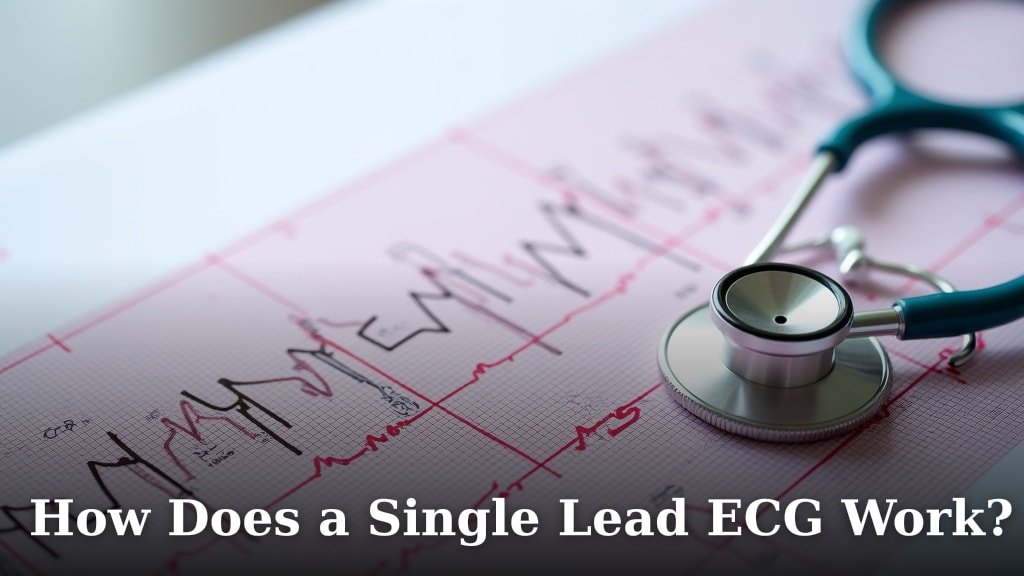
A single lead ECG works by using two electrodes to measure your heart’s electrical activity. It captures a specific view of your heart’s rhythm, providing essential data for health monitoring. This simpler design makes it very accessible.
You might be wondering how such a compact device can give useful heart information. We found that it focuses on the heart’s electrical signals between two points. This method helps detect common irregularities, giving you a quick snapshot of your cardiac health.
- A single lead ECG uses two electrodes to monitor heart rhythm.
- It measures electrical impulses between these two points.
- The device provides a specific, focused view of heart activity.
- It’s useful for quick checks and detecting common heart rhythm issues.
- This technology offers a convenient way to track your heart at home.
Let’s walk through exactly how this works, step by step, and what it means for your health monitoring needs.
Understanding How a Single Lead ECG Operates
A single lead ECG operates by capturing the electrical signals of your heart from one specific angle. Think of it like taking a single photograph of a moving object. It provides a focused perspective on your heart’s rhythm, which can be very telling.
This method differs significantly from a traditional 12-lead ECG you might find in a hospital. We found that the simplicity of the single lead design makes it ideal for quick checks and home monitoring.
The Electrical Symphony of Your Heart
Your heart beats thanks to tiny electrical impulses. These impulses tell your heart muscle when to contract and pump blood. It’s an amazing, constant internal symphony.
When these impulses don’t fire correctly, or when the timing is off, your heart rhythm can become irregular. This is what medical professionals call an arrhythmia. Many people experience these without even knowing it.
A single lead ECG acts like a miniature microphone for these electrical signals. It listens in and helps you visualize what’s happening beneath your skin.
Where Do These Signals Come From?
The heart has natural pacemakers. The main one is the sinoatrial (SA) node, located in the right atrium. It generates the initial electrical impulse. This impulse then spreads through your heart, much like ripples in a pond.
As the electricity moves, it causes your heart chambers to contract in a specific order: first the atria, then the ventricles. This coordinated action is what produces a healthy heartbeat.
The Role of Electrodes in a Single Lead ECG
Electrodes are the unsung heroes of any ECG. For a single lead device, you typically use two electrodes. These are small, sticky pads or metallic contacts that touch your skin.
One electrode acts as the “positive” receiver, and the other as the “negative” reference point. The device then measures the voltage difference between these two points. It’s similar to measuring the flow of electricity through a wire.
- One electrode picks up the electrical “action.”
- The other electrode provides a baseline for comparison.
- The difference between them creates the ECG waveform.
Placement Matters: Getting a Clear Signal
For a single lead ECG, electrode placement is generally very straightforward. Many devices are designed to be placed on your chest, wrists, or even your fingers. The goal is to create a clear “line of sight” for the electrical signals.
If you’re using a device with chest electrodes, you’ll often place one on the right side of your chest and one on the left. This setup allows the device to capture a strong signal as electricity flows across your heart (Cleveland Clinic).
For wrist or finger devices, the electrodes are built into the device itself. You simply hold it or press your fingers to the sensors. We found these methods offer great convenience for on-the-go monitoring.
Interpreting the Wavy Lines: What an ECG Shows You
Once the electrodes capture the electrical activity, the single lead ECG device translates it into a visual waveform. This wavy line is what you’ll see on the device’s screen or in its accompanying app.
Each bump and dip in the waveform corresponds to a specific event in your heart’s electrical cycle. It’s like watching a graph of your heart’s performance.
Key Components of an ECG Waveform
Even with a single lead, you can often identify some important components:
One of the most recognizable parts is often called the QRS complex. This sharp, spiky wave represents the electrical activity when your heart’s main pumping chambers (the ventricles) contract. This is a big event in your heartbeat.
You might also see a smaller bump before the QRS complex, called the P wave. This reflects the electrical activity in your upper heart chambers (the atria). It’s a quick signal that prepares the heart for the main pump.
After the QRS complex, there’s usually another curve called the T wave. This indicates when your ventricles are recharging and getting ready for the next beat. It’s like the heart taking a deep breath.
| Wave Component | What It Represents | Why It’s Important |
|---|---|---|
| P Wave | Atrial Contraction (Top Chambers) | Shows natural pacemaker function |
| QRS Complex | Ventricular Contraction (Main Pumps) | Indicates primary pumping action |
| T Wave | Ventricular Repolarization (Recharge) | Signals heart muscle recovery |
By looking at the timing and shape of these waves, a single lead ECG can help flag potential rhythm issues.
Comparing Single Lead vs. 12-Lead ECG
It’s important to understand that a single lead ECG provides a limited view compared to a 12-lead ECG. A 12-lead ECG uses many more electrodes placed across your chest and limbs. This gives doctors a comprehensive 3D “picture” of your heart’s electrical activity from 12 different angles.
Imagine the difference between a single snapshot and a full panoramic photo. Both are useful, but for different purposes.
When is a Single Lead ECG Most Useful?
Many experts recommend single lead ECGs for spot checks and remote monitoring (Mayo Clinic). If you feel a palpitation or an irregular beat, a single lead device can quickly record it. This data can then be shared with your doctor.
It’s especially good for detecting common arrhythmias like atrial fibrillation (Afib). Afib is a condition where the upper chambers of your heart beat irregularly and often too fast. We found that many consumer devices are specifically designed to help identify this condition.
It’s also helpful for:
- Monitoring your heart rhythm between doctor visits.
- Providing peace of mind if you have occasional symptoms.
- Creating a record of irregular heartbeats to show your healthcare provider.
Remember, a single lead ECG is a screening tool, not a diagnostic one. It gives you and your doctor valuable information, but it doesn’t replace a full medical evaluation.
What a Single Lead ECG CAN and CANNOT Detect
A single lead ECG is quite good at spotting rhythm irregularities. If your heart is beating too fast, too slow, or in an erratic pattern, the device can often pick up on it. This includes conditions like Afib or other forms of irregular heartbeats.
However, what it usually cannot detect are things like heart attacks, structural heart damage, or blockages in the arteries. These issues often require the broader perspective of a 12-lead ECG and other diagnostic tests.
Think of it this way: a single lead ECG can tell you if your heart’s drummer is off-beat, but it might not tell you if a string on the guitar is broken.
When to Seek Medical Attention
If your single lead ECG consistently shows irregularities, or if you experience symptoms like chest pain, shortness of breath, dizziness, or fainting, you should always consult a doctor immediately. Your device is a tool to help you monitor, not a substitute for professional medical advice.
Here’s a quick checklist for what to do:
- If the device flags an irregular heartbeat.
- If you feel new or worsening heart symptoms.
- If your doctor has recommended regular monitoring.
- If you have concerns about your heart health.
- Always share your ECG readings with your healthcare provider.
The Future of Personal Heart Monitoring
Single lead ECG technology is constantly evolving. Devices are becoming smaller, more accurate, and easier to use. This means more people can actively participate in monitoring their heart health from the comfort of their homes.
We found that this accessibility is a huge benefit, empowering you with information and encouraging proactive health management. It allows for a greater awareness of your body’s signals, especially concerning your heart.
Conclusion
You’ve seen how a single lead ECG distills your heart’s electrical symphony into simple waves. This powerful tool offers a personalized window into your cardiac rhythm. It helps you monitor for common irregularities and provides vital data for your doctor.
While it simplifies heart monitoring, remember its purpose is for screening and awareness. Use it to stay informed and to record concerning heart events. If you have any heart health worries or your device flags issues, always consult your healthcare provider. Your proactive approach, combined with professional guidance, is key to maintaining a healthy heart.
Frequently Asked Questions
Can a single lead ECG replace routine doctor visits?
No, a single lead ECG is a monitoring tool, not a diagnostic one. It helps you track your heart between visits. Always continue with your scheduled medical check-ups and follow your doctor’s advice.
How accurate are single lead ECG devices for detecting heart issues?
Single lead ECGs are very accurate for detecting common rhythm abnormalities, particularly conditions like atrial fibrillation. However, they provide a focused view and may not detect all types of heart problems, such as structural issues or blockages.
What exactly does “single lead” mean in an ECG?
“Single lead” refers to the device measuring electrical activity from one specific direction or “lead.” It uses two electrodes to create this single perspective, differing from the multiple perspectives a 12-lead ECG provides.
Are there any specific health conditions that make a single lead ECG more useful?
We found single lead ECGs are especially useful if you have a history of or are at risk for arrhythmias, like atrial fibrillation. They also help if you experience occasional palpitations or irregular heartbeats and want to capture these events for your doctor.
How often should I use my single lead ECG device for monitoring?
The frequency depends on your health needs and your doctor’s recommendations. Some people use it daily for regular checks, while others use it only when they feel symptoms. Always discuss the best monitoring schedule with your healthcare provider.
