Can You Diagnose a Heart Attack with a Home ECG Monitor?
No, you cannot diagnose a heart attack solely with a home ECG monitor. These devices are fantastic for tracking your heart rhythm and detecting certain irregularities, but they do not provide a definitive diagnosis of a heart attack.
Home ECGs give you a snapshot of your heart’s electrical activity. This information can be very useful for your doctor. However, a heart attack diagnosis requires more than just an ECG reading; it needs a full medical evaluation.
- Home ECGs are for monitoring, not diagnosing.
- They detect rhythm issues, not heart attacks directly.
- Medical professionals use more advanced tests.
- Always seek emergency care for suspected heart attack symptoms.
Let’s walk through exactly what home ECG monitors can and cannot do for your heart health, and why knowing the difference is so important.
Understanding Home ECG Monitors and Heart Attacks
You might be wondering if that sleek new home ECG monitor can really tell you if you’re having a heart attack. The short answer is no, not directly. While these devices are powerful tools for monitoring your heart’s electrical activity, they aren’t designed to give a definitive heart attack diagnosis.
What Exactly Does a Home ECG Monitor Do?
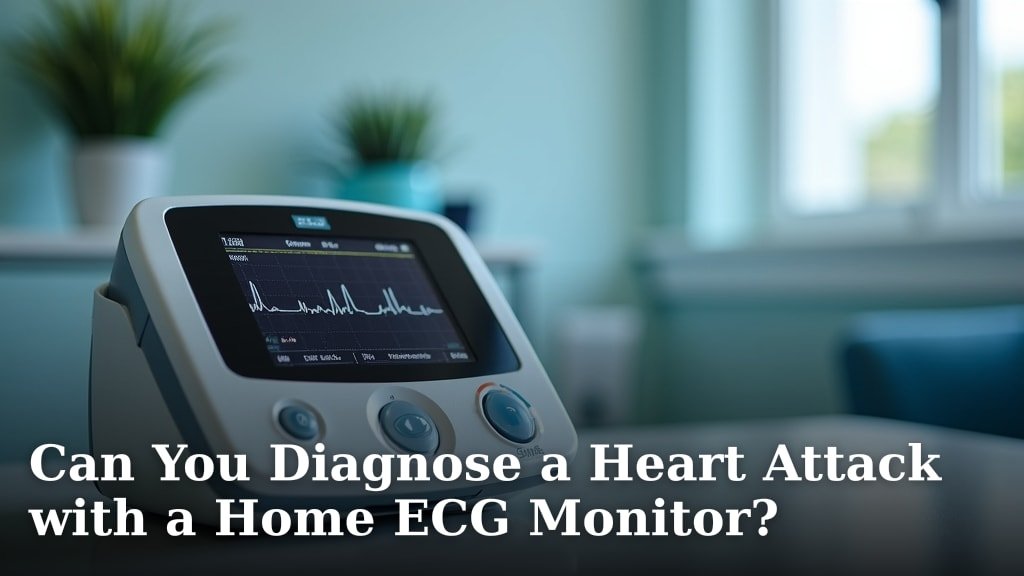
Think of your home ECG monitor as a mini detective for your heart’s electrical signals. It records these signals, showing how fast your heart is beating and if the rhythm is steady or irregular. This information is then displayed on your device or an app on your smartphone.
These monitors are great for detecting common heart rhythm issues. Conditions like atrial fibrillation (AFib), where your heart beats irregularly and often rapidly, are often picked up by these devices. They give you a snapshot of your heart’s electrical patterns at a specific moment.
How Does a Home ECG Differ from a Medical ECG?
A home ECG is a simplified version of what you’d get in a doctor’s office or hospital. A standard medical ECG (electrocardiogram) uses 12 leads placed on different parts of your chest and limbs. This provides a detailed, multi-angle view of your heart’s electrical activity.
Home ECGs usually have one or a few leads. This limited view means they can’t capture all the nuanced electrical changes that a full medical ECG can. Those subtle changes are often key in diagnosing a heart attack.
Why Home ECGs Can’t Diagnose a Heart Attack
A heart attack, also known as a myocardial infarction, happens when blood flow to a part of your heart is blocked. This blockage damages heart muscle. Diagnosing it is a complex process that goes beyond just electrical signals.
The Limitations of Single-Lead Readings
Most home ECG devices offer single-lead readings. Imagine trying to understand a whole building by looking through just one window. You get some information, but you miss the bigger picture. A single lead might not show the specific electrical changes that indicate heart muscle damage from a heart attack.
Medical professionals need to see these changes from multiple angles. This helps them pinpoint the exact location and severity of any potential damage. Your home device just doesn’t have that capability.
What Doctors Look For Beyond Electrical Signals
When you go to the emergency room with chest pain, doctors don’t just rely on an ECG. They perform a series of tests to confirm a heart attack. This includes looking at specific blood markers called cardiac enzymes or troponin. These proteins are released into your bloodstream when heart muscle is damaged (American Heart Association).
They also consider your symptoms, medical history, and may even perform imaging tests like an echocardiogram. All these pieces of information come together to form a complete diagnosis. Your home ECG is just one small piece of a much larger puzzle.
When Are Home ECG Monitors Truly Helpful?
So, if they can’t diagnose a heart attack, are home ECGs even useful? Absolutely! They serve a very important purpose in managing your heart health.
Monitoring Known Arrhythmias
If you have a diagnosed heart rhythm disorder, such as AFib, a home ECG can be your best friend. It allows you to track your heart rhythm between doctor visits. You can share these recordings with your cardiologist, giving them valuable data about how your heart is behaving in your daily life. This can help them adjust medications or treatment plans.
Detecting Asymptomatic Irregularities
Sometimes, heart rhythm problems don’t cause noticeable symptoms. A home ECG can catch these silent irregularities. If your device alerts you to an abnormal rhythm, you can then follow up with your doctor for further investigation. Early detection can prevent more serious complications down the line.
Think of it as an early warning system for rhythm issues, not a full-blown diagnostic lab for heart attacks.
Recognizing Heart Attack Symptoms: Your Crucial Role
Since your home ECG isn’t the diagnostic tool for a heart attack, your awareness of symptoms becomes even more vital. Don’t wait for a device to tell you something is wrong if you feel it yourself.
Classic Heart Attack Warning Signs
Heart attack symptoms can vary, but there are some common ones you should never ignore:
- Chest discomfort: Pressure, tightness, squeezing, or aching in the center of your chest. This may last more than a few minutes, or it may go away and come back.
- Pain in other areas: Discomfort radiating to one or both arms (especially the left), your back, neck, jaw, or stomach.
- Shortness of breath: This can occur with or without chest discomfort.
- Other signs: Cold sweat, nausea, lightheadedness, sudden dizziness.
It’s important to remember that women can experience heart attack symptoms differently than men. They might have less chest pain and more of the other symptoms, like unusual fatigue, indigestion, or pain in the back or jaw (Mayo Clinic).
What to Do If You Suspect a Heart Attack (Your Checklist)
Time is muscle when it comes to a heart attack. Every minute that passes increases the potential damage to your heart. Here’s what you should do immediately:
- Call 911 (or your local emergency number) right away.
- Do not drive yourself to the hospital.
- Do not wait to see if symptoms improve.
- Chew and swallow aspirin if advised by emergency services (and you’re not allergic).
- Stay calm and try to rest.
- Loosen any tight clothing.
Even if you’re not sure, it’s always better to call for help. Paramedics can start treatment on the way to the hospital, which can be lifesaving.
Home ECG vs. Professional Diagnosis: A Quick Comparison
To put it simply, home ECGs and professional medical evaluations serve different, yet complementary, roles in heart health. Here’s a look at their primary functions:
| Feature | Home ECG Monitor | Professional Medical Diagnosis (Hospital/Clinic) |
|---|---|---|
| Purpose | Heart rhythm monitoring, detection of common arrhythmias | Definitive diagnosis of heart conditions, including heart attacks |
| Information Provided | Snapshot of heart’s electrical rhythm, heart rate | Detailed electrical activity (12-lead ECG), blood tests (troponin), imaging, physical exam, symptom analysis |
| Key Strength | Convenient, ongoing tracking; early warning for rhythm issues | Comprehensive assessment, ability to identify heart muscle damage |
| Diagnosis of Heart Attack | No (cannot definitively diagnose) | Yes (primary method, combined with other tests) |
| Action Needed for Symptoms | Share readings with doctor for rhythm concerns | Seek immediate emergency medical attention |
As you can see, your home device is a fantastic tool for tracking and sharing information with your doctor. But when serious symptoms strike, especially those suggesting a heart attack, professional emergency medical care is the only safe and effective path.
Conclusion
While your home ECG monitor is a wonderful tool for observing your heart’s rhythm and catching irregularities like AFib, remember its primary role is monitoring, not diagnosing a heart attack. It provides valuable data for your doctor, but it lacks the comprehensive view and blood tests needed for a definitive heart attack diagnosis. Your awareness of symptoms is your most critical defense. If you ever suspect you’re having a heart attack, don’t rely on your device; call 911 immediately. Prompt medical attention is vital to protect your heart muscle and save your life.
Frequently Asked Questions
Can a home ECG detect blocked arteries?
No, a home ECG monitor cannot directly detect blocked arteries. These devices record your heart’s electrical activity. Blocked arteries, which cause heart attacks, are a plumbing problem with blood flow, not primarily an electrical one. Specialized imaging tests are needed to visualize arterial blockages.
What if my home ECG shows an abnormality but I feel fine?
If your home ECG shows an abnormal reading, even if you feel no symptoms, it’s always best to contact your doctor. Share the ECG recording with them. They can assess if further investigation is needed or if it’s a known irregularity you already manage.
Should I buy a home ECG monitor if I have chest pain?
If you are experiencing new or concerning chest pain, your priority should be seeking immediate medical attention by calling 911, not purchasing or using a home ECG monitor. These devices are for monitoring, not for emergency diagnosis of acute symptoms. Delaying care can be dangerous.
How often should I use my home ECG monitor?
The frequency of using your home ECG monitor depends on your doctor’s recommendations and your specific health needs. If you have a diagnosed condition like AFib, your doctor might suggest daily checks or when you feel symptoms. Otherwise, use it as part of your general wellness routine or if you notice something unusual.
Is a normal home ECG reading proof that my heart is healthy?
A normal home ECG reading is reassuring for the moment it was taken, but it’s not proof of overall heart health or that you won’t have future issues. It only reflects your heart’s electrical activity at that specific time. Regular check-ups with your doctor, including blood pressure and cholesterol monitoring, are essential for a complete picture of your heart health.