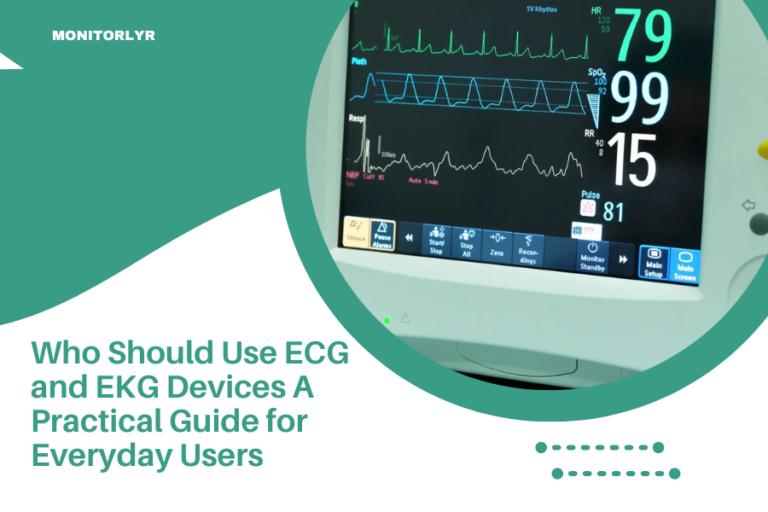
How Heart Electrical Signals Work: A Visual Guide
Heart electrical signals are the electrical impulses that coordinate your heartbeat, traveling through specialized pathways in your heart muscle to create the rhythmic contractions you feel as your pulse.
Your heart’s electrical system works like a biological pacemaker, with signals starting at the sinoatrial node and spreading through four chambers to pump blood efficiently throughout your body.
Think of your heart as having its own electrical grid. Just like the wiring in your house controls when lights turn on, your heart has an electrical network that controls when each chamber contracts.
This system is so reliable that it beats about 100,000 times per day without you thinking about it. But what exactly happens during each heartbeat? Let me walk you through this amazing process.
The Heart’s Built-In Electrical System
Your heart doesn’t need your brain to tell it when to beat. It has its own electrical system that works independently.
This system includes several key parts that work together like a well-organized team. Each part has a specific job in creating your heartbeat.
The Sinoatrial Node: Your Natural Pacemaker
The sinoatrial (SA) node sits in your right atrium. This small cluster of cells acts as your heart’s natural pacemaker.
It fires electrical signals about 60 to 100 times per minute when you’re at rest. These signals start each heartbeat cycle.
Research from the American Heart Association shows the SA node automatically adjusts your heart rate based on what your body needs.
The Atrioventricular Node: The Traffic Controller
The atrioventricular (AV) node sits between your upper and lower heart chambers. It acts like a traffic light, controlling when signals move forward.
This node creates a small delay. This pause lets your upper chambers finish emptying before your lower chambers start contracting.
Without this delay, your heart wouldn’t pump blood effectively.
How Electrical Signals Move Through Your Heart
Each heartbeat follows the same electrical pathway. This process happens in a specific order every time.
Step 1: Signal Generation
Your SA node creates an electrical impulse. This happens when sodium and potassium ions move across cell membranes.
The signal spreads quickly across both upper chambers (atria). This makes them contract at the same time.
Step 2: Signal Transmission
The electrical signal reaches your AV node. Here, it pauses for about 0.1 seconds.
This delay gives your atria time to push all their blood into your ventricles.
Step 3: Ventricular Activation
After the pause, the signal travels down special pathways called bundle branches. These carry the signal to your lower chambers (ventricles).
The signal spreads through tiny fibers called Purkinje fibers. These reach every part of your ventricle walls.
Step 4: Coordinated Contraction
Both ventricles contract together, pushing blood out to your lungs and body. This creates the strong pulse you can feel.
Then your heart muscle relaxes, and the cycle starts over.
What ECG Devices Actually Measure
ECG devices detect the electrical activity of your heart through sensors placed on your skin. They don’t measure the actual contractions – just the electrical signals that cause them.
The Five Main ECG Waves
An ECG reading shows five distinct waves, each representing a different part of your heart’s electrical cycle:
- P wave: Shows atrial contraction
- QRS complex: Shows ventricular contraction
- T wave: Shows ventricular recovery
- PR interval: Time from atrial to ventricular activation
- QT interval: Total time for ventricular activity
Reading Your ECG Results
Normal ECG patterns have consistent spacing and wave shapes. Irregular patterns can indicate various heart conditions.
Your doctor looks at wave timing, shape, and rhythm to assess your heart’s electrical health.
When Heart Electrical Systems Go Wrong
Sometimes your heart’s electrical system doesn’t work perfectly. This can cause various rhythm problems called arrhythmias.
Common Electrical Problems
Atrial fibrillation happens when your upper chambers beat irregularly. This affects about 2.7 million Americans (CDC).
Heart block occurs when signals don’t travel properly between chambers. This can slow your heart rate significantly.
Ventricular tachycardia involves fast, irregular rhythms in your lower chambers. This can be serious and needs immediate attention.
What Causes Electrical Problems
Age naturally affects your heart’s electrical system. Scar tissue from heart attacks can also disrupt normal pathways.
Other factors include high blood pressure, diabetes, and certain medications. Sometimes the cause isn’t clear.
How Modern ECG Devices Work
Today’s ECG devices are much more advanced than early versions. They can detect very small electrical changes in your heart.
Traditional 12-Lead ECG
Hospital ECG machines use 12 sensors placed on your chest, arms, and legs. This gives doctors a complete view of your heart’s electrical activity.
Each sensor (lead) looks at your heart from a different angle. Together, they create a detailed picture.
Portable ECG Monitors
Wearable ECG devices use fewer sensors but can still detect many heart rhythm problems. They’re perfect for daily monitoring.
Many smartwatches now include ECG features. These use sensors on the watch back and crown to measure your heart’s electrical signals.
The Science Behind ECG Signal Detection
ECG sensors detect electrical changes through your skin. Your heart’s electrical activity is strong enough to reach the surface of your body.
How Sensors Pick Up Heart Signals
Metal electrodes on ECG devices conduct electricity from your skin. Conductive gel improves the connection between your skin and the sensors.
The device amplifies these tiny electrical signals and converts them into the wave patterns you see on screen.
Filtering Out Interference
Modern ECG devices filter out electrical noise from other sources. This includes muscle movement, breathing, and nearby electronic devices.
Advanced algorithms help separate your heart’s signals from background electrical activity.
Understanding Your Heart Rate Variability
Heart rate variability (HRV) measures tiny changes in timing between heartbeats. This actually shows a healthy heart.
A perfectly steady heart rate isn’t normal. Healthy hearts have slight variations in timing between beats.
What HRV Tells You
Higher HRV often indicates better fitness and stress recovery. Lower HRV might suggest you need more rest.
Many fitness trackers now measure HRV to help you understand your recovery status.
Factors That Affect Heart Electrical Activity
Several things can change how your heart’s electrical system works. Understanding these helps you interpret your ECG readings better.
Physical Activity
Exercise naturally increases your heart rate. Your SA node fires faster to meet your body’s oxygen needs.
Regular exercise can actually improve your heart’s electrical efficiency over time.
Stress and Emotions
Stress hormones like adrenaline affect your heart’s electrical system. This can cause your heart to beat faster or irregularly.
Deep breathing and relaxation can help normalize your heart rhythm.
Medications and Caffeine
Some medications directly affect your heart’s electrical system. Beta-blockers slow your heart rate by blocking certain signals.
Caffeine can increase your heart rate and sometimes cause extra heartbeats.
| Condition | ECG Finding | What It Means |
|---|---|---|
| Normal Rhythm | Regular P-QRS-T pattern | Heart working properly |
| Atrial Fibrillation | Irregular rhythm, no clear P waves | Upper chambers beating irregularly |
| Heart Block | P waves not followed by QRS | Signal delay between chambers |
The Future of Heart Electrical Monitoring
Technology continues to improve how we monitor heart electrical activity. New devices are smaller, more accurate, and easier to use.
Artificial intelligence now helps detect subtle rhythm changes that doctors might miss. This could lead to earlier detection of heart problems.
Conclusion
Your heart’s electrical system is a remarkable network that keeps you alive every second of every day. Understanding how these signals work helps you appreciate why ECG monitoring is so valuable for your health.
Modern ECG devices give you the power to monitor this electrical activity at home. Whether you use a simple fitness tracker or a medical-grade device, you’re getting a window into one of your body’s most important systems.
Remember that while these devices are helpful tools, they don’t replace professional medical care. If you notice concerning changes in your heart rhythm, talk to your doctor right away.
How long does each heartbeat’s electrical cycle take?
A complete electrical cycle takes about 0.8 seconds at rest. The signal travels from your SA node through your entire heart in less than 0.2 seconds, with the rest of the cycle being recovery time.
Can you feel your heart’s electrical activity?
You can’t directly feel the electrical signals, but you feel their effects. The electrical activity causes muscle contractions that create your heartbeat and pulse that you can feel in your wrist or neck.
Why do some people need artificial pacemakers?
Artificial pacemakers replace or supplement your natural SA node when it doesn’t work properly. They send electrical signals to your heart when your natural pacemaker is too slow or stops working.
Do heart electrical signals get weaker with age?
The signals themselves don’t necessarily get weaker, but the pathways can become less efficient. Age-related changes in heart tissue can slow signal transmission and make rhythms less regular.
Can stress permanently damage your heart’s electrical system?
Chronic stress can contribute to electrical problems over time, but temporary stress usually doesn’t cause permanent damage. Managing stress through exercise, relaxation, and healthy habits helps protect your heart’s electrical system.