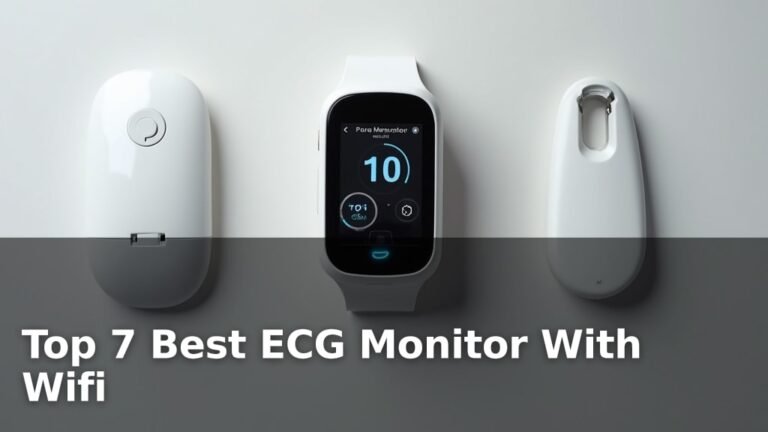
How Do Portable EKG Monitors Work? Simple Guide
Portable EKG monitors work by using small electrodes that stick to your chest to detect electrical signals from your heartbeat, then send this data to a device or app for analysis.
These compact devices can record your heart rhythm anywhere, anytime, making it easier to catch irregular heartbeats that might happen outside a doctor’s office.
What Makes Portable EKG Monitors Different
Think of a portable EKG monitor as a mini version of the big machine at your doctor’s office. Instead of lying on a table with wires everywhere, you get a small device you can carry in your pocket.
The main difference is convenience. Hospital EKG machines give detailed 12-lead readings. Portable versions usually offer 1 to 6 leads, which is enough to spot most heart rhythm problems.
You control when to take readings. Feel your heart skip a beat during a meeting? Pull out your device and record it right then.
The Science Behind EKG Detection
Your heart creates tiny electrical impulses every time it beats. These signals travel through your heart muscle, telling it when to squeeze and pump blood.
Portable EKG monitors act like extremely sensitive microphones for electricity. They pick up these signals through your skin and turn them into the wavy lines you see on screen.
How Electrical Signals Move Through Your Heart
The process starts in your heart’s natural pacemaker, called the SA node. This sends an electrical wave across both upper chambers, making them contract.
The signal then moves to the AV node, which acts like a relay station. It pauses briefly, then sends the signal down to your lower chambers.
When everything works right, you get a steady, regular heartbeat. When something goes wrong, the EKG shows irregular patterns.
Types of Portable EKG Monitors
I found that portable EKG devices come in several different styles, each with their own strengths.
Smartphone-Connected Devices
These small gadgets connect to your phone through Bluetooth or a direct attachment. Popular brands like KardiaMobile make credit card-sized devices that work with an app.
You place your fingers on the device for 30 seconds, and it records your heart rhythm. The app shows your EKG trace and can detect common problems like atrial fibrillation.
Wearable Patch Monitors
These stick directly to your chest like a large bandage. They can record continuously for days or weeks, depending on the model.
Doctors often prescribe these when they need to catch irregular heartbeats that happen randomly. The patch records everything, then you mail it back for analysis.
Wristwatch-Style Monitors
Some smartwatches now include EKG features. Apple Watch and Samsung Galaxy Watch can take single-lead EKG readings when you touch the crown or bezel.
These work well for spot checks, but they’re not as detailed as chest-worn devices.
Handheld Recorders
These look like small smartphones designed just for heart monitoring. You hold them against your chest or place your hands on sensors to get a reading.
Many offer more leads than phone-connected devices, giving doctors better information about your heart’s activity.
Step-by-Step: How Recording Works
Let me walk you through what happens when you use a portable EKG monitor.
Step 1: Electrode Contact
The device needs good contact with your skin to pick up electrical signals. Different types use different contact methods:
- Finger sensors require clean, dry fingers
- Chest patches need clean skin, sometimes with adhesive gel
- Handheld devices need firm, steady contact
Step 2: Signal Capture
Once you make contact, the device starts detecting tiny electrical changes on your skin. These signals are incredibly small – we’re talking about millivolts.
The device amplifies these signals thousands of times so they can be processed and displayed.
Step 3: Digital Conversion
Your heart’s electrical activity gets converted from analog signals to digital data. This happens almost instantly, usually within milliseconds.
The digital data can then be stored, displayed on a screen, or sent to your phone.
Step 4: Analysis and Display
Software in the device or connected app analyzes the EKG pattern. It looks for specific features like:
- Heart rate (beats per minute)
- Rhythm regularity
- Wave shape and timing
- Signs of common heart problems
What the Squiggly Lines Mean
Those wavy lines on your EKG screen tell a story about your heartbeat. Each beat creates a similar pattern with distinct parts.
The P Wave
This small bump shows your upper heart chambers contracting. It should be smooth and consistent.
The QRS Complex
This is the big spike you see. It represents your lower chambers contracting to pump blood. This should be sharp and well-defined.
The T Wave
This smaller wave after the big spike shows your heart muscle resetting for the next beat.
When these waves look irregular, happen at weird times, or have unusual shapes, it can signal heart problems.
Accuracy: What Can You Trust
I researched how accurate these devices really are, and the answer depends on what you’re looking for.
What They Do Well
Portable EKG monitors excel at detecting rhythm problems. Studies show they can identify atrial fibrillation with over 95% accuracy when used correctly (American Heart Association).
They’re also great for tracking heart rate and basic rhythm patterns over time.
What They Miss
Single-lead devices can’t see everything a full 12-lead hospital EKG can detect. They might miss:
- Some types of heart attacks
- Structural heart problems
- Subtle electrical abnormalities
User Error Factors
Many accuracy problems come from how people use the devices. Common mistakes include:
- Moving during recording
- Poor skin contact
- Using the device incorrectly
- Recording during exercise or stress
Battery Life and Data Storage
Most portable EKG devices are designed for convenience, which means good battery life and smart data management.
Typical Battery Performance
Smartphone-connected devices usually last weeks or months on a single charge, since they only work when actively recording.
Continuous monitoring patches work for days to weeks, depending on how often they record and transmit data.
How Your Data Gets Stored
Many devices store recordings locally first, then sync to your phone or cloud storage when possible. This means you won’t lose data if your connection drops during recording.
Some devices can store hundreds of recordings in their internal memory.
When to Use Your Portable EKG Monitor
Timing matters when you’re trying to catch heart rhythm problems.
Symptom-Triggered Recording
The biggest advantage of portable monitors is catching problems as they happen. Use your device when you feel:
- Heart palpitations or racing
- Dizziness or lightheadedness
- Chest discomfort
- Unusual fatigue
Routine Monitoring
Some people benefit from regular recordings, even without symptoms. This helps establish your normal pattern and catch gradual changes.
Many experts recommend daily or weekly recordings if you have known heart conditions or risk factors (Cleveland Clinic).
Sharing Data With Your Doctor
The real value of portable EKG monitoring comes when you share results with healthcare providers.
What Doctors Want to See
Your doctor cares most about recordings taken during symptoms. A normal EKG when you feel fine doesn’t rule out problems that happen at other times.
Keep notes about what you were doing and how you felt during each recording. This context helps doctors interpret your results.
Easy Export Options
Most modern devices make sharing simple. You can usually email EKG traces as PDF files or grant your doctor access to your monitoring app.
Common Problems and Solutions
I came across several issues people have with portable EKG monitors, along with practical fixes.
| Problem | Cause | Solution |
|---|---|---|
| Noisy, unclear readings | Poor skin contact or movement | Clean hands/chest, stay still during recording |
| Device won’t connect to phone | Bluetooth or app issues | Restart both devices, update app |
| Inconsistent heart rate readings | Irregular rhythm or device placement | Try different electrode positions, record longer |
| Battery drains quickly | Background app activity | Close unused apps, check device settings |
Choosing the Right Device for You
With so many options available, picking the right portable EKG monitor depends on your specific needs.
For Occasional Monitoring
If you want to check your heart rhythm once in a while, a smartphone-connected device works well. They’re affordable and easy to use.
For Continuous Tracking
People with known heart conditions often need more frequent monitoring. Wearable patches or smartwatch EKG features make this easier.
For Medical-Grade Recording
If your doctor specifically requested EKG monitoring, ask which devices they recommend. Some integrate better with medical record systems.
Future Technology Trends
Portable EKG technology keeps getting better and more accessible.
AI-Powered Analysis
Newer devices use artificial intelligence to spot problems human eyes might miss. These algorithms get trained on millions of EKG recordings.
Smaller, More Comfortable Designs
Companies are making devices smaller and more comfortable for long-term wear. Some new patches are thin enough that you forget you’re wearing them.
Better Integration
Future devices will connect more seamlessly with health apps, electronic medical records, and even emergency services when needed.
Conclusion
Portable EKG monitors work by capturing your heart’s electrical signals through skin contact and converting them into readable data you can share with doctors. These devices give you the power to record your heart rhythm anywhere, anytime, which is especially valuable for catching problems that come and go unpredictably.
While they can’t replace full medical EKG machines, portable monitors serve as excellent tools for routine monitoring and symptom tracking. The technology keeps improving, making heart monitoring more accessible and accurate for people who need it.
Remember that any concerning readings should be discussed with healthcare providers. These devices work best as part of your overall health monitoring strategy, not as standalone diagnostic tools.
Can portable EKG monitors detect heart attacks?
Most single-lead portable EKG monitors cannot reliably detect heart attacks. They excel at finding rhythm problems like atrial fibrillation, but heart attacks often require multi-lead EKGs and additional tests. If you suspect a heart attack, call emergency services rather than relying on a portable device.
How often should I use my portable EKG monitor?
Usage frequency depends on your health needs. People with known heart conditions might record daily or weekly, while others only record during symptoms. Your doctor can recommend the best schedule based on your specific situation and risk factors.
Do I need medical training to interpret EKG results?
While apps provide basic interpretation, medical training helps understand subtle abnormalities. Focus on noting symptoms during recordings and let healthcare providers interpret complex patterns. Many apps flag obvious problems but can’t catch everything a trained professional would notice.
Will my portable EKG work if I have a pacemaker?
Portable EKG monitors can work with pacemakers, but the artificial electrical signals may affect readings. The device will show pacemaker spikes along with your natural heart rhythm. Always inform your doctor about pacemaker presence when sharing EKG recordings.
What’s the difference between EKG and ECG on device labels?
EKG and ECG mean exactly the same thing – electrocardiogram. EKG comes from the German spelling “elektrokardiogramm,” while ECG uses the English spelling. Device manufacturers use both terms interchangeably, so don’t worry about which abbreviation appears on your monitor.